The 5 Non-Alcoholic Beverages I’m Pouring at Drinks with Benefits and Why They Matter

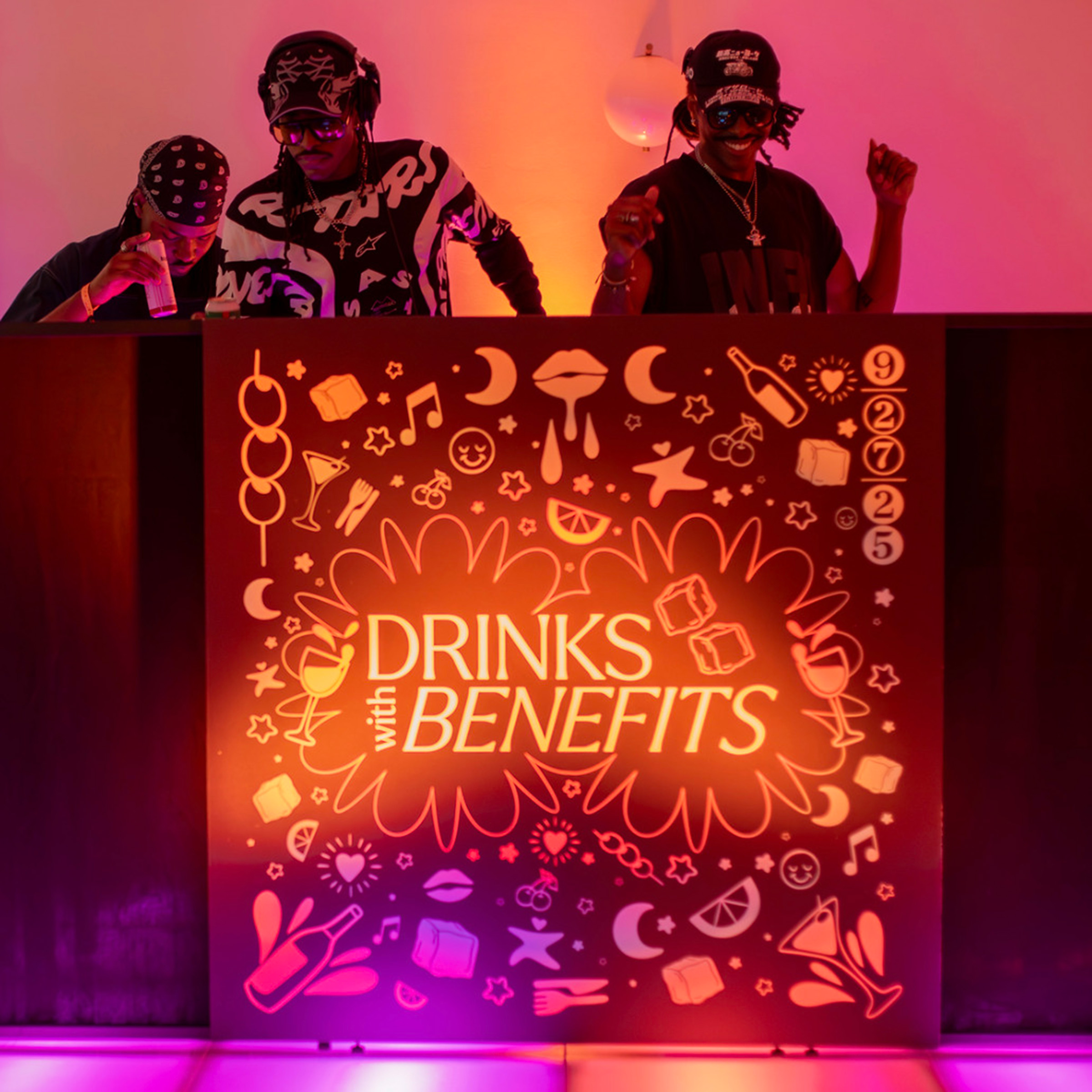
Drinks with Benefits is in its second year as a premium non-alcoholic beverage festival geared towards consumers and prosumers in the NA space. I attended last year and was energized by the potential for this industry, this niche in beverage.
A note for my colleagues on the floor. DWB has carved out a trade hour, 5-6 p.m., and code DWBTRADE gets you in free. If you run a bar, a restaurant or a beverage program, that hour is the most efficient 60 minutes you will spend on this category all year. No lines, founders at their own tables, and the chance to taste side by side instead of one brand at a time across six separate sales calls. There is no easier way to taste this many top non-alc brands at one time.
As a sommelier who devoted his life to learning about the finer points of wines from all over the world — France, Australia, South Africa, California, New York, Georgia (Republic of) — I understand how daunting a massive category with a seemingly infinite amount of information can be. I appreciated what sommelier Isabel Neuhaus shared recently: “I don’t like the ‘we’re making wine too complicated’ narrative. Wine IS complicated! That’s why it’s cool.” I fully agree, and the same concept applies for non-alc. I love how many rabbit holes one can go down in this industry. Of course, that’s not always a positive, as it can be daunting for any consumer.
Which is why tasting is believing, and Drinks with Benefits is where folks can come to taste. I’m grateful to have been asked to curate a table at the festival, where I’ll get to pour six of my favorite brands/beverages and share what I love about these beverages and why I think they’re so important with consumers and industry folks alike.
Just like it’s hard for a sommelier to say what his or her favorite wine is (it depends on the who, the what, the where, the when and the why), these brands and beverages are some of my favorites because at least one of them can fit into most of life’s occasions.
In alphabetical order, just to keep it fair, here’s what I’ll be pouring:
Aplós Chili Margarita
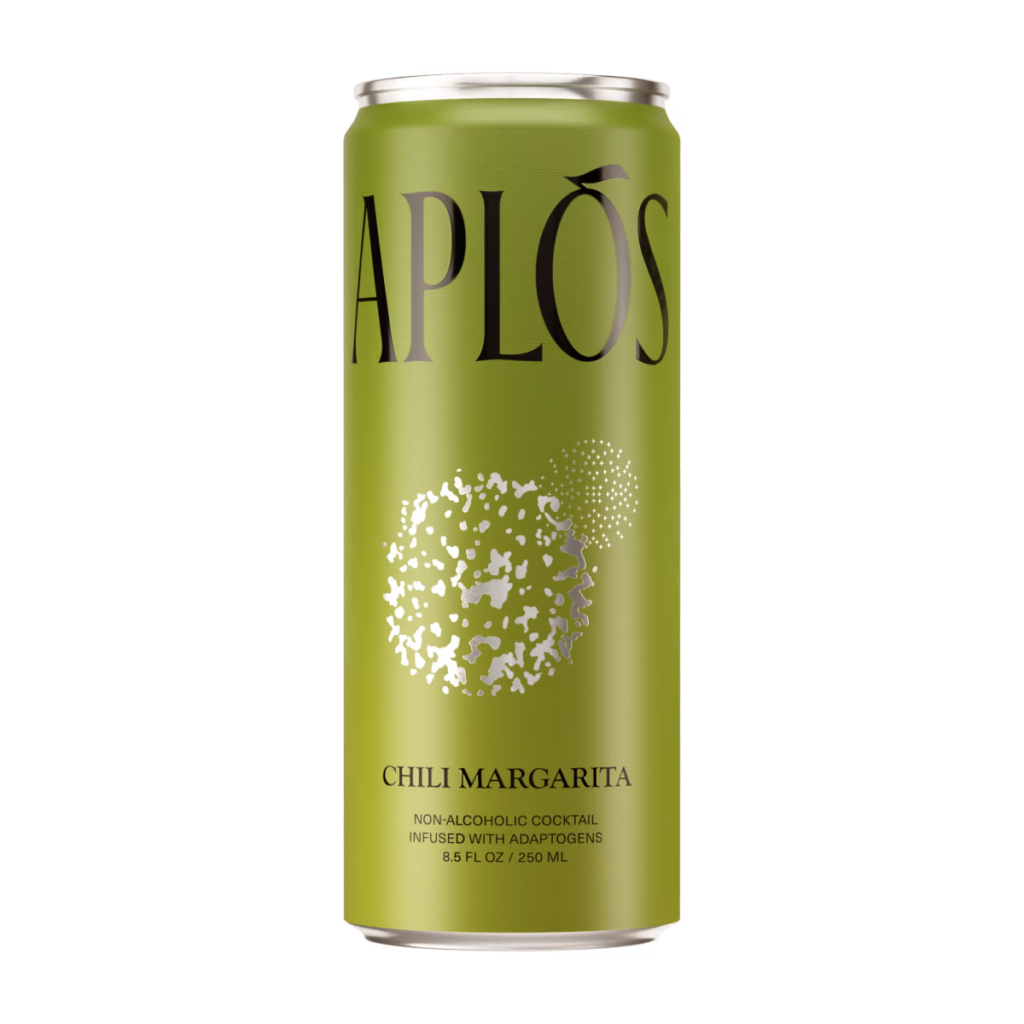
(Photo: Aplos)
I appreciate what the founders behind Aplós are building and how they’re building it. I got to meet them about a year ago at the Maze, where I helped to launch the opening Non-Alc beverage program. They’re business savvy and know that they can’t compromise on flavor if they’re going to succeed in the NA industry. Aplós’ Chili Margarita is one of those drinks I’m pleasantly surprised to see so widely distributed in New York, from NYC to East Hampton. It’s a casual, canned beverage that overdelivers on flavor and texture and is a well-priced alternative to most of the other NA bevs with comparable reach. From fine dining restaurants to dive bars to breweries, I’ve always ordered it when I see it, and it’s always accompanied a good time.
Kettl Japanese Teas
(Photo: Kettl)
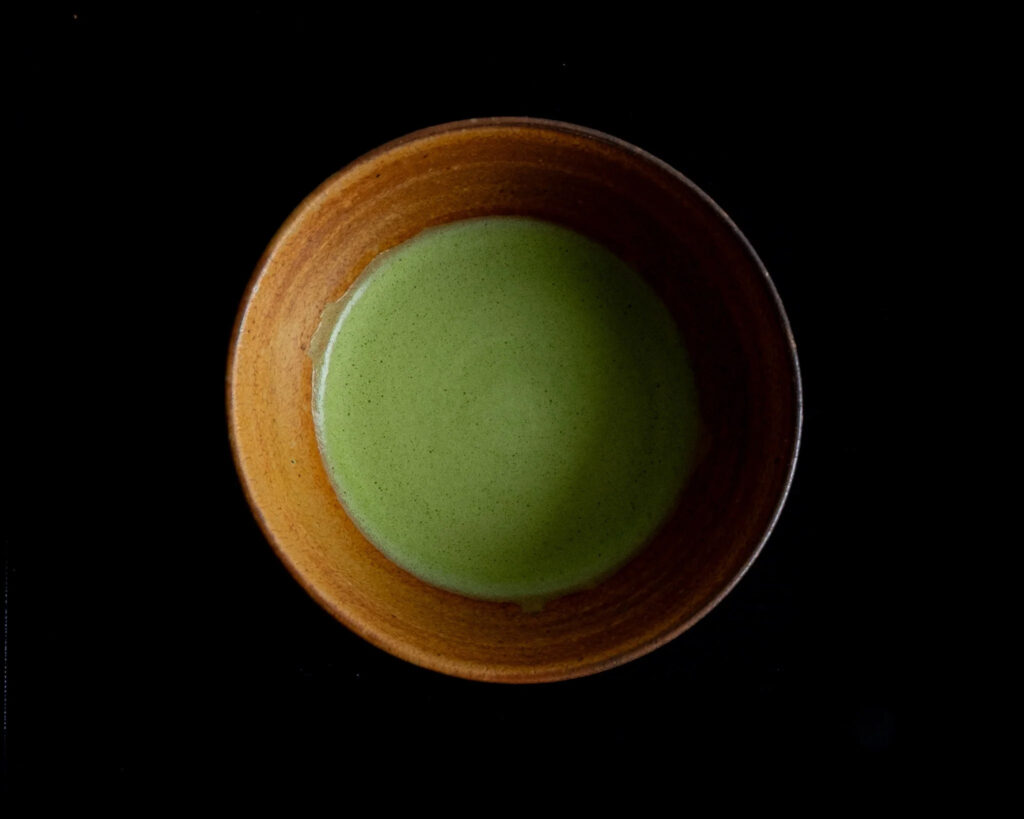
I admire so much what Zach Mangan and the team at Kettl are doing. They’re taking a classic tea-growing country and giving it the platform it deserves. Telling the stories of the farmers behind the tea, but also having fun with tea and matcha as a category (matcha chocolate, anyone?). Their back bar at their Greenpoint location is some of the best tea service you can get in NYC. Their dedicated matcha store, Sen Mon Ten, in Greenpoint: no one comes close to presenting matcha in such a refined fashion to such a wide audience. I imagine most folks attending DWB will have had a matcha latte in their lives. I’m so happy to see matcha, as a tea category, attain such wide success in the market. To me, matcha is like Champagne. Champagne gets to play in spaces most still white or red wines can’t dream of touching. Same thing goes for tea and matcha. It isn’t sencha or gyokuro or da hong pao that you can get at most coffee shops in America these days. And while I can’t always say that the matcha quality you get at many random coffee shops in the U.S. is the best, Kettl is helping to change that by bringing high-quality matcha and other Japanese teas to the widest audience that has ever existed for these traditional products.
NON
(Photo: NON)
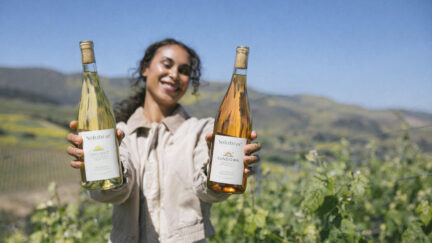
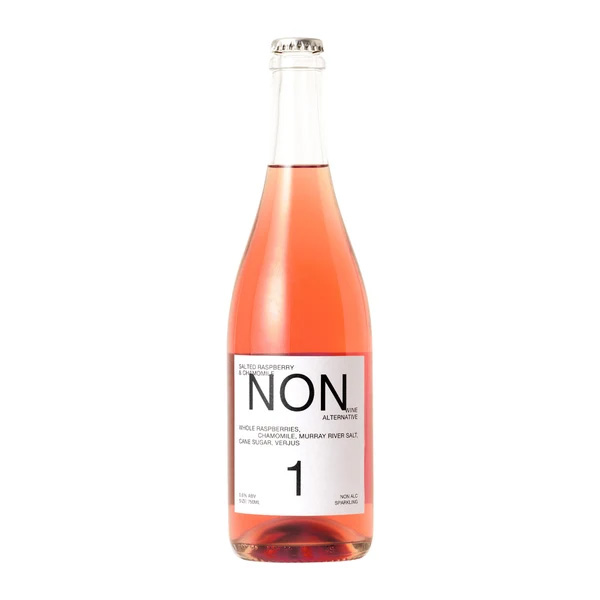
One of my first true loves in the wine alternative category. NON, specifically, the sparkling rosé, opened my eyes to how versatile an NA beverage playing in the wine-occasion space can be. Rosé bubbles, it’s hard to go wrong. It’s festive, it’s aesthetically pleasing. And the aroma and flavor and texture are so captivating, it’s giving “I ordered a glass, but you can leave the rest of the bottle here, please. Thanks.”
One of the funniest things about wine is how often it smells like so many other things besides grapes. Wine is almost the original party trick. “So you’re telling me this beverage I’m drinking here, that smells like feet and cheese and cherries and dirt, not only gets me drunk but came from that grape vineyard over there?” “Correct.” And thus began the ~8,000 year success story of a humble fruit and its cohabitation alongside human culture. NON plays on that in the inverse. I do get the raspberry. I get the chamomile. I get the Murray River salt, but it doesn’t just taste like those things, it comes together to be so much more. It pairs well with barbecue, or Thai food, or a roasted leg of lamb. If I see a bottle of NON1 in ice at a party, I know someone here means business. When it’s by the glass at a restaurant, I usually just order the bottle. Put it on a table alongside 11 bottles of real, fermented grape wine and watch it disappear the fastest. I’m a big fan and I can’t wait to share this one.
Vers’eau
(Photo: Vers’eau)
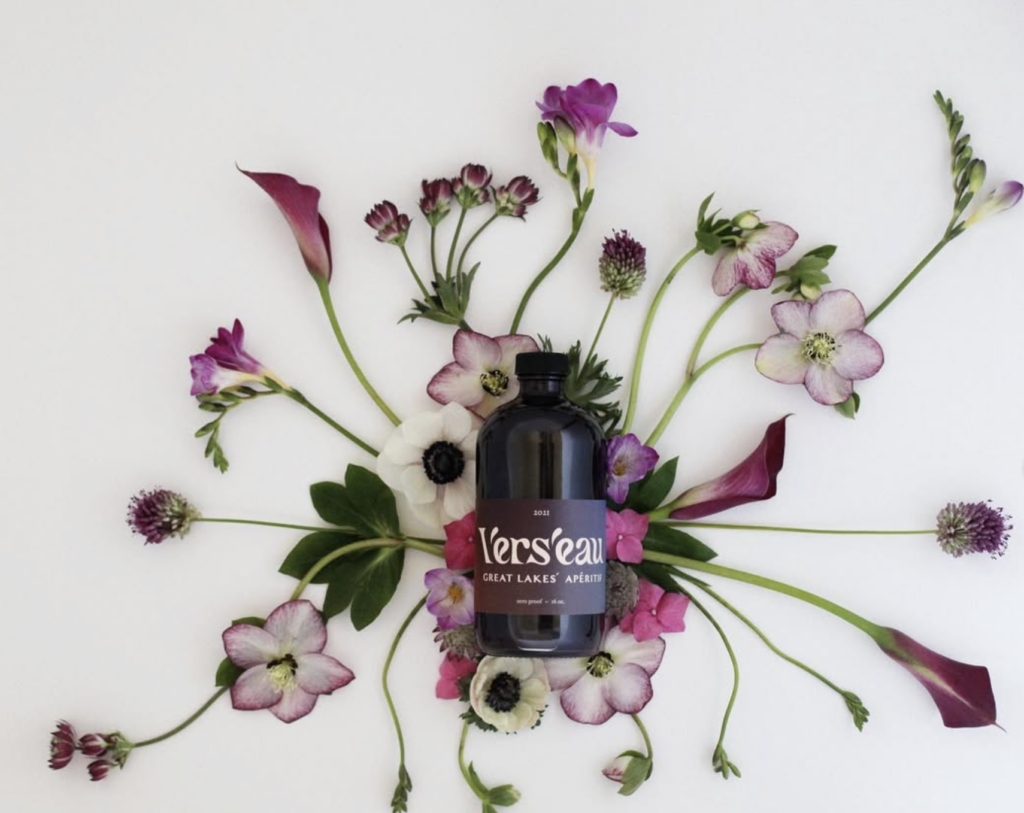
Shout out to my friend Stanton McConnell from undergrad days, who is working his full-time job, in a band, raising babies and bringing this beautiful NA beverage into the world! I was so pleased when he reached out to reconnect and share his latest creation with me. It fills a void in the NA space like nothing else. First, it’s got midwestern roots. And while a lot of great non-alc breweries also hail from the Great Lakes/Midwest area (Go Brewing, Untitled Art’s FLVR, to name a couple), no one is making anything like this. It’s effectively a concentrate of three fruits homegrown in Michigan (cherries, grapes, and elderberries) alongside a unique mix of herbs, roots, and spices that round it out and make it a complex, dynamic, and refreshing base for NA gatherings. My favorite way to drink it is one part chilled Vers’eau to three to four parts chilled sparkling water, in a wine glass. It’s like the most delicious NA lambrusco you’ve never had. It’s zippy enough to be an aperitif, but also textured enough to work well alongside rich, “red wine”-friendly dishes. And that for me is the niche this fills — RED WINE. It’s the holy grail of the NA wine industry. NA red wine is tough. Full stop. And while this is not that, it’s not not that when presented in this way. It’s the chilled red of the NA space, and that is something that has been missing since day 1. I’m champing at the bit to be turning NYC onto this Midwestern bev.
Villbrygg & Cul’Sec
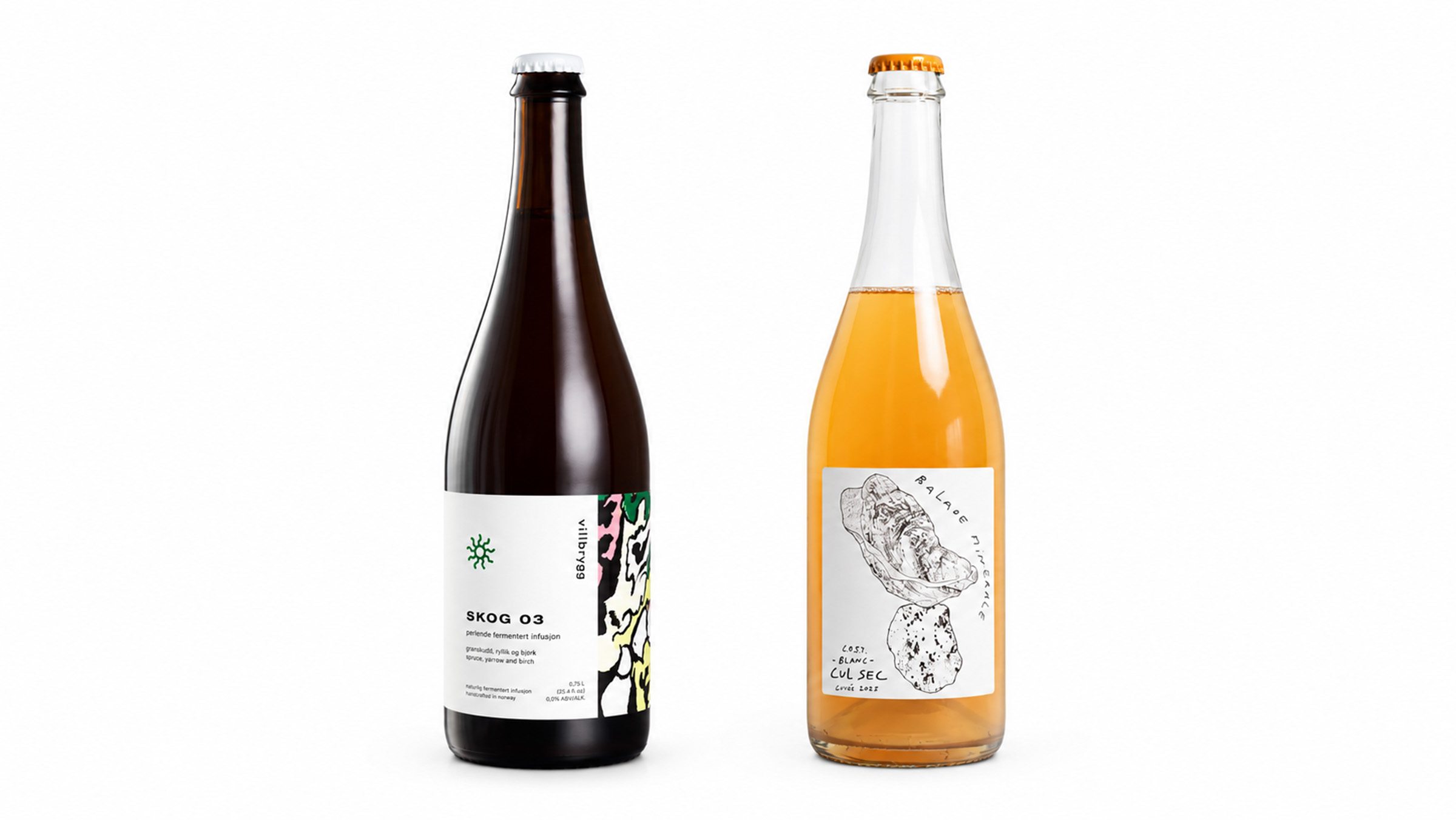
I recently co-hosted a dinner at Chambers, one of NYC’s truest temples to wine and fine northeast U.S. cooking, and it was all non-alcoholic beverages. One course was dedicated to the fine work countries in northern Europe are doing to progress this NA wine occasion category. There are none finer than Villbrygg and Cul’Sec (Shout out to Muri, which is also making amazing moves in this space!) Villbrygg was started by ex-fine dining folks who were (a) seeking more NA bevs in haute cuisine spaces and (b) sick of importing wines from southern Europe to pair with their locally foraged reindeer and sea buckthorn dishes. I get it. What Villbrygg has built is a business that makes ethereal, complex, honest and true expressions of a time and a place and a zeitgeist. Foraged “noro-tropics,” aka things that only grow and taste a certain way as they do in Norway, are picked by an army of local foragers and friends, brewed like a tisane and lightly sweetened. These are transporting beverages that turn casual gatherings into pure elegance and pair nicely from sushi to chicken to cheese course and beyond. I can’t gush enough about how grateful I am that these folks decided to come together and share their brilliance with the world. Thank you, Villbrygg. Keep up the amazing work.
Now for the Dutch. There is something special in the water for these folks at Fruitslagers in the Netherlands to be making Cul’Sec. Unbridled creativity. Pure innovation. Exploration and pushing the boundaries of what NA is, should be, and can be. For better or worse, they mix up their playbook from vintage to vintage. Loved last year’s version? Well, this year they’re making it slightly differently. Similar inspiration, but a new execution. And while product variation can be a four-letter word in the F&B world, that’s exactly the type of organic change many folks love about the wine industry, and certainly within the natural wine industry, and this project feels like it plays most loudly to just that community. From bottle to glass, the vibe is natty wine, yet it would be just as comfortable on a barrel top outside a Parisian wine bar as it would be on a 3-Michelin-star table in New York City. I’d say these are the most challenging products I’ll be pouring, but that’s why I think they’re so important.
If you’re not yet coming to DWB, grab a ticket. If you’re coming, please stop by my table and say hello and taste some of these fantastic tipples.
Follow The Daily Pour:
About The Daily Pour
Founded by Dan Abrams, The Daily Pour is the ultimate drinking guide for the modern consumer, covering spirits, non-alcoholic and hemp beverages. With its unique combination of cross-category coverage and signature rating system that aggregates reviews from trusted critics across the internet, The Daily Pour sets the standard as the leading authority in helping consumers discover, compare and enjoy the best of today's evolving drinks landscape.