Where Does Your Bottled Water Actually Come From?

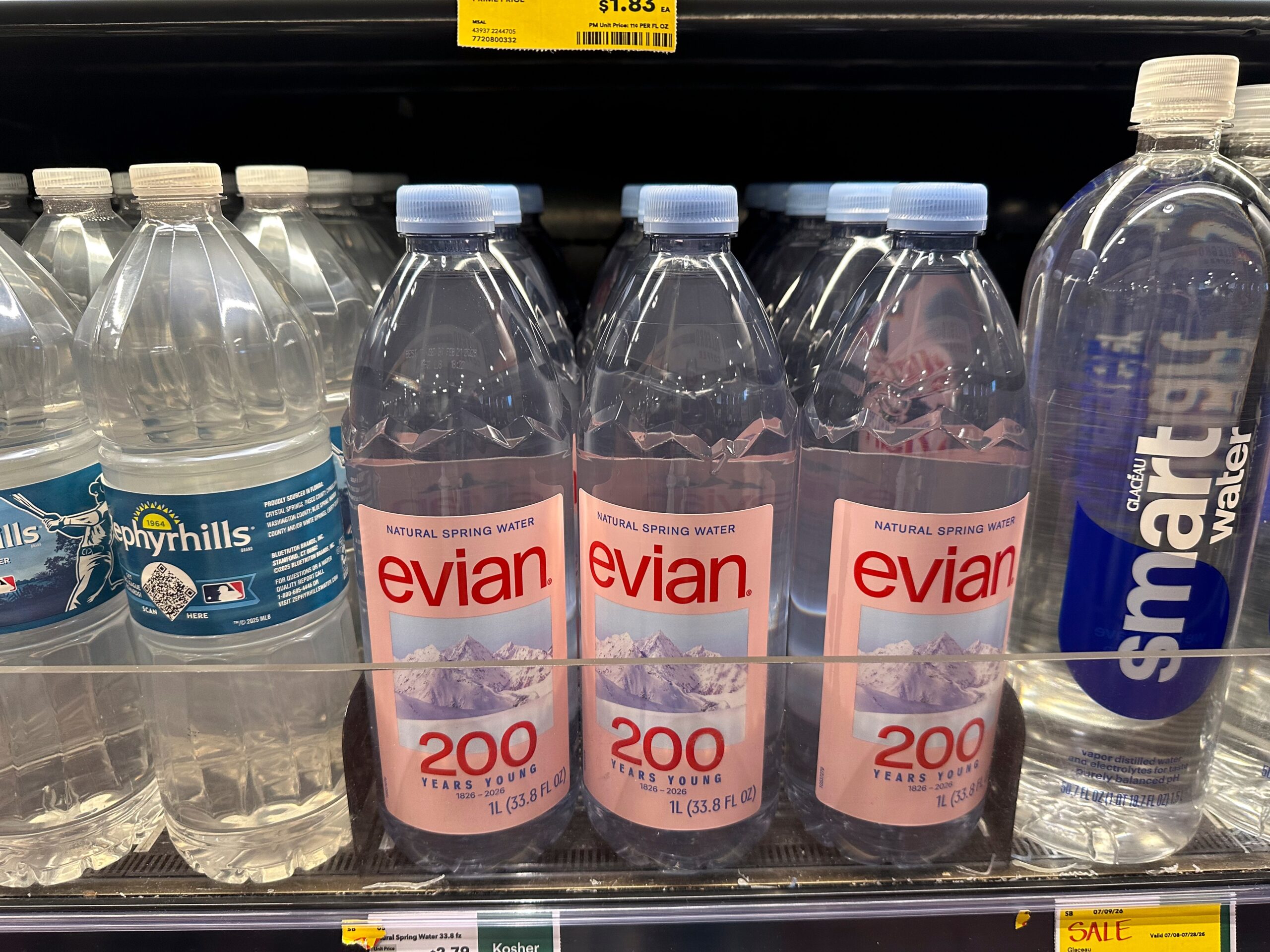
A variety of bottled water brands line supermarket shelves as beverage companies expand offerings to meet consumer demand for hydration products, including purified, mineral and enhanced waters with added functional benefits. Miami, Florida. Photo by (Michele Eve Sandberg/Sipa USA)(Sipa via AP Images)
Some bottled waters come from springs. Others start at the tap.
Of the top-selling still water brands, Fiji, Deer Park and Poland Spring come from natural aquifers or springs. Purified waters include Aquafina, Dasani, Smartwater and Nestlé Pure Life.
Purified waters are usually, but not always, sourced from municipal water (aka tap water). For major brands, that’s rarely a single municipality: Aquafina draws from more than 40 purification sites across the U.S. and Canada.
Starting tap water varies in taste and composition depending on where it originates, but it’s processed to eliminate chlorine, chloramine, fluoride, minerals and organic matter, then usually remineralized for flavor. Chlorinated tap water is first filtered through activated carbon — the same process used in home water filters — then purified by distillation, reverse osmosis or “other suitable processes,” according to the FDA.
Distillation is the process of boiling water, capturing the steam and condensing it back into water, leaving dissolved minerals and organic matter behind. Reverse osmosis forces water at high pressure through a semipermeable, molecular-level membrane. Either process leaves a mineral-free blank slate. Both natural and purified waters are typically disinfected using UV light, ozone gas or both to destroy microorganisms.
Distilled water doesn’t taste pleasant and can feel drying rather than hydrating, so most purified waters are remineralized for flavor. Specific mineral salts are added back and listed as ingredients on the label. Dasani’s label lists purified water, magnesium sulfate and potassium chloride, noting “minerals added for taste.” Smartwater lists vapor-distilled water, calcium chloride, magnesium chloride and potassium bicarbonate.
Aquafina is an exception — it’s demineralized but not remineralized. The mineral content of bottled water is measured in total dissolved solids (TDS). Higher TDS levels generally means more mineral flavor and a heavier mouthfeel. Contrary to claims circulating online, high TDS doesn’t indicate that bottled water is polluted or unsafe.
Pure distilled water has 0 mg/L TDS. Aquafina measures just 4 mg/L; Dasani typically runs around 40 mg/L. Many popular natural waters measure around 200 mg/L.
Natural bottled waters come from springs, artesian aquifers, wells and other sources — filtered and disinfected to some extent, but without added minerals. Brand names often evoke a specific source, but the water itself may come from many different places.
Poland Spring is collected from several springs in Maine, then filtered and disinfected. Deer Park and Saratoga source from multiple U.S. states, and those sources can shift from year to year, along with the ratio and quantity of dissolved solids in the water. If you think your favorite water brand tastes different lately, you might be right.
Fiji water comes from an artesian aquifer in Fiji. “The water is filtered to remove any particulate matter, micron-filtered to remove microbiological particles and ultraviolet light is applied to ensure disinfection,” according to the brand.
Fiji has a TDS of 210; Mountain Valley Spring cites 220-230 mg/L; Poland Spring ranges from 27-84. Among popular still water brands, Evian likely has the highest TDS at 345 mg/L. TDS counts typically appear in brands’ water quality reports online, though some — including Evian and Mountain Valley Spring — print it directly on the label. Natural waters can shift year to year with their sources, but purified waters stay consistent: Though they start from many different (usually municipal) sources, they’re stripped clean and rebuilt from the ground up. “Because of the purification and re-mineralization treatments it receives, Dasani provides a consistent taste regardless of its source,” according to the brand, which reformulated in 2024 to remove added sodium.
While most purified waters (Dasani, Aquafina) target the mass market, one newer brand, Loonen, skews upscale. Sourced from Palomar Mountain Spring in California, it’s filtered through reverse osmosis, treated with UV light, then remineralized to a level “that mirrors the original composition of the high-quality natural spring water,” using calcium chloride, magnesium sulfate, Celtic sea salt and potassium bicarbonate. TDS runs 120-170 mg/L, per the brand’s website.
Loonen’s water “never touches municipal infrastructure,” moving instead through stainless steel systems, and ships only in glass rather than plastic. Its cap does include a plastic liner, which the brand says is PFAS- and BPA-free. The label calls the water “certified clean,” and much of the site echoes that purity claim.
Natural waters stay closer in composition to their original sources but can draw from many different ones. Purified waters don’t always start with tap water, and not all are remineralized afterward. The world of water is a wider one than most realize. What are you going to drink?
Follow The Daily Pour:
About The Daily Pour
Founded by Dan Abrams, The Daily Pour is the ultimate drinking guide for the modern consumer, covering spirits, non-alcoholic and hemp beverages. With its unique combination of cross-category coverage and signature rating system that aggregates reviews from trusted critics across the internet, The Daily Pour sets the standard as the leading authority in helping consumers discover, compare and enjoy the best of today's evolving drinks landscape.