Why Non-Alcoholic Beverage Brands Should Be the Biggest Sponsors in Women’s Sports

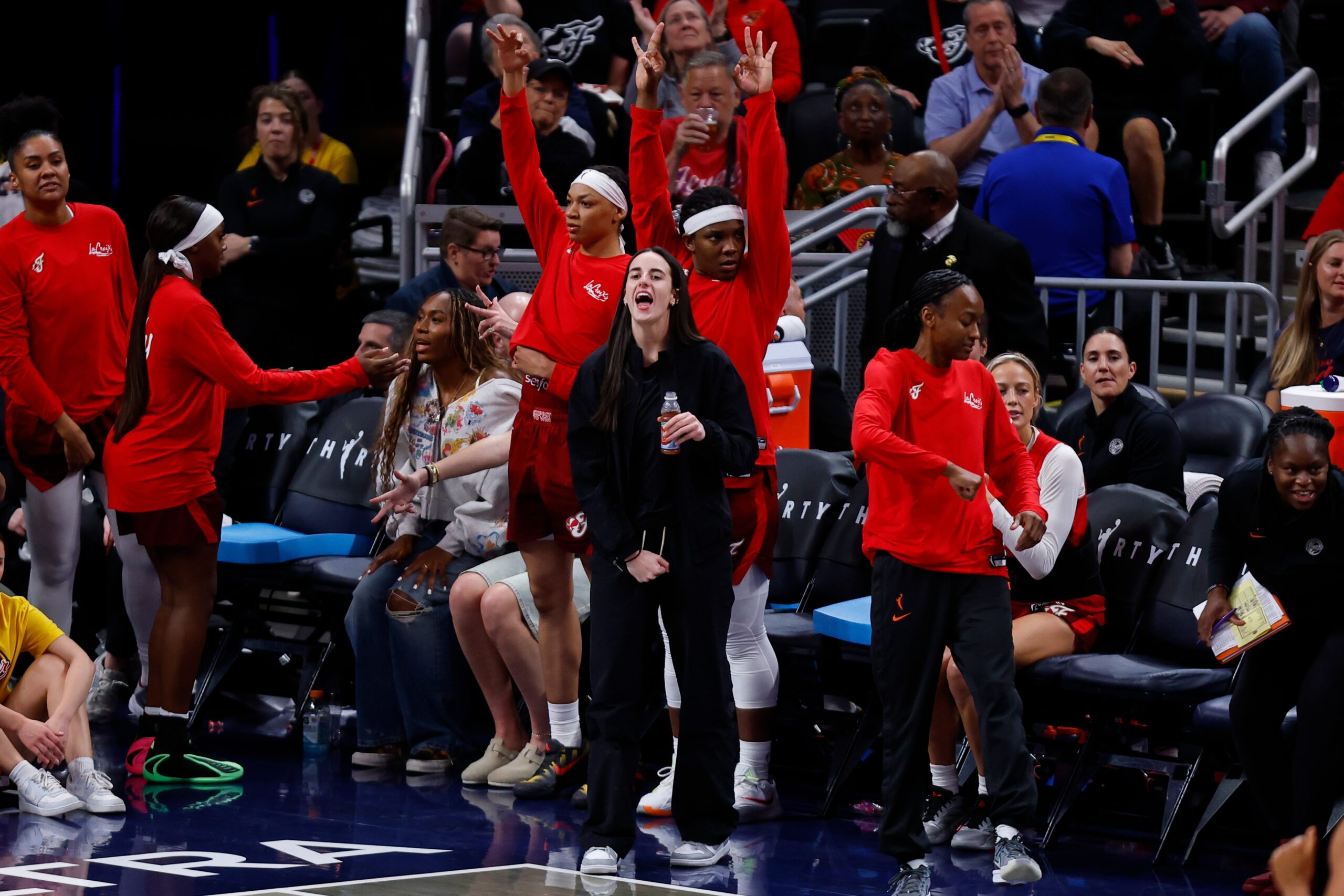
Indiana Fever guard Caitlin Clark and the rest of the bench celebrate the made 3-pointer in the second half of play during a WNBA game between the Portland Fire and the Indiana Fever on May 20 at Gainbridge Fieldhouse, in Indianapolis, Indiana. (Photo: Jeffrey Brown/Icon Sportswire via AP Images)
Women’s sports are entering a new era, one defined by visibility, investment and cultural relevance. WSC Sports reports that videos centered on individual women athletes increased 146.1% year-over-year in 2025 — a signal that audiences aren’t just watching, they’re deeply engaged.
Yet, the social rituals around women’s sports haven’t kept pace. The non-alcoholic and functional beverage space is projected to reach $790 billion by 2030, presenting a major opportunity to redefine how fans, athletes and communities gather — more inclusively and in alignment with the values driving women’s sports forward.
From Olympic watch parties to March Madness, PWHL selling out Madison Square Garden to women’s-only sports bars, these experiences still reflect a legacy sports culture where alcohol is the main event. Shotgunning beers at the tailgate, taking shots during commercial breaks, “grabbing a drink” as the entry point to belonging — does this resonate with female athletes and the fans invested in women’s sports? These women are focused on wellness and health. The pain point isn’t the ritual of celebration; it’s the lack of non-alcoholic and functional beverage options at the venues and spaces where fans already gather.
The non-alc category has already become a must-have, even if not everyone has realized it. Lifestyles of longevity, resiliency and clarity are the epitome of women’s sports culture, and the non-alc industry is a tangible expression of those values. When venues fail to offer curated non-alc options, they lose an entire revenue market of moderating and non-drinking fans — and the loyalty that comes with them.
Several standout brands are already normalizing this shift:
- Mad Flora: A women-owned and -founded amaro without alcohol, perfect for elevated watch parties
- Curious Elixirs: Functional blends with adaptogens, bridging social and wellness
- TRIP: Positioned around performance, mood and recovery
- FABRIC: Proof that THC-infused drinks can scale and resonate with sports culture
- Noughty Wine: A sophisticated non-alc wine brand designed by women for connection without compromise
These brands are also storytellers for women athletes, representing who they are off the field and what they stand for. Partnerships with women athletes (including collegiate NIL deals) send a powerful message to the non-drinking fan, the sober-curious woman, the young girl watching her favorite sport: The woman you admire doesn’t need alcohol. The future looks like a collegiate swimmer repping a functional recovery drink, a WNBA star with her own adaptogen blend, an Olympic rugby player fronting a non-alc aperitivo — and a sold-out stadium with a non-alc menu worth talking about.
Non-alc brands like these are story-tellers for women athletes. They represent who these athletes are off the field, how they move through the world and their values. It’s crucial that these brands begin partnering with women athletes (including collegiate athletes through NIL) because it sends a positive message to the non-drinking fan, the sober-curious woman, the young girl watching her favorite sport: the woman you admire doesn’t need alcohol.
This space is almost entirely unclaimed. Here’s how to change that:
Make Non-Alc a Menu Category, Not a Feature: Four to six curated options with the same intention as alcoholic offerings. If it looks secondary, it will sell secondary.
Build Partnerships Between Teams, Venues, Athletes and Brands: Official non-alc team sponsors, co-branded game-day drinks, sampling with swag at events. The brands that move first will set the standard.
Educate Staff to Sell the Experience: Most staff don’t have the knowledge to sell non-alc. Train them on language that drives behavior: “Are you in the mood for something refreshing, functional or spirit-free?” Language drives behavior; behavior drives sales.
Make It a Ritual, Not Just an Option: A signature non-alc drink endorsed by the athlete (think: Ilona Maher’s Body Check Bellini), “First Period Pour” or halftime specials. Making it a moment is what makes it memorable and desirable.
Design with the Next Generation in Mind: Gen Z is already drinking less. Women’s sports have a unique opportunity to build their fan experience around that reality from the start: prioritizing non-alc in new stadium builds, vendor contracts and sponsorship packages — treating these beverages as core staples, not afterthoughts.
Better beverage programs mean better fan experiences. Better fan experiences drive attendance, retention and sponsorship dollars. Women’s sports and the non-alc movement are each redefining their industries. Together, they can build something entirely new — an ecosystem where culture, community and commerce move in sync.
Follow The Daily Pour:
About The Daily Pour
Founded by Dan Abrams, The Daily Pour is the ultimate drinking guide for the modern consumer, covering spirits, non-alcoholic and hemp beverages. With its unique combination of cross-category coverage and signature rating system that aggregates reviews from trusted critics across the internet, The Daily Pour sets the standard as the leading authority in helping consumers discover, compare and enjoy the best of today's evolving drinks landscape.