The Kratom Problem: Inside Non-Alc’s Most Polarizing Product

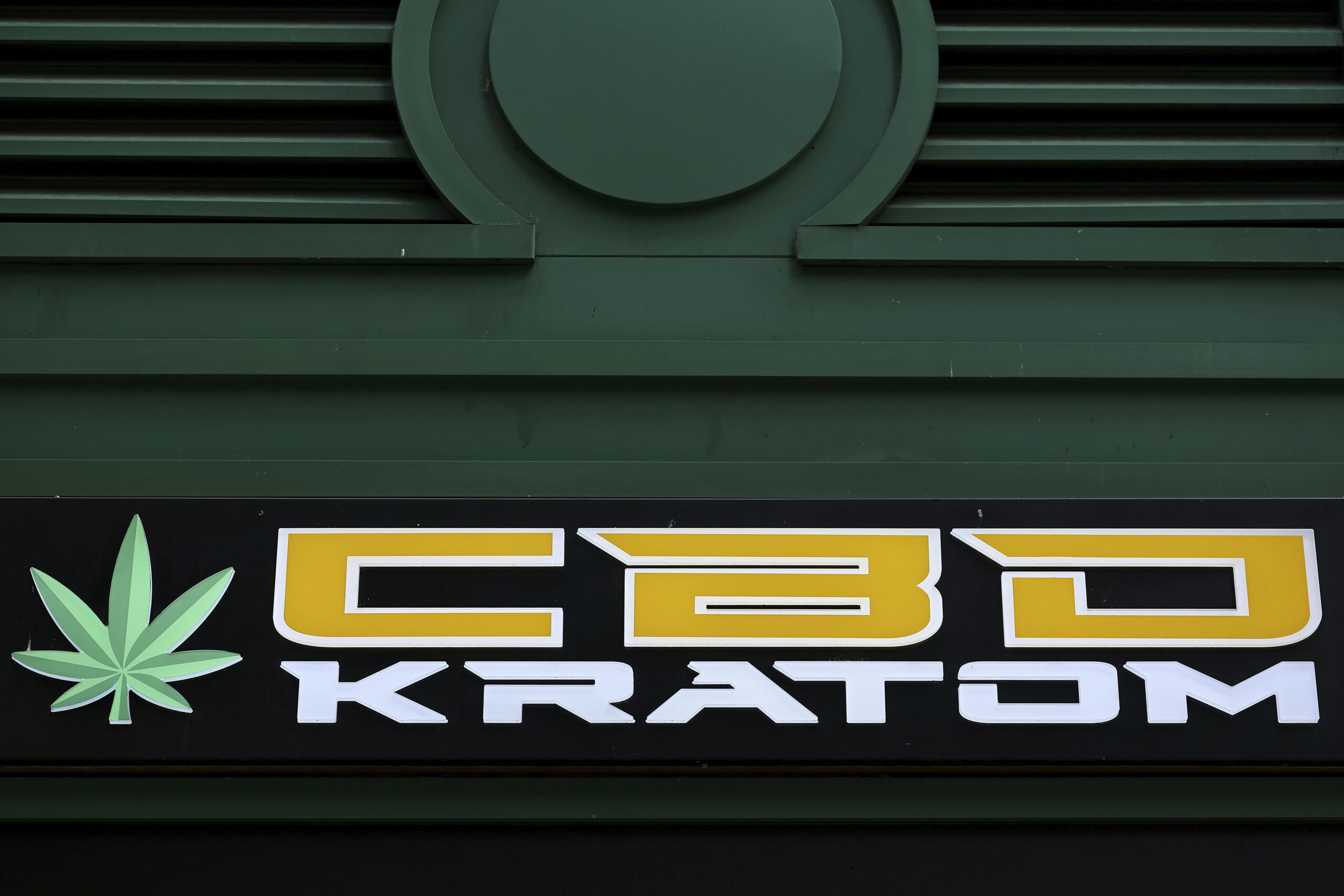
CBD Kratom signage is illuminated outside a CBD Dispensary on Aug. 12, 2025, in Chicago. (Aaron M. Sprecher via AP)
Kratom is having a polarizing moment in the beverage space. And the supplement space. And the gummy space. And the legal space. There’s a lot of discourse about whether this plant-derived product belongs in the rapidly expanding non-alcoholic drink category. Sure, it’s an alcohol alternative, but most industry insiders say there’s no room for a substance like kratom.
The NA industry isn’t necessarily split, but indifferent. Kratom is more of an afterthought, a concept many brands are riding to the bank. Others think it’s an underestimated and underutilized category.
It might seem like sobriety and non-alc go hand-in-hand — and they often do — but an overwhelming majority of people who shop this category still drink alcohol. They also still consume plant substances like cannabis, psilocybin and even kratom.
“That’s where ‘NA’ can get conflated with ‘pro-sobriety,’ and drinks that don’t pass the purity test of the latter category are often scrutinized and maligned by sober voices in the NA space,” says Mark LaFaro, a beverage and cannabis journalist.
What Is Kratom?
Kratom is a leaf that grows on trees indigenous to Southeast Asia, with a consumption history dating back hundreds of years. Laborers in Thailand, Indonesia and Malaysia used kratom to manage pain, reduce fatigue and increase productivity during long workdays. Dutch botanist Pieter Willem Korthals officially “discovered” it in the early 19th century while studying the region’s flora.
Kratom leaves are traditionally consumed in small doses — sipped as tea, pulverized into powder and added to water, chewed like coca leaves or smoked. Studies show kratom’s primary active ingredient, mitragynine, produces different effects depending on dosage. At higher doses, it interacts with opioid receptors and can produce sedative, opioid-like effects. Lower doses are generally associated with stimulation and increased alertness — effects that can be habit-forming for some users.
The rise in kratom products speaks to how industrialization works: People enjoy a thing, so companies learn to mass-produce — and often synthesize — that thing to maximize profits for investors.
Today, the kratom industry generates an estimated $1.5 billion annually in the U.S. Its connection to opioid receptors makes it appealing to some consumers seeking alternatives during opioid withdrawal or chronic pain management.
But kratom is just the latest example of a naturally occurring substance being industrialized for profit, the same way coca leaves became cocaine and opium became OxyContin. People once chewed coca leaves to work more efficiently and relaxed in opium dens the way someone might visit a neighborhood bar for an after-work pint — until manufacturers learned to isolate, concentrate and scale those compounds.
Humans have always sought ways to alter consciousness, improve performance and relieve suffering. The danger isn’t necessarily the plant or the product, but how it’s marketed, sold and regulated. The difference now is industrialization’s obsession with scale.
The Functional Wild West
Much like legislation struggles to keep pace with AI, cannabis and emerging wellness products, kratom often exists in a regulatory gray area. Kratom products, like many “functional” non-alc items, can skirt regulation by marketing themselves as dietary supplements rather than beverages.
“An interesting similarity between THC (hemp-derived, specifically), kava and kratom is the lack of regulatory oversight because of the novelty and gray areas under which some of these substances fall,” LaFaro said. “They’re not subject to the standards or scrutiny of other beverage categories, like cannabis-derived THC beverages or alcohol.”
The key difference: Kratom carries a risk of physical dependence, while THC and kava are associated with lower addiction risk. The picture gets murkier beyond the raw leaf. Many of today’s products contain concentrated extracts or isolated compounds like mitragynine or 7-hydroxymitragynine (7-OH) — a naturally occurring alkaloid that can be significantly more potent than mitragynine itself.
The FDA has repeatedly warned consumers about kratom’s potential risks, while advocates argue the real danger lies in unregulated manufacturing, not the plant itself. The American Kratom Association contends that today’s concerns stem largely from industrialization’s push for stronger, faster-acting products — isolating mitragynine and 7-OH, creating concentrated extracts, or adding other substances that amplify kratom’s effects while increasing risk.
As with any medication, plant or supplement, consult a doctor before using kratom products, especially if you take prescription medications or are on a sobriety journey.
Where Should Kratom Products Live?
Does kratom belong on the same shelf as your favorite NA beer and dealcoholized wine? It depends on who you ask.
Laura Silverman, founder of Zero Proof Nation, says no: “Because it’s opioid-adjacent, it specifically does not belong in the NA space, period. One of the NA industry’s target audiences is sober folks and people in recovery — people who are actively looking for alcohol replacements.”
Other industry experts say it’s up to the consumer. “If it doesn’t have alcohol, and it’s being used as an alcohol alternative, I don’t see why not,” LaFaro said. “It’s going to find a home there, whether we like it or not. So long as retailers are willing to stock it and consumers are willing to buy it, it’s an NA product.”
Retailers like Minus Moonshine, an NA bottle shop in Brooklyn, don’t carry kratom products. “I think using kratom, like everything else, is a personal decision” says Minus Moonshine owner Aqxyl Storms. “We don’t get many inquiries about it, probably because our customers shop for wines, beers and cocktail ingredients” — echoing Silverman’s point that the NA category largely serves people seeking alcohol replacements, not a lab-made buzz.
Kratom is sold nearly everywhere, you just have to know where to look. In New York City, it shows up in 8-ounce cans at bodegas next to iced tea and in gummies and capsules beside the supplements. in on-premise locations, it has an old-school speakeasy vibe: Know the door, know the password and you can have a cold glass of kratom in hand while your buddy sips an NA beer.
It’s also worth noting that, because of this regulatory Wild West, no one who sells kratom on-premise would participate in this story. Several declined to comment publicly, citing ongoing legislative uncertainty — that’s telling in itself.
The debate around kratom reveals a larger identity crisis within the non-alcoholic industry: Is NA simply a category defined by the absence of alcohol? Or is it defined by a shared philosophy around sobriety, recovery, wellness and harm reduction?
For some consumers, those are the same thing. For others, they’re not.
After nearly a decade covering the sober-curious movement, I’ve learned that consumers turn to non-alcoholic products for wildly different reasons — recovery support, ritual, wellness or a buzz that feels different from alcohol. Most want a little bit of everything. The NA category has grown big enough to accommodate all of them, which is exactly why kratom is so polarizing.
For now, the industry seems less interested in drawing hard lines than in watching what happens next. Whether kratom becomes the next cannabis beverage or the next cautionary tale remains to be seen. But one thing is clear: This conversation isn’t really about kratom anymore. It’s about who gets to define wellness, who profits from it, and how many loopholes a product can squeeze through before legislation catches up.
Follow The Daily Pour:
About The Daily Pour
Founded by Dan Abrams, The Daily Pour is the ultimate drinking guide for the modern consumer, covering spirits, non-alcoholic and hemp beverages. With its unique combination of cross-category coverage and signature rating system that aggregates reviews from trusted critics across the internet, The Daily Pour sets the standard as the leading authority in helping consumers discover, compare and enjoy the best of today's evolving drinks landscape.