Trump Escalates Canada Trade War With Alcohol Import Ban

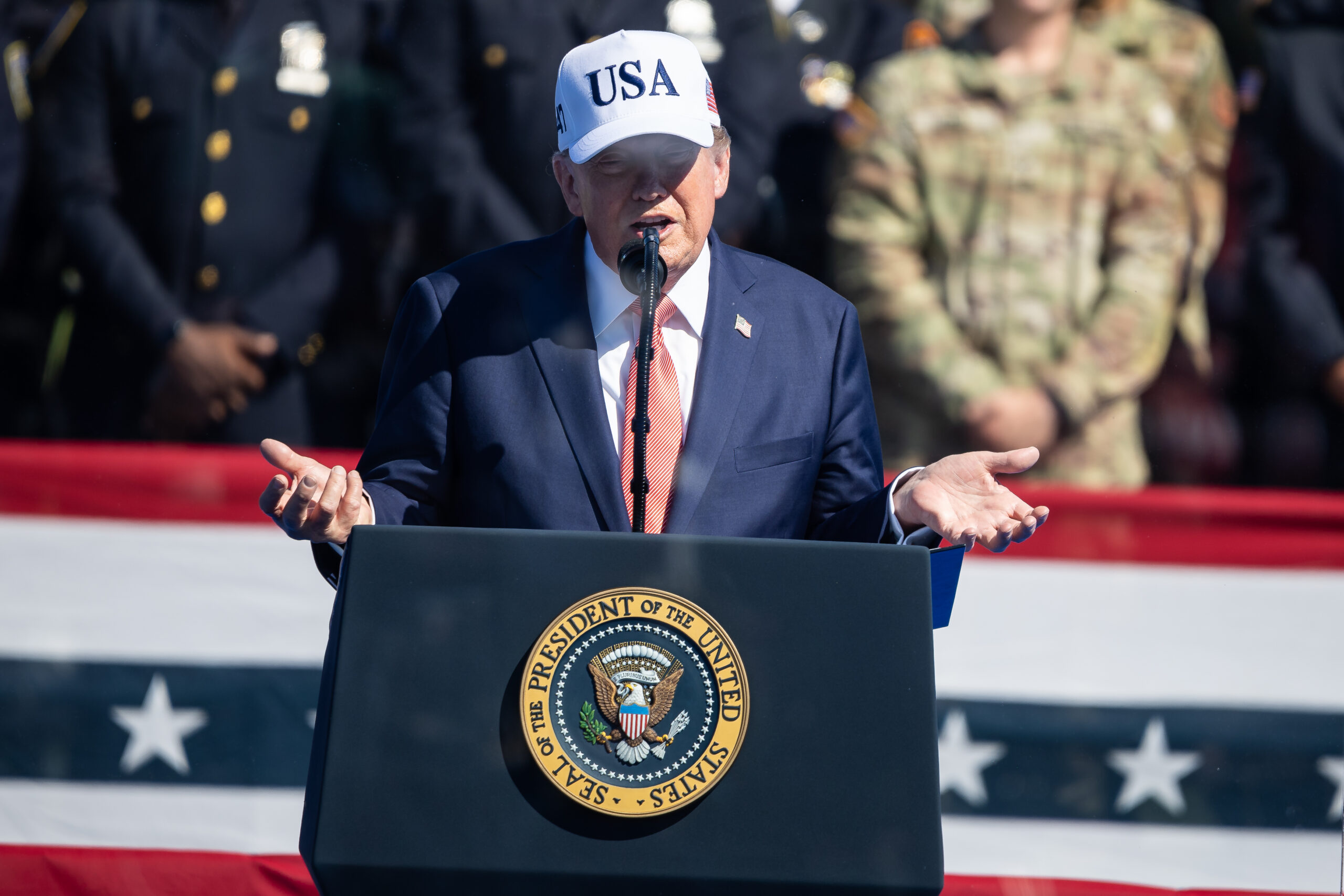
President Donald Trump delivers remarks during a “Steel Across America” event to commemorate the 25th anniversary of Sept. 11, 2001, on the Ellipse near the White House in Washington, D.C. on Sept. 8. (Photo: Francis Chung/POLITICO via AP Images)
The Trump administration will ban certain Canadian alcoholic beverages from entering the United States beginning Sept. 29, escalating an already bitter trade dispute over alcohol between the two countries.
President Donald Trump signed a proclamation Tuesday ordering specified Canadian alcohol products that are currently subject to a 50% tariff to be excluded from U.S. imports beginning at 12:01 a.m. Eastern time on Sept. 29. The ban applies to products listed in an accompanying annex and does not cover every Canadian alcoholic beverage.
The annex covers a wide range of alcohol tariff classifications, including beer, wine, cider, spirits, Scotch and Irish whisky, bourbon, rye whisky, rum, vodka, gin, tequila and mezcal.
What Canadian Alcohol Is Banned?
The annex includes beer made from malt when packaged for direct consumption. Wine categories covered include sparkling grape wine and numerous still grape wines, including products in containers of 2 liters or less, as well as certain larger containers. Some larger-volume wine classifications are covered only when packaged in bottles, cans, boxes, kegs or similar direct-to-consumption containers.
The ban also covers packaged cider, prune wine, rice wine or sake, effervescent wine and other specified fermented beverages.
The spirits section is broad but relies on specific tariff classifications. It includes:
- Pisco and singani
- Certain grape brandies
- Irish and Scotch whiskies
- Bourbon
- Rye whisky
- Other specified whiskies
- Rum and tafia
- Gin and genever
- Vodka
- Liqueurs and cordials
- Bitters
- Slivovitz and other brandies
- Tequila
- Mezcal
Several classifications have limits based on container size or the value of the product per liter, while other classifications are limited to packaged products.
The White House says the product descriptions in the annex are informational and do not independently determine the scope of the action. The applicable Harmonized Tariff Schedule classifications and listed scope limitations control, with questions about individual classifications directed to U.S. Customs and Border Protection.The new restrictions build on Trump’s July proclamation imposing 50% duties on certain Canadian alcoholic beverages.
The new restrictions build on Trump’s July proclamation imposing additional 50% duties on certain Canadian alcoholic beverages.
That earlier action accused Canada of discriminating against U.S. alcohol through provincial and territorial restrictions on American beer, wine and spirits. The administration said those measures disadvantaged U.S. commerce compared with alcohol from other countries.
The additional duties were initially scheduled to take effect Aug. 19 but were temporarily suspended for three days after Canada expressed a commitment to address the issue. The suspension ended Aug. 22, when the 50% duties took effect.
The White House said Canada failed to remove what the administration considers discriminatory treatment of U.S. alcohol.
“On August 21, 2026, Canada reneged on its commitment, ceased negotiating in good faith, and did not remove the discrimination or unreasonable and unequal imposition at issue,” the proclamation reads.
The proclamation specifically points to Saskatchewan’s decision to impose its own 50% levy on U.S. alcoholic beverages, which took effect Sept. 8, as an example of what the administration describes as additional Canadian retaliation.
The proclamation says the administration now considers excluding certain Canadian alcohol products from the U.S. market to be in the interests of the United States and the public.
The new proclamation does not replace the entire 50% tariffs. Instead, certain products are being moved from the 50% additional duty to the import ban, while other Canadian products remain subject to the tariff framework.
A separate proclamation signed Tuesday modifies the scope of Canadian alcohol products subject to the 50% duty. That change takes effect Sept. 15 and specifies which products remain subject to the additional duty and which are removed from that duty. For products covered by the new import ban, those imported before Sept. 29 but not yet withdrawn from a warehouse for consumption before the deadline, remain subject to the 50% duty established under the earlier proclamation.
Follow The Daily Pour:
About The Daily Pour
Founded by Dan Abrams, The Daily Pour is the ultimate drinking guide for the modern consumer, covering spirits, non-alcoholic and hemp beverages. With its unique combination of cross-category coverage and signature rating system that aggregates reviews from trusted critics across the internet, The Daily Pour sets the standard as the leading authority in helping consumers discover, compare and enjoy the best of today's evolving drinks landscape.