American Spirits Industry Responds to Trump’s Canadian Alcohol Ban With Call for a ‘Negotiated Solution’

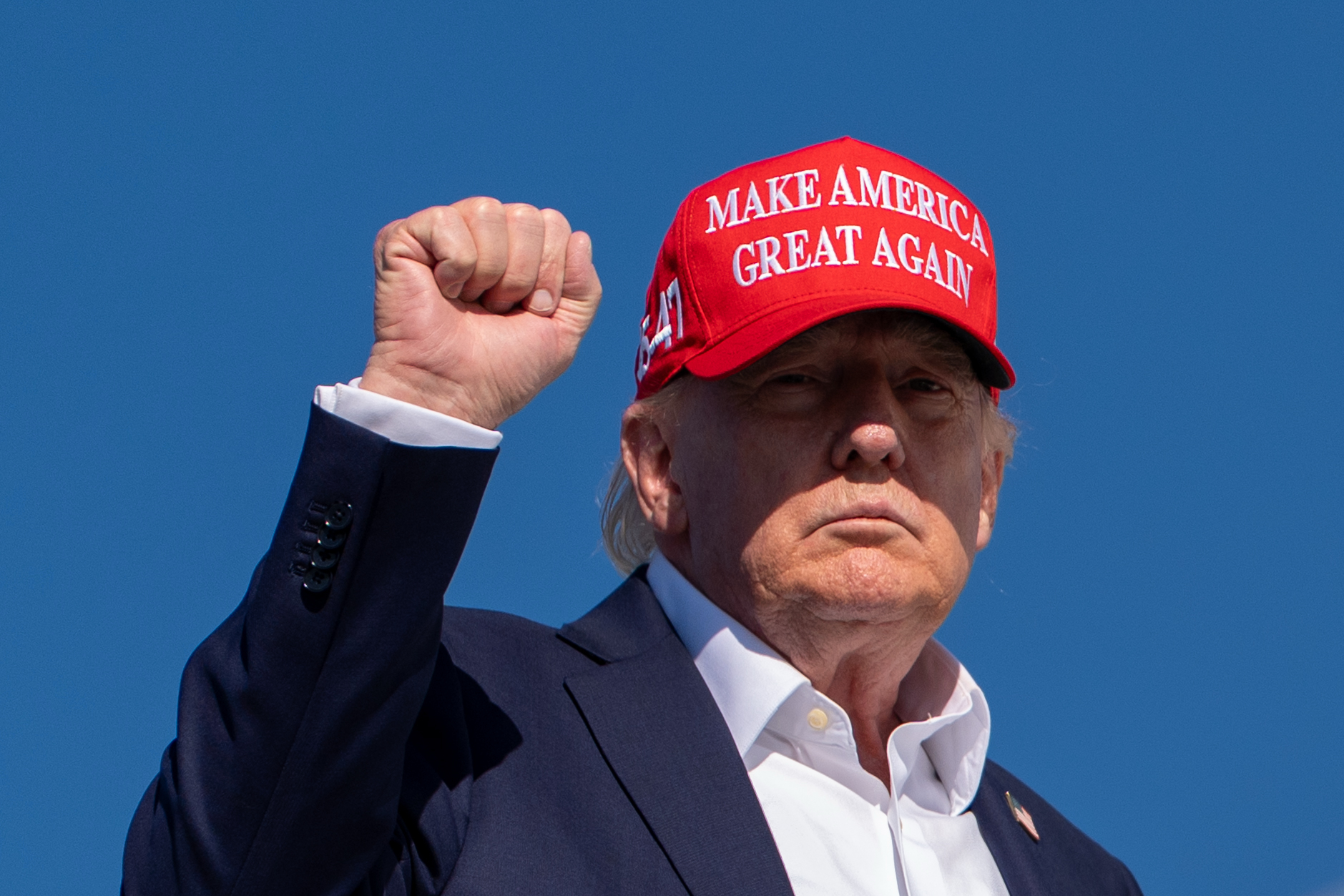
President Donald Trump gestures while boarding Air Force One on Sept. 7 at Morristown Airport in Morristown, New Jersey. (AP Photo/Julia Demaree Nikhinson)
The Distilled Spirits Council of the United States is calling for a negotiated end to the Canada-U.S. spirits trade dispute after President Donald Trump ordered certain Canadian alcoholic beverages excluded from U.S. imports.
Chris Swonger, president and CEO of DISCUS, said in a statement Tuesday night that American distillers have absorbed much of the fallout from the trade fight since Canadian provinces began removing U.S. spirits from retail shelves in March 2025.
“For more than a year and a half, American distillers have shouldered the brunt of this trade dispute,” Swonger said.
The White House announced Tuesday that certain alcoholic beverages classified as products of Canada will be banned from entering the U.S. beginning Sept. 29. The action escalates the 50% tariffs imposed on certain Canadian alcohol imports in August.
Swonger said the provincial restrictions had a major effect on U.S. spirits exports to Canada, which fell more than 70% year over year from the beginning of the retaliatory restrictions in March 2025 through December 2025, according to DISCUS. The trade group said exports to Canada declined from $203 million during March-December 2024 to $60 million during the same period in 2025.
The restrictions began as a Canadian response to U.S. tariffs on Canadian goods. Canadian provinces removed American spirits from retail shelves in March 2025, with Alberta and Saskatchewan later restoring access. DISCUS said those two provinces remain the only ones to have lifted their bans.
Despite the latest escalation, Swonger said DISCUS wants the two countries to negotiate a solution rather than continue adding tariffs and import restrictions.
“We urge leaders on both sides of the border to reach a negotiated solution that restores U.S. spirits to retail shelves throughout Canada and returns the spirits sector to a permanent zero-for-zero tariff framework,” he said.
The “zero-for-zero” verbiage refers to the long-standing treatment of spirits traded between the U.S. and Canada without tariffs. DISCUS has repeatedly called for its restoration since the provincial bans began. In 2024, Canada was the second-largest export market for U.S. spirits, with American producers shipping $221 million worth of spirits to the country, according to DISCUS.
DISCUS reported that U.S. spirits exports overall fell 3.8% in 2025 to $2.37 billion, while exports excluding Canada increased 2.5%.
The latest U.S. action follows months of escalating measures.
The Trump administration imposed a 50% additional duty on certain Canadian alcohol products in August after previously delaying the tariffs for three days. The White House said Canada had not removed what it described as discriminatory restrictions on U.S. alcoholic beverages.
The administration’s Tuesday proclamation says the new import ban will apply to certain Canadian-origin alcoholic beverages beginning at 12:01 a.m. ET on Sept. 29. Products subject to the ban that entered the U.S. before that date but had not yet been entered for consumption or withdrawn from a warehouse will remain subject to the 50% duty instead.
Follow The Daily Pour:
About The Daily Pour
Founded by Dan Abrams, The Daily Pour is the ultimate drinking guide for the modern consumer, covering spirits, non-alcoholic and hemp beverages. With its unique combination of cross-category coverage and signature rating system that aggregates reviews from trusted critics across the internet, The Daily Pour sets the standard as the leading authority in helping consumers discover, compare and enjoy the best of today's evolving drinks landscape.