This App Promises Bottled Water Transparency — But Is It Actually Profiting From Panic?

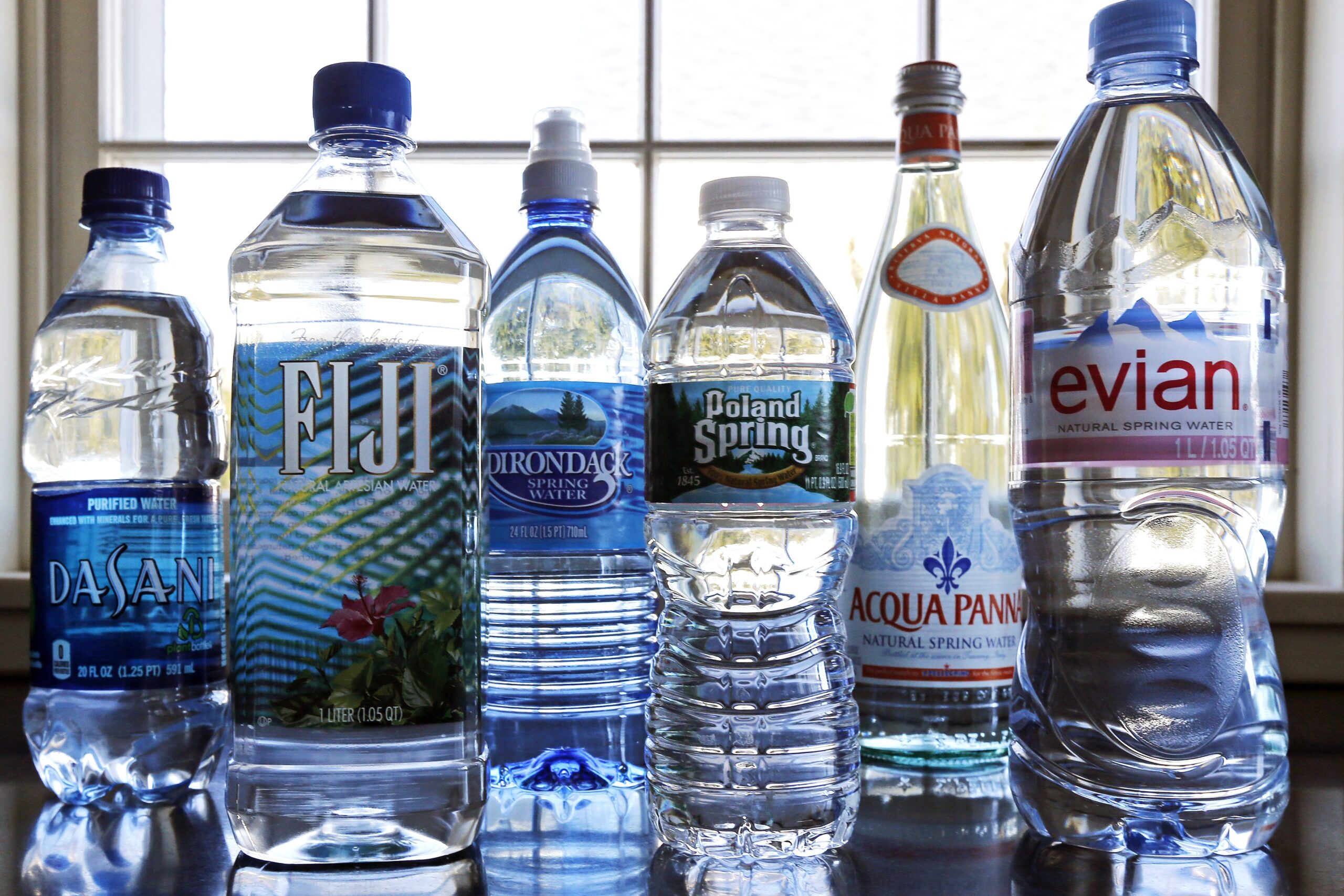
In this March 5, 2013 photo, a selection of bottled waters stands on a kitchen counter in East Derry, New Hampshire. (AP Photo/Charles Krupa)
Water fear has become a business. Apps, influencers and subscription services have discovered that alarming content about what’s in your water converts extremely well. Frightening numbers get shared, brands get avoided, and distilled water flies off shelves. Some of this scrutiny is useful, but when the methodology behind those scary scores is opaque, commercially incentivized and scientifically imprecise, the result can be panic dressed up as data. Oasis is the clearest example of this problem right now.
A Useful Idea Has Turned Into a Fear Product
Health app Oasis, founded in 2024 by Cormac Hayden, deserves credit for forcing some semblance of transparency in a bottled-water industry that too often hides behind branding and vague purity claims. Oasis, however, is more opaque than you may initially think once you look into what business it’s really in: selling you a subscription.
The app says it offers independent product testing, charging users in order to fund expensive lab work; its current App Store listing says Oasis Pro costs $47 per year. But Oasis also frames the market in starkly adversarial language, telling users they live in a world of products that “poison us.” Oasis also runs an affiliate program, paying 20% of membership costs to users who refer subscribers. None of that proves bad faith. It does, however, create an obvious commercial incentive for alarming content to spread, convert and keep users engaged. Sound familiar?
The Perfect Example: Cascade Mountain
Take Cascade Mountain Spring Water — an excellent everyday lower-mineral spring water and, I’d argue, the most compelling potential competitor to Mountain Valley in the glass-bottle spring water space. On the front page of Oasis, Cascade Mountain scores 38/100 and appears in the red. Cascade Mountain’s own published analysis reports arsenic as “ND” (non-detectable) under EPA parameters, with a detection limit of 0.005 mg/L against an EPA primary standard of 0.010 mg/L. The Oasis page for this water shows arsenic at 0.0007 mg/L and labels it “180x” over its comparison threshold. That looks catastrophic until you ask: 180 times over what? Oasis itself notes the comparison uses a California Office of Environmental Health Hazard Assessment benchmark rather than the EPA standard. This is confusing for the average app user or social media scroller who sees flashing red numbers, clicks past, and then unconsciously reaches for distilled water in the grocery aisle a few days later. Don’t do that; purity is a myth on all fronts.
This distinction matters enormously. OEHHA’s Public Health Goals are not regulatory standards. For carcinogens, they’re typically set at a one-in-one-million lifetime excess cancer risk over 70 years. For arsenic, OEHHA’s PHG is 0.000004 mg/L, while California’s Maximum Contaminant Level is 0.01 mg/L. EPA’s enforceable standard is also 0.01 mg/L, and the FDA’s bottled-water arsenic standard is 0.010 mg/L. Cascade Mountain’s reported arsenic level sits far below every enforceable federal and California standard, even while it exceeds the more conservative public-health goal. Emerging research increasingly links trace levels of arsenic to killing cancer cells. Perhaps there’s a reason nature produces certain trace minerals in water.
Common foods naturally contain arsenic at levels equal to or far exceeding those in the waters Oasis criticizes. Rice can contain inorganic arsenic in the 50–250+ ppb (parts per billion) range; seafood often runs into the thousands of ppb, and certain seaweeds go even higher. Will you stop eating sushi? I haven’t, and a California roll sounds pretty good right now. Maybe I should check Oasis first to see if the Dragon roll is safer.
The source report Oasis links to explicitly states its HGL is a “health protective, non-enforceable” benchmark. The EPA itself says drinking water may reasonably contain small amounts of contaminants and that their presence doesn’t necessarily indicate a health risk. If consumers are going to be confronted with frightening multipliers, they deserve to know whether a number exceeds a legal limit, a non-binding target or simply the most conservative benchmark ever published. This is just water — quite literally the tip of the iceberg. Just wait until someone runs the same analysis on the 55-ingredient fast food chicken sandwich you eat twice a week. Let’s test the arsenic in the lemonade next. Or better yet, an Arnold Palmer. Now I’m getting thirsty!
Natural Waters Are Not Supposed to Look Like Blank Lab Samples
Spring water and purified water are not the same product. Under FDA rules, spring water must come from an underground formation that flows naturally to the surface and be collected at that source. Purified water is produced by distillation, deionization, reverse osmosis or similar processes, often from municipal sources. Different products, different tradeoffs.
This is why drinking-water law regulates concentrations within enforceable standards rather than expecting every natural spring to look like a laboratory blank. Oasis’s own methodology quietly acknowledges part of this: spring, aquifer and glacial water receive no source penalty, while municipal water gets -15 and unknown-source water gets -25. But the same system then drives scores down through logarithmic penalties tied to “amount vs. guideline” and classifies anything below 60 as “Very Poor,” essentially suggesting users avoid those waters. It is a significant leap to go from “this water contains detectable constituents measured against a conservative benchmark” to “avoid this water.”
There’s also a deeper accuracy problem worth unpacking. On Oasis’s Cascade Mountain page, one entry appears as “Strontium-90” at 0.178 mg/L, described as a radioactive fallout isotope. But the linked lab report shows total strontium at 0.17795 mg/L, tested using EPA Method 200.7.
Strontium is a naturally occurring mineral found in rocks, soil and groundwater all over the world. It’s in many foods we eat every day, including leafy greens, dairy and seafood. Stable strontium — the kind measured in that lab report — is not radioactive. It’s simply a dissolved mineral, the same category as calcium or magnesium, and at moderate levels it’s considered harmless. Strontium-90 is something else entirely — a radioactive isotope produced by nuclear fission, associated with nuclear weapons testing and reactor accidents. It does not occur naturally in meaningful amounts, and it requires a completely different testing method to detect.
EPA Method 200.7, which the lab used, is a standard procedure for measuring metals and trace elements in water — think calcium, iron, zinc. It is not designed to detect radioactivity. The EPA method for radioactive strontium in drinking water is Method 905.0, a radiochemical procedure. These are not interchangeable. So what the lab measured was a naturally occurring mineral, and what Oasis labeled it was a radioactive fallout isotope.
That is not a minor semantic slip. When a platform is shaping brand reputations and triggering public fear — especially with how viral water content has become — the distinction between a dissolved element and a radioactive isotope has to be clear cut.
The Microplastics Story Cuts Against Oasis’s Packaging Dogma
The packaging side of the app isn’t much better. Oasis gives glass a zero-point penalty and calls it the “best option” with “no leaching or microplastics,” while assigning steep penalties to PET plastic for nanoplastics and antimony leaching. Yet, a 2025 paper in the Journal of Food Composition and Analysis found that, in a dataset of beverages sold in France, the most contaminated containers were glass bottles, with caps suspected as the primary source, as many particles matched the color and polymer composition of the outer paint on those caps. That doesn’t mean plastic bottles are harmless, but it does show that the real world is more complex than “glass good, plastic bad.” Closures, coatings, filling lines, abrasion and handling all matter. Concern is justified. Certainty is not.
What Real Water Transparency Would Look Like
The answer isn’t a multi-level marketing water filter scheme, a blanket pass for big purified-water players, a reverse osmosis system and a shrug, or a dismissal of independent testing. The answer, however straightforward, is a commitment to truth from everyone involved.
Brands that sell spring water need to show the source, the treatment and a current lab report published at least annually, since a living source can fluctuate. If a product is municipal-source purified water, say so clearly rather than hiding behind terms like “alkaline” or “electrolytes for taste.” And if an app is going to translate chemistry into a moral score, it must distinguish legal limits from health goals.
Water is too important for tribalism and too nuanced for panic. No natural water is perfect, and almost any living water source beats a purified municipal one in my view. The goal should be transparent sourcing, better labeling, frequent testing and more competition, not scaring people away from high-quality spring and mineral waters that still reflect the geology they come from. If Oasis wants to move the category forward, it should uplift brands and sources rather than spread fear through the selective presentation of data. Based on the comments on their posts lately, it seems many people feel the same way.
Follow The Daily Pour:
About The Daily Pour
Founded by Dan Abrams, The Daily Pour is the ultimate drinking guide for the modern consumer, covering spirits, non-alcoholic and hemp beverages. With its unique combination of cross-category coverage and signature rating system that aggregates reviews from trusted critics across the internet, The Daily Pour sets the standard as the leading authority in helping consumers discover, compare and enjoy the best of today's evolving drinks landscape.