Q&A: Meet David Nutt, the Professor Who Ranked Every Drug by Societal Harm — and Put Alcohol First

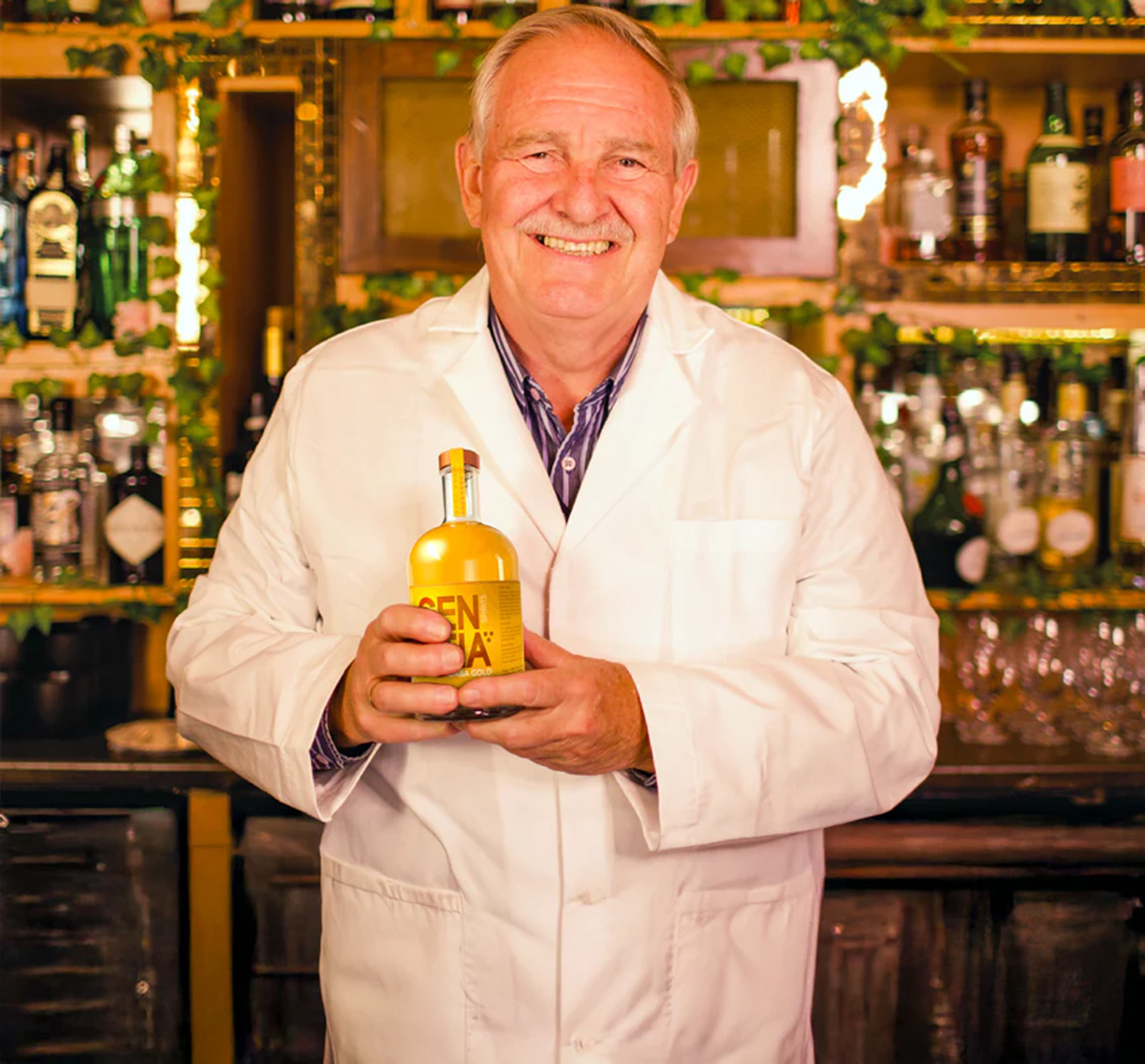
Professor David Nutt poses for his brand, Sentia. (Photo: Sentia)
Named by the Evening Standard as one of the top 100 people shaping London in 2025, Professor David Nutt has authored over 500 research papers and more than 30 books. One of the world’s foremost experts on alcohol and its effects on the brain, he co-founded GABA Labs and leads its research and development — with a simple yet powerful goal: to make drinks that help humans connect safely, naturally, and joyfully.
About Professor Nutt
After first training as a doctor, Professor Nutt built a track record in alcohol research during two years at the National Institute on Alcohol Abuse and Alcoholism in the United States, where he studied the biochemistry, pharmacology, and clinical science of alcoholism. In 2008, back in the UK, he was appointed Chair of the government’s Advisory Council on the Misuse of Drugs — a role that ended in 2009 when he was dismissed for publicly challenging national drug policy.
Among his warnings at the time was what he called an alcohol “time bomb,” according to Jesus College, University of Cambridge. He believes history has borne him out: Alcohol is now the leading cause of death in men under the age of 50 and, he argues, will soon become the leading cause of death in women under 50 as well.
Professor Nutt is the scientist behind Sentia, a botanical GABA Spirit and the first consumer product to emerge from GABA Labs. He continues to lead the conversation on drug science and human wellness.
Professor Nutt co-founded GABA Labs in 2016 with a vision of bringing more choices to adult social drinkers — creating a drink that delivers the positive feelings people seek from alcohol without the downsides. The science targets specific GABA receptors in the frontal part of the brain responsible for managing relaxation and socialisation.
We sat down with Nutt for a Q&A:
What’s life like for you outside of work?
I suppose I don’t really stop working. I write books, record podcasts, and spend a lot of time communicating science to the public. Translating complex ideas into accessible language is something I feel strongly about.
But outside of that, I play Scrabble (quite competitively) and I walk my dogs every day. That’s non-negotiable. Throwing a ball for them is a good counterbalance to thinking about drugs and policy all day.
Who were you as a young man? What led you toward this career?
I’ve written about my childhood in my book, but I was always curious about how the brain works. What fascinated me early on was the idea that our thoughts, emotions, and behaviors could be shaped by biology, and specifically by chemistry.
That curiosity naturally led me toward psychopharmacology.
For those unfamiliar, what exactly is a psychopharmacologist?
A psychopharmacologist studies how drugs affect the brain: particularly behavior, consciousness, mood, memory, and addiction.
When I was training, one of the pivotal discoveries shaping the field was the understanding that the brain is fundamentally a chemical organ, not just an electrical one. Neurons communicate through chemicals (neurotransmitters) and drugs can modify those chemical systems.
By studying how drugs change brain chemistry, we can learn how the brain itself works. Importantly, many drugs are therapeutic. They can enhance or block problematic transmitters and help treat disorders like depression, epilepsy, or anxiety. So psychopharmacology isn’t simply about recreational drugs, it’s about understanding and improving mental health.
What is the biggest misconception the public has about alcohol?
The biggest misconception is that alcohol isn’t really a drug.
Because it’s legal and culturally embedded, people tend to minimize its risks. That minimization has been reinforced over the years by parts of the drinks industry promoting claims that alcohol is good for you, such as the so-called “French paradox.” Those health claims have largely been debunked.
Alcohol is a drug. And like all drugs, it carries risks.
You concluded in your harm framework that alcohol is the most damaging drug overall. How did you reach that conclusion?
We developed a structured methodology to assess harm. We identified 16 different ways drugs cause damage, nine harms to the individual user (including death and disease) and seven harms to society, such as healthcare costs and social disorder or violence.
We then scored 20 drugs (legal and illegal) against those criteria.
Alcohol ranked as the most harmful drug overall in the UK, a finding that has since been replicated in other Western countries. It’s important to clarify that alcohol is not the most harmful drug to the individual user, substances like fentanyl, heroin, and crack cocaine are more dangerous at that level.
But because so many people drink alcohol, the total societal harm is enormous. That is why it ranks first overall.
What prompted you to begin ranking drugs in the first place?
Drugs are legally classified in schedules and classes that determine penalties. I wanted to know whether that system was evidence-based.
When I looked at sentencing data in the UK, I discovered that for simple possession, MDMA resulted in some of the longest prison sentences, despite the fact that at the time there were very few deaths associated with it.
That discrepancy suggested the classification system was driven more by moral judgments (particularly objections to people “having fun”) than by scientific assessment of harm. That concerned me.
You were dismissed as the UK government’s chief drugs adviser. Why?
I was sacked for stating publicly that drug laws were not evidence-based. The government’s position was that such statements might encourage people to disregard the law.
But my point was straightforward: if laws are not grounded in evidence, that is a problem. In some parts of the world, people are executed for cannabis possession. Beyond the ethical concerns, prohibition also impedes research. It makes it extremely difficult to properly study substances like cannabis or psychedelics for medical purposes.
Science should inform policy, not the other way around.
Do you believe the illegal status of drugs is the biggest barrier to therapeutic progress with MDMA and psychedelics?
There’s no doubt about it.
Illegality increases the cost of research (sometimes by tenfold) and massively delays clinical trials. For years, institutions like the U.S. National Institute on Drug Abuse primarily funded research into harms rather than therapeutic uses.
As a result, we risk missing enormous therapeutic potential. MDMA, for example, has shown promise for PTSD. Psychedelics may help with depression and addiction. But if the regulatory environment makes research prohibitively difficult, progress slows dramatically.
With cannabis legalization gaining ground, do you think psychedelic reform will accelerate?
We’re already seeing aspects of that. States like Oregon have adopted models allowing psilocybin for supervised use, somewhat analogous to early medical cannabis frameworks.
What’s crucial now is that governments rigorously study these experiments. If properly evaluated, I suspect we’ll see measurable improvements in mood, resilience, productivity, and well-being.
But we need data (not ideology) to guide the next steps.
You’ve developed Sentia, a functional alternative to alcohol. Do you envision a future where drinks like this replace alcohol in social settings?
My ambition is not to replace alcohol, it’s to give people a choice.
Ideally, I would like it to be a requirement that any bar serving alcohol also offers credible functional alternatives. For centuries, alcohol has been the default social lubricant. But it need not be the only option.
We’re already seeing a decline in alcohol consumption among younger generations, which has prompted parts of the drinks industry to reconsider their future. Some companies are now exploring functional alternatives.
I believe we’re moving toward a world where alcohol, alcohol-free options, and functional alternatives stand side by side. The key is freedom of informed choice.
Follow The Daily Pour:
About The Daily Pour
Founded by Dan Abrams, The Daily Pour is the ultimate drinking guide for the modern consumer, covering spirits, non-alcoholic and hemp beverages. With its unique combination of cross-category coverage and signature rating system that aggregates reviews from trusted critics across the internet, The Daily Pour sets the standard as the leading authority in helping consumers discover, compare and enjoy the best of today's evolving drinks landscape.