This American Distiller Rebuilt Sales by Moving to Canada After Tariff Fallout


(Photo: Phillips Distilling)
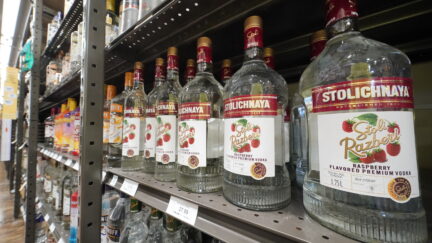
A Minnesota distiller behind one of Canada’s most recognizable party liqueurs says it was forced to move production north of the border after retaliatory liquor bans tied to the U.S.-Canada trade war wiped out most of its business in the country.
According to BBC, Phillips Distilling Company lost roughly 70% of its Canadian business after multiple provinces stopped selling American-made alcohol in response to tariffs imposed by President Donald Trump. The company’s brightly colored Sour Puss liqueur brand was hit especially hard because Canada represents the vast majority of its customer base.
CEO Andy England told BBC the situation became “a disaster” almost immediately after provinces began pulling U.S. liquor from store shelves in spring 2025.
The company responded by shifting part of its production to Canada through a manufacturing agreement with Montreal-based Station 22. Production began moving north later that year after it became clear both the tariffs and provincial liquor restrictions were likely to continue.
The strategy appears to have worked.
Phillips products have since returned to shelves in several provinces, with Quebec reportedly among the first markets to allow Sour Puss back into stores after Canadian production began.
England told the BBC the move effectively transformed the company’s standing in the market.
“We produce and sell in Canada,” he said. “We have, I think, convinced all of the provinces to take back some of our products, and we’re on the road to recovery.”
The dispute stems from ongoing trade tensions between the United States and Canada. Beginning in 2025, provinces including Ontario, Quebec and British Columbia stopped selling most American alcohol products as retaliation against U.S. tariffs targeting Canadian industries including metals, lumber and automotive manufacturing.
Because Canadian alcohol sales are largely controlled by provincial governments, officials were able to quickly remove U.S. products from shelves. As of May 2026, only Alberta and Saskatchewan still broadly allow American alcohol sales under fully privatized retail systems.
The BBC noted Phillips Distilling was uniquely positioned to relocate production because Sour Puss is not geographically tied to a protected category like Kentucky bourbon or California wine.
The company’s rapid shift into Canadian manufacturing also highlights how some alcohol brands are restructuring supply chains as trade tensions continue to disrupt cross-border beverage sales.
For Canadian consumers like Quebec resident Stephanie Intrevado — who told the BBC she collects Sour Puss bottles and merchandise — the return of the brand was welcome news after months of uncertainty about whether the liqueur would disappear entirely from stores.
Follow The Daily Pour:
About The Daily Pour
Founded by Dan Abrams, The Daily Pour is the ultimate drinking guide for the modern consumer, covering spirits, non-alcoholic and hemp beverages. With its unique combination of cross-category coverage and signature rating system that aggregates reviews from trusted critics across the internet, The Daily Pour sets the standard as the leading authority in helping consumers discover, compare and enjoy the best of today's evolving drinks landscape.