One Bottle After Another: The Perfect Liquor Pairing for Each 2026 Best Picture Nominee

Let’s be honest — the Academy Awards are a three-hour endurance test disguised as a celebration of great cinema. Though we’re as excited as anyone else to see Conan O’Brien return to the big stage, there’s no denying that the night can be a bit of a slog before it ends on a high note. Enough ads to rival the Super Bowl; speeches cut short by tedious play-off music; empty platitudes; and so, so many bad jokes.
If ever there was an occasion to open a good bottle of liquor, the Oscars are it. 10 Best Picture nominees means 10 bottles, so grab a bucket of popcorn and buckle down for some delicious (though groaningly cheesy) spirit pairings.
Sinners – High Wire Jimmy Red Sweet Mash Bourbon
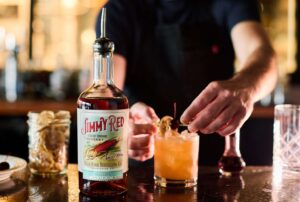
(Photo: High Wire Distilling)
Alcohol flows through the veins of Ryan Coogler’s supernaturally excellent “Sinners,” a film in which corn liquor is mentioned just about as much as the word “vampire.” So why not have both? Distilled in Charleston, South Carolina, High Wire Jimmy Red Sweet Mash Bourbon is made using 100% Jimmy Red corn, a magenta-hued heirloom grain grown for decades on James Island and nearly lost forever. Just two ears survived after the last known grower passed away; through years of painstaking work, High Wire rescued it from extinction. The resulting whiskey is nutty, sweet and mineral-forward on the nose, with an unusually creamy mouthfeel owed to the corn’s extraordinarily high oil content. Rest assured — it may look like blood, but it certainly doesn’t taste the part.
Marty Supreme – Smirnoff Vodka

(Photo: Smirnoff)
Yes, you heard us right! Though Smirnoff is today best known for dorm room party shots and brightly flavored spinoff products, the brand got its big break in the early 1950s thanks to the efforts of Don Draper types in New York City. Advertisers pitched Smirnoff as a form of “white whiskey,” capitalizing on the premium appeal of aged liquor at a time when vodka was thought of as little more than a dubious foreign export (hard to believe, we know, but it wasn’t until 1962 that James Bond sipped his first martini on screen). Dare we say that the spirit could even be enjoyed inside a… Martini Supreme? Replace the olive garnish with a ping pong ball, and you might go viral on TikTok.
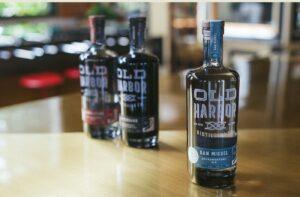
One Battle After Another – Old Harbor San Miguel Southwestern Gin
(Photo: Old Harbor Distilling)
The sandswept hills of Southern California are just as much of a character in “One Battle After Another” as any star-worthy turn from Leonardo DiCaprio or Benicio Del Toro. Distill the scenery down to its gritty essentials, and you’ll get something that tastes like Old Harbor San Miguel Southwestern Gin. Made using locally grown cilantro, cucumber, lime and sage harvested in the San Diego area, the gin is a decidedly herbal sipper, balancing its crunchy greenery with a drying, sun-baked finish. Serve in a G&T with a cucumber slice or top it up with a tall bottle of ice-cold Topo Chico for best results.
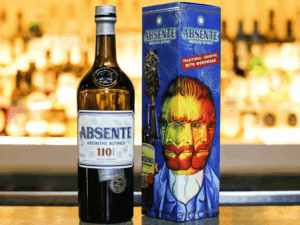
Frankenstein – Absente Absinthe
(Photo: Absente)
Much like “Sinners,” Guillermo Del Toro’s adaptation of “Frankenstein” lends itself to colorful, if on-the-nose, booze recommendations. Absinthe (better known in Mary Shelly’s time as the Green Fairy) felt like the obvious choice. Up until recently, however, that would’ve meant a black-market product distilled in someone’s moonshining laboratory. But no longer! Absente Absinthe, crafted in the south of France using wormwood, anise, star anise, fennel, peppermint, lemon balm and hyssop, was the first full-throated absinthe to re-enter the American market after a federal ban was lifted in 2007. At 110 proof, it arrives vibrant green in the glass, awash with aromas of bitter herbs and spices that smell as if they were plucked straight from a mad botanist’s garden. More so than anything else on this list, we only ask that you drink in moderation.
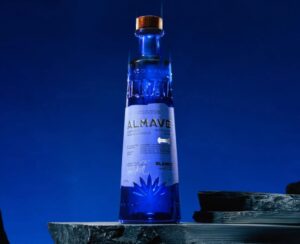
F1 – Almave Distilled Non-Alcoholic Agave
(Photo: Almave)
Lewis Hamilton not only cameoed in, but helped produce Apple’s “F1,” so it should come as no surprise that his zero-proof spirits venture is the bottle to beat. Unlike most tequila alternatives, the brand is made with the real stuff. Blue Weber agaves are harvested, crushed, cooked and distilled using all the same techniques found inside a regular 40%-ABV tequila — the only thing missing from the equation is fermentation, the step that turns glucose molecules into alcohol. Reviewing the product at launch, we found a lot to like in its honeyed flavors of lime zest, flowers and vanilla, a combo that plays particularly well inside a nonalc spicy margarita or paloma. In addition to its flagship Blanco, the brand offers a reposado-inspired Ámbar (which we have yet to try) and a smoky Humo (which we quite enjoyed!).
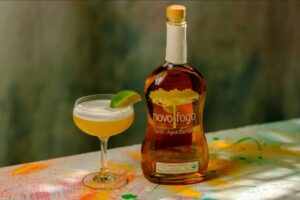
The Secret Agent – Novo Fogo Amburana
(Photo: Novo Fogo)
“The Secret Agent” takes viewers to the seedy alleyways of Recife, Brazil, a time and a place that screams all things cachaça. The country’s most popular spirit by a considerable margin, cachaça is distilled from fermented sugarcane juice, lending it a vibrant character that lands somewhere between a rum and a tropical gin. Of the brands widely available in the United States, we’d recommend Avua, Yaguara, Pitu, and Lebelon, though none capture the sepia-toned, 1970s cool-guy energy of “The Secret Agent” quite like Novo Fugo Amburana. Produced in the southern state of Paraná, the liquor makes use of fresh-pressed sugarcane juice fermented with wild yeast, then aged alternating in American oak and amburana barrels. Expect hearty flavors of cinnamon, tapioca pudding and vanilla bean, followed by a lingering nutmeg finish.
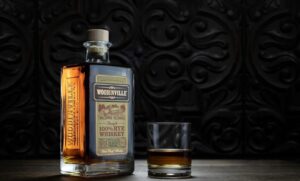
Train Dreams – Woodinville Straight Rye Whiskey 8-Year
(Photo: Woodinville)
“Train Dreams” transports viewers to the forests of early 20th-century Idaho and Washington — and since there aren’t many spirits distilled in the former, we figured we’d stick with the latter. Woodinville is one of our favorite whiskey makers on the scene right now, with a stacked roster of bourbons that make use of everything from Marsala to orange wine cask finishes. Its eight-year 100% rye whiskey, however, feels the most old-timey of the bunch. Sourced entirely from grains grown on the Omlin family farm in Quincy, Washington, the whiskey leaps out of the glass with sweetened aromas of raspberries, blueberries and cream, followed by a more characteristically rye palate of nutmeg, clove and ample tannins.
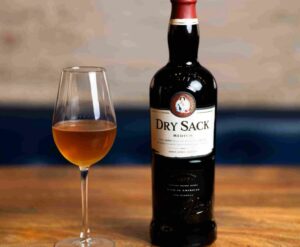
Hamnet – Williams & Humbert Dry Sack Sherry
(Photo: Williams & Humbert)
Apart from vague shout-outs to ale and beer, no alcohol is mentioned in Shakespeare’s plays quite as much as sack, the precursor to what is now known as dry sherry. An umbrella term for fortified white wines imported from Spain to England during the Elizabethan era, sack would have been enjoyed by wealthy merchants and royalty with a few coins to spare. Thankfully, modern alternatives are easier to come by. Williams & Humbert sells what is by far the best-known dry sack on the market, making use of Palomino and Pedro Ximénez grapes aged for a minimum of six years. Hints of walnuts, raisins and sticky marmalade dominate.
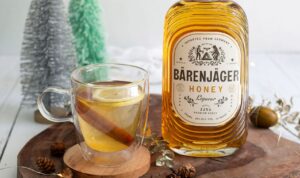
Bugonia – Bärenjäger Honey Liqueur
(Photo: Barenjager)
Nihilism, big tech and honey liqueur don’t go hand in hand. But there’s no denying that bees play an outsized role in the twists and turns of “Bugonia,” so we figured now was as good a time as any to spotlight a criminally underrated cocktail tool. Bärenjäger has roots going back to 18th-century Prussia, where, so the story goes, it was originally crafted as bait to lure bears from their caves. Today’s version contains 225 grams of pure honey per bottle, combined with a neutral grain spirit and bottled at 70 proof. It’s a potently boozy — and potently sweet — mix. Pour it over the rocks, mix it into a hot toddy or use in gin and honey cocktails like the Bee’s Knees and Pucker Up.
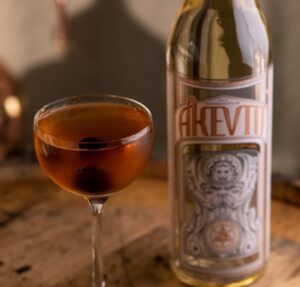
Sentimental Value – OHD Akevitt
(Photo: OHD Distillery)
Joachim Trier’s quiet family drama is a Norwegian film in both origin and spirit — and the very same could be said (minus the film part) of OHD Akevitt. Distilled from Norwegian potato spirit and steeped in thirteen botanicals including angelica, yarrow, chamomile, wormwood, St. John’s wort, dandelion root and hyssop, the liquor is then aged in oak barrels for a minimum of 18 months. Like many akevitts, its flavor balances the bite of a traditional gin with a mildly spicy freshness reminiscent of dill butter spread on rye bread. Combine that with a lick of ex-bourbon sweetness and you’re in for a truly one-of-a-kind treat.
Follow The Daily Pour:
About The Daily Pour
Founded by Dan Abrams, The Daily Pour is the ultimate drinking guide for the modern consumer, covering spirits, non-alcoholic and hemp beverages. With its unique combination of cross-category coverage and signature rating system that aggregates reviews from trusted critics across the internet, The Daily Pour sets the standard as the leading authority in helping consumers discover, compare and enjoy the best of today's evolving drinks landscape.