10 Best Scotch Whiskies for Beginners

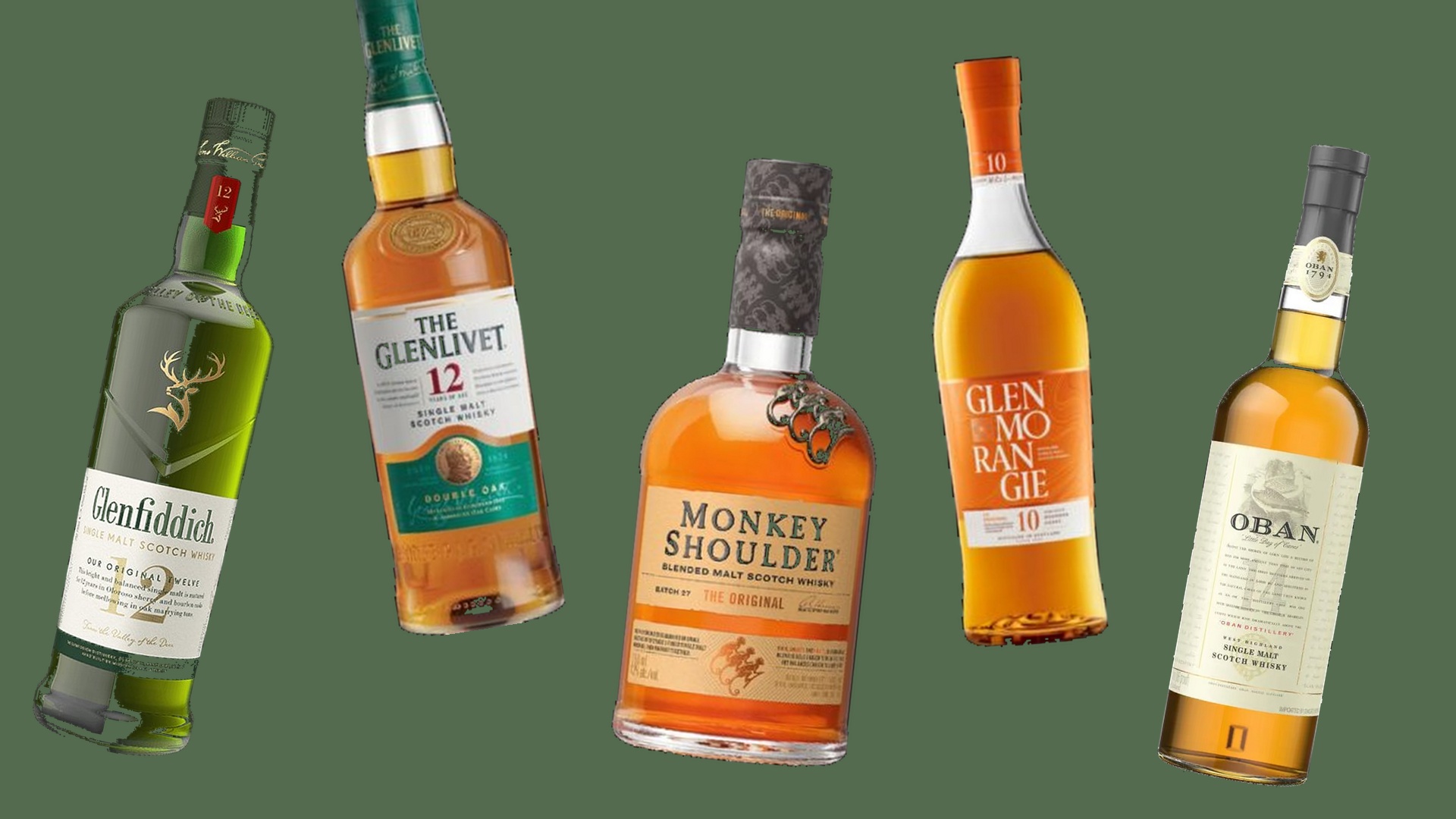
Among those who don’t know it well, Scotch whisky has an intimidating reputation. Five distinct regions. Hundreds of distilleries. A vocabulary that includes words like “peated,” “sherried,” and “Speyside.” It can feel overwhelming before you’ve even uncorked a bottle.But here’s the truth: the right entry-point bottle will hook you for life. The wrong one — something too heavily peated, tannic or harsh — might put you off Scotch forever.We’ve focused on whiskies that are smooth and accessible, reward beginners without boring enthusiasts and are available almost anywhere at a fair price. Whether you’re buying your first bottle or gifting one, you can’t go wrong with any choices on this list.
The 10 Best Scotches for Beginners in 2026
1. Glenfiddich 12 Year Old
Region: Speyside
Price: $50
If there’s one bottle that has introduced more people to Scotch than any other, it’s this one. Glenfiddich 12 is the world’s best-selling single malt for a reason: it’s simply approachable, consistent, and genuinely pleasant to drink. Light-bodied with a signature fruitiness and not a trace of the smoke that can intimidate newcomers, this is the gold standard starting point.
Tasting notes: pear, apple, melon, light smoke
2. The Glenlivet 12 Year Old
Region: Speyside
Price: $51
The Glenlivet was the first legal distillery in the Scottish Highlands, and its 12-year expression has remained a benchmark of gentle, floral Speyside style for generations. Where Glenfiddich leans fruity, The Glenlivet goes floral.
Smooth with zero harshness, it’s especially beloved by beginners who find bourbon a little too sweet but wine a little too thin. If you want elegance without complexity, start here.
Tasting notes: Citrus blossom, honey, cream, soft spice
3. Monkey Shoulder Blended Malt
Region: Speyside Blend
Price: $34
Monkey Shoulder broke every rule of stuffy whisky culture when it launched: bold bottle, fun name, deliberately unpretentious. A blend of three Speyside malts (Glenfiddich, Balvenie and Kininvie), it’s equally solid neat, on the rocks or in cocktails like a Whisky Sour or Rob Roy. If you’re not sure how you like your Scotch yet, this bottle lets you experiment without guilt.
Tasting notes: Vanilla, baked apple, cinnamon, toffee
4. Balvenie DoubleWood 12 Year Old
Region: Speyside
Price: $73
The Balvenie DoubleWood spends 12 years in traditional whisky casks before being transferred to first-fill oloroso sherry casks, imparting dried fruit and spice notes for added complexity.
Tasting notes: Honey, dried raisin, cinnamon, nutmeg
5. Auchentoshan Three Wood
Region: Lowlands
Price: $60
Scotland’s Lowland region is the unsung hero of beginner whisky — lighter in body, gentler in character and rarely peated. Auchentoshan claims to be the only Scottish distillery that triple-distills all of its whiskies, producing a cleaner spirit before it even sees a barrel.
The Three Wood expression then matures in three successive cask types: bourbon, Oloroso sherry, and Pedro Ximénez sherry, adding a wide swath of flavors.
Tasting notes: Dark chocolate, fig, brown sugar, coffee
6. Highland Park 12 Year Old Viking Honour
Region: Orkney
Price: $62
Want to dip your toe into smoky Scotch without diving off the deep end? Highland Park 12 is the answer. Made in the Orkney Islands at the northern tip of Scotland, it uses a small proportion of lightly peated malt that gives it a gentle heathery smokiness — present, but firmly in the background behind a wall of honey, dried heather and toasted almonds.
The smoke is much more campfire-from-a-distance than ashtray, making this an outstanding bridge between approachable and adventurous.
Tasting notes: Heather honey, light smoke, toasted almond, orange peel
7. Glenmorangie The Original 10 Year Old
Region: Highlands
Price: $46
Matured exclusively in ex-bourbon American white oak, Glenmorangie 10 is a masterclass in restraint and elegance. Distilled in Scotland’s tallest copper pot stills (which produce an exceptionally light, delicate spirit), it offers a clean Highland character that feels almost closer to a fine Cognac than a traditional whisky.
Peach, apricot, and a subtle vanilla sweetness define the palate, with a finish that’s short, clean, and utterly satisfying. Excellent value for a Highland single malt of this quality.
Tasting notes: Peach, apricot, vanilla, butterscotch
8. Dewar’s 12 Year Old
Region: Highland Blend
Price: $30
Don’t sleep on blended Scotch. While single malts get all the press, blended whiskies account for over 90% of scotch sold globally — and the best of them are genuinely wonderful. Dewar’s 12 is a “double-aged” blend, meaning it undergoes a secondary maturation in ex-bourbon casks after blending, giving it a cohesion that most blends at this price can’t match. An easy pick-up if you’re looking for a cheap scotch.
Tasting notes: Caramel, toasted oak, dried fruit, gentle spice
9. Oban 14 Year Old
Region: Highlands
Price: $88
Oban sits at the geographic and stylistic crossroads of the Scottish Highlands and the peaty islands: not quite as robust as an Islay malt, not quite as gentle as a Speyside. The 14-year expression is one of the most complete, well-rounded introductory single malts in existence — a honey-sweet core with a faint maritime briny quality and the faintest kiss of smoke.
It’s the whisky that rewards beginners who want to feel like they’re discovering something personal rather than just drinking what everyone else drinks. The distillery is tiny, the production is limited, and the result is special.
Tasting notes: Sea salt, honey, dried citrus, subtle smoke
10. Laphroaig 10 Year Old
Region: Islay
Price: $45
Type: Single Malt
Realistically, an Islay scotch — especially a Laphroaig — probably shouldn’t be anybody’s first scotch. Yet, it felt wrong to not have a single Islay expression on this list. So, this is for the scotch “beginner” who’s tried a handful of Speyside or Highland expressions and wants to give peat a chance. Laphroaig is aggressively, unapologetically smoky — medicinal and iodiney in ways that are sure to either horrify or enchant the taster. It’s on this list because every beginner should try it at least once, even if just to know what big, peated Islay Scotch tastes like.
Tasting notes: Peat smoke, iodine, sweet vanilla
Frequently Asked Questions
What is the smoothest Scotch whisky for beginners?
Glenfiddich 12 and The Glenlivet 12 are consistently cited as the smoothest entry-level single malts. If you want a blended scotch, Monkey Shoulder and Dewar’s 12 are exceptionally smooth and easy to drink. All four are light, fruity and completely unaggressive on the palate.
Should beginners drink Scotch neat, with water, or on the rocks?
Start neat to understand what you’re drinking. Try to pull out tasting notes. Then, optionally, add a few drops of still room-temperature water — this “opens up” the whisky by releasing aroma compounds locked in the alcohol.
Is single malt Scotch always better than blended?
Not at all. Single malt simply means the whisky comes from one distillery using only malted barley — it says nothing about quality. Blended Scotch combines whiskies from multiple distilleries, and master blenders work extremely hard to achieve consistency and balance. Monkey Shoulder and Dewar’s on this list are blended whiskies that outperform many single malts at the same price.
What glass should I use for Scotch?
A Glencairn glass is the gold standard — its tulip shape concentrates aromas at the nose, vastly improving the sensory experience. If you don’t own one, a wine glass will do the trick. Avoid wide-brimmed tumblers.
Follow The Daily Pour:
About The Daily Pour
Founded by Dan Abrams, The Daily Pour is the ultimate drinking guide for the modern consumer, covering spirits, non-alcoholic and hemp beverages. With its unique combination of cross-category coverage and signature rating system that aggregates reviews from trusted critics across the internet, The Daily Pour sets the standard as the leading authority in helping consumers discover, compare and enjoy the best of today's evolving drinks landscape.