Federal Hemp Ban May be a Gift in Disguise, Says THC Beverage Founder

(Photos: Wynk)
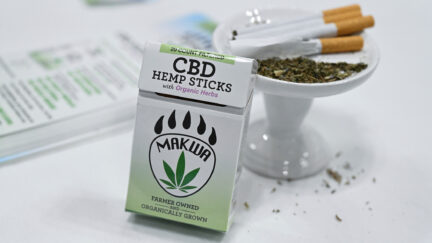
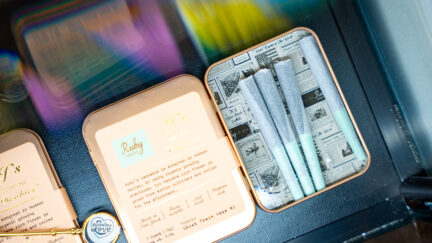
The 2026 Spending Bill that ended the longest government shutdown in American history delivered a surprise, skunk-green caveat for millions of consumers. A stipulation snuck into the legislation days before its passage included language that will effectively ban hemp, originally defined as products with less than 0.3% THC by dry weight, from the national market.
These goods are widely available at convenience and liquor stores across the country in the form of flower, vapes, edibles, drinks and tinctures, amounting to a $28 billion industry that employs some 300,000 Americans. The U.S. Hemp Roundtable contends that over 90% of nonintoxicating hemp-derived products would be wiped out by the ban, and insiders now have less than 300 days to avoid all-out pandemonium.
Some would have you believe that the bill is a ticking time bomb that will unleash unintended consequences on par with the government’s failed alcohol Prohibition attempted over a century prior. Others contend that a temporary hemp ban is an absolute necessity — and they may not be wrong. The market has been infiltrated by a torrent of bad actors over the past few years, flooding shelves with improperly dosed and often unsafe products that undermine the credibility of the category.
We sat down with Wynk co-founder Angus Rittenburg for a fresh perspective. Debuted to modest beginnings in 2021, Wynk is now one of the biggest movers and shakers in the hemp-derived THC beverage market. Its catalog of low-dose, fruit-flavored seltzers is distributed at established retailers like Target, Total Wine and Binny’s Beverage Depot, and available via direct-to-consumer shipping in 40 states. The brand represents THC drinks at their most professionalized, and Rittenburg could be thought of, by a small stretch of the imagination, as its Willy Wonka.
We talked to Rittenburg less than a day after the 2026 Spending Bill was passed. Against all odds, the hemp entrepreneur was not only hopeful, but downright ecstatic for what’s to come.
“I’m probably more optimistic than I should be, definitely more optimistic than some others I’ve talked to, but I think the way this went through is a bit of a gift,” Rittenburg told us.
Another Day, Another Hurdle
When Rittenburg launched Wynk in 2021, the hemp-derived THC market was in its infancy. State-level cannabis laws defined the dos and don’ts of the industry, setting firm restrictions on interstate commerce that halted many would-be manufacturers in their tracks. Rittenburg, a mechanical engineer with prior experience at Tesla and SpaceX, devised a workaround that sounds like it was ripped straight from “Breaking Bad.”
“It didn’t make sense to build a canning facility in each state we wanted to sell,” Rittenburg says. “We decided we’d make a mobile production system that can travel state to state, partnering with people that already have facilities but no ability to make beverages. My background is in engineering, so I developed a system that did just that.”
Wynk’s earliest iteration was produced not by a factory but by a 53-foot semi truck. The solution-on-wheels established the brand as one of the first truly national players in the THC drinks space, taking advantage of technology and accessibility to break into markets where hazy beverages were thus far limited to local upstarts.
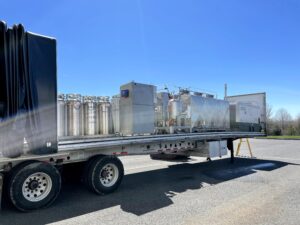
“We had a generator on board; a huge chiller to cool the liquid; batching, carbonation, liquid CO2 storage, air compressors, a canning line and everything else you’d need to produce beverages. The goal when the system was being designed was that you should literally be able to roll into a parking lot and start from scratch.”
Wynk expanded to 10 markets within its first year, making it the most widely distributed THC beverage of its era. Demand grew fast. Rittenburg built another trailer, staffed by an additional six employees who traveled the nation’s highways with production capabilities in tow. Innovative as the solution may have been, it quickly became apparent that trucks alone couldn’t accommodate the size and scale of Wynk’s A-list aspirations. The Minnesota Model — a 2022 regulatory plan that ushered in a new era of nationally available hemp-derived THC products — laid the groundwork for Wynk’s permanent home.
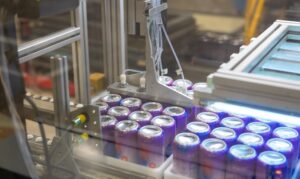
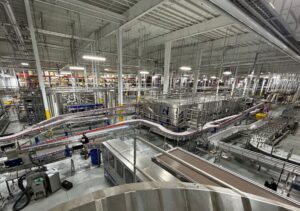
The brand is now produced at BestBev in Waverly, New York, a co-packing facility responsible for over 15 million cases of annual production across the alcoholic, nonalcoholic and hemp-derived beverage markets. It’s a far cry from the parking lot days. Steel tubes and conveyor belts zigzag across a 130,000-square-foot warehouse, delivering a quantity and quality of products on par with the likes of Coca-Cola or Pepsi.
Hemp Ban: Disaster or Blessing in Disguise?
All of that’s to say, Rittenburg has a lot to lose from a hemp ban. For entrepreneurs who staked their livelihood on what was — up until recently — a perfectly legal industry, the looming stakes of hemp prohibition might seem downright apocalyptic.
Rittenburg, however, is of another opinion. The engineer turned hemp tycoon seems to think the 2026 Spending Bill is a blessing in disguise, one that could give his profession a much-needed push toward credibility.
“The hemp ban that got put into law is temporary by nature,” Rittenburg explains. “It’s a one-year funding bill. In addition to that, the law created through this funding bill doesn’t go into effect until the funding bill expires, which sets it up perfectly for reversion at the end of this year, either through the next appropriations bill or potentially earlier through the Farm Bill.”
“Most of the lobbying groups that were supportive of a ban said, very fairly, that we need to ban all this stuff until there are regulations to make it safe for consumers. So my stance is: They got the ban, now let’s work together on the regulations.”
The Great ‘Flush’
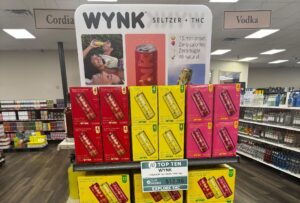
Wynk on the shelf at a Target location in Minnesota.
Several pundits, notably including Joe Rogan, have argued that the hemp ban is a naked attempt by the alcohol industry to stymy competition. Younger drinkers are trading booze for cannabis at record-high rates, and it stands to reason that the former would do everything in its power to stomp out the latter. There may be a morsel of truth to this version of events. But Rittenburg says that regulation doesn’t have to be a zero-sum game — especially when alcohol industry regulars have everything to gain from a pivot.
“In almost all cases, the suppliers that were lobbying the hardest for this ban have teams internally working on THC beverages, talking with brands like us on strategy,” Rittenburg says. “They’re investing in getting ready for THC, while at the same time lobbying to ban it. It has to be genuine.”
Corona owner Constellation Brands and Pernod Ricard, the French powerhouse behind Jameson Whiskey, are each researching hemp-derived cannabis drinks as they attempt to diversify their portfolios, according to Reuters. Don Julio owner Diageo says that it is “closely monitoring the space.” Lagunitas Brewing, a subsidiary of Heineken, has released a spin-off product dosed with 10 milligrams of THC, while the Boston Beer Company recently unveiled a line of non-alcoholic cannabis cocktails dubbed Emerald Hour.
The alcohol industry has invested billions into the development of THC drinks. There’s no world in which these companies would pursue an outright ban of the category, nor is it likely that retailers would turn down an additional avenue to generate sales. The future is looking dank, and major players are already sipping the hemp-derived Kool-Aid.
Rittenburg forsees a mutually advantageous outcome. If government officials, alcohol brands and established hemp manufacturers can agree on a regulatory framework before the end of 2026, then the category can continue to chug along, albeit in a markedly different form. Effective regulations would wipe out a huge number of so-called “bad actors” from the market — a point of reckoning that Rittenburg likens to a “flush.”
“The ban will create an immense squeeze on the category. And I think the category is ripe for a little bit of a flush. There are a lot of brands that don’t deserve to exist, not because they’re not good people, but because their products aren’t done right: they’re not safe, they’re not marketed effectively.”
We asked Rittenburg to provide a few examples. He listed nearly a dozen.
“The easy one is a 100-milligram drink, some with dosages even higher than that, sold through a liquor store. To make those products accessible just isn’t right. There are examples of brands that have the exact same packaging, exact same graphics and exact same price with doses that are 10 times higher than one another. That kind of thing is not good.”
“Then there are drinks sold outside of age-gated retail. Labelling of products where kids have no way of knowing whether it’s Skittles or Skittles with 1,000 milligrams of THC in it. Add to that, rampant quality issues. Incorrectly dosed products: You look at the label, and what you’re getting in the can is either far less or far more. Countless examples, and it’s all a result of no regulation.”
In September, eight Democratic senators published a letter that provides a rough idea of what’s to come. Senators including Ron Wyden and Cory Booker suggested that the federal government restrict sales and possession to adults over the age of 21, eliminate “look-a-like” packaging that mimics popular brands, prohibit synthetic products and require third-party lab testing to ensure safety.
Wynk has everything to gain from a grand flush. The THC drinks market of 2026 is overcrowded to the point of absurdity, bursting at the seams with enough bubblegum-pink weed sodas to fuel the economy of a small nation. If regulations trim the pack, the market share of above-the-board players like Wynk has the potential to grow exponentially. (Cynics might argue that this is why alcohol companies pushed hard as they did for the 2026 Spending Bill. In that regard, cynics are probably right.)
Of course, this is all hypothetical. There’s a non-zero chance that the government will follow through on a total hemp ban, and even if it doesn’t, Rittenburg predicts that deliberations will wear into the eleventh hour.
“You can bet on the 2027 appropriations bill correcting this, but you won’t know until the final days,” he said. “For distributors and retailers that have alcohol licenses, they’re at risk, because the day the ban goes into effect, their federal licenses are in peril. They really can’t be holding inventory even an hour after the law goes into effect. So I suspect that will cause inventory levels to drop. I’m hopeful that we can do something sooner. My guess, however, is that it will drag into the final stretch.”
It’s a potentially billion-dollar gamble. But Rittenburg, and many entrepreneurs like him, are confident that the grass is greener on the other side.
“We’re gearing up to pounce as soon as it’s reversed,” Rittenburg said. “If we can do this really well, which I think we will, we’ll be uniquely positioned to thrive when most of our competition doesn’t exist anymore.
“I’ve been joking with my partners. This may actually be the cheapest way for us to stand out from the competition.”
Follow The Daily Pour:
About The Daily Pour
Founded by Dan Abrams, The Daily Pour is the ultimate drinking guide for the modern consumer, covering spirits, non-alcoholic and hemp beverages. With its unique combination of cross-category coverage and signature rating system that aggregates reviews from trusted critics across the internet, The Daily Pour sets the standard as the leading authority in helping consumers discover, compare and enjoy the best of today's evolving drinks landscape.