Gun Case Sparks Supreme Court Debate Over the Founding Fathers’ Drinking Habits

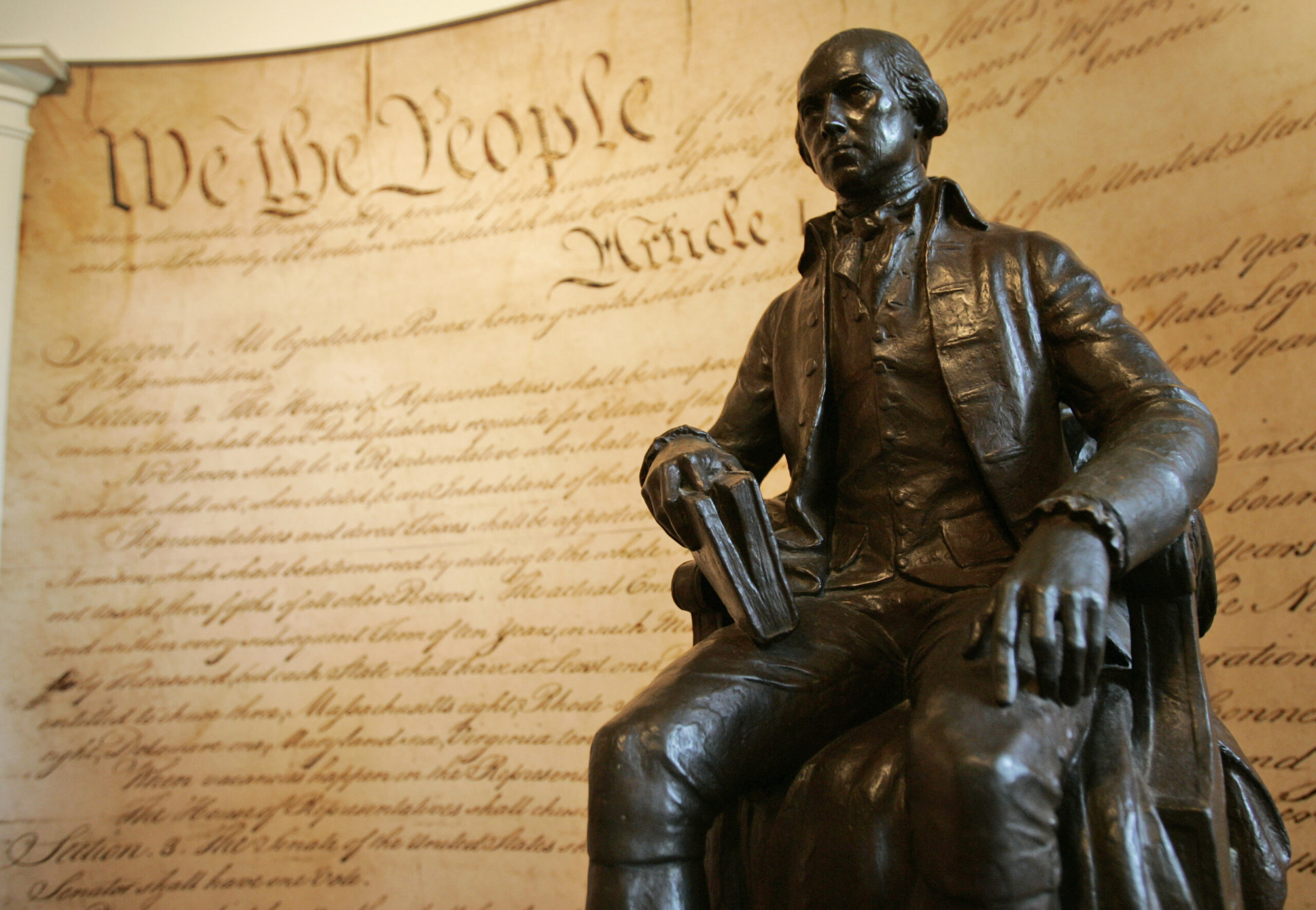
A statue of former President James Madison is shown in front of a mural of the Constitution in the education center at Montpelier, Madison’s home, in Orange, Va., Wednesday, Aug. 13, 2008. (AP Photo/Steve Helber)
The drinking habits of America’s Founding Fathers have become an unlikely focal point in a major Supreme Court case that could reshape the limits of the Second Amendment.
As the court weighs whether people who use illegal drugs can be prohibited from owning firearms, several justices have turned to history for guidance — including how alcohol was consumed during the nation’s founding era.
The case stems from a challenge to a federal law that bars unlawful drug users from possessing guns. Because the Supreme Court’s landmark 2022 decision in New York State Rifle & Pistol Association v. Bruen requires modern gun regulations to be consistent with historical American traditions, lawyers and judges have spent months searching centuries-old records for comparable restrictions.
During oral arguments, Neil Gorsuch questioned whether alcohol use in the late 18th and early 19th centuries offered a useful comparison. While states sometimes restricted the rights of so-called “habitual drunkards,” Gorsuch noted that many prominent founders were known for consuming significant amounts of alcohol.
According to remarks cited during the hearing, John Adams reportedly drank hard cider with breakfast, while James Madison was said to consume a pint of whiskey daily. Thomas Jefferson, meanwhile, famously enjoyed wine and reportedly drank several glasses most evenings.
The historical references highlight a growing trend at the Supreme Court, where justices increasingly rely on originalism — a legal philosophy that seeks to interpret the Constitution according to its original public meaning when it was adopted.
That approach has pushed lawyers into increasingly obscure corners of American history. In recent cases, attorneys have debated everything from Civil War-era voting practices to colonial-era searches conducted by British customs officials.
Supporters of originalism argue that grounding constitutional interpretation in historical tradition protects individual rights from shifting political winds. Critics counter that applying centuries-old customs to modern problems often produces uncertain and contradictory results.
The debate is expected to play a role in several high-profile cases being decided this term, including disputes involving gun rights, election procedures, digital privacy and birthright citizenship.
For the firearms case, however, one of the most surprising questions before the court remains whether America’s founders — many of whom openly consumed alcohol — would have viewed intoxication as grounds for losing constitutional rights.
The answer could influence how the court evaluates modern restrictions on gun ownership in the years ahead.
Follow The Daily Pour:
About The Daily Pour
Founded by Dan Abrams, The Daily Pour is the ultimate drinking guide for the modern consumer, covering spirits, non-alcoholic and hemp beverages. With its unique combination of cross-category coverage and signature rating system that aggregates reviews from trusted critics across the internet, The Daily Pour sets the standard as the leading authority in helping consumers discover, compare and enjoy the best of today's evolving drinks landscape.