A Sip of History: 3 Cocktails That Were Popular in the Roaring Twenties and How You Can Recreate Them at Home

It’s ironic that the one era many associate with cocktail culture is the decade when booze was illegal in the U.S. We can’t help but think of underground speakeasies, jazz, flappers and general hedonistic, booze-related debauchery when the Roaring Twenties come to mind. But what were the most popular cocktails of an era when alcohol sales were largely illegal?
American Prohibition, or “The Noble Experiment,” was a nationwide ban on sales and importing alcoholic beverages from 1920 to 1933. Alcohol was blamed for all of society’s ills, and the movement aimed to bring families together, heal political corruption and end alcoholism. Sounds pretty noble from an idea standpoint, right?
Yet, in practice, few of those goals were achieved. Consumption skyrocketed, a once-regulated market gave way to a robust underground economy run by organized crime, and the U.S. government’s nefarious actions at the time gave new meaning to the word “corruption.” But more on that in a little bit.
Prohibition was spearheaded by Pietistic Protestants, the Anti-Saloon League and the Women’s Christian Temperance Union, according to The History Channel. Yet, Prohibition’s seeds were sown long before the 1920s, and to understand what was really going on in America, one has to look back even further.
We covered the most popular cocktails of 1900 through 1910 as part of our series on cocktail history, and in this piece, we are going to continue by exploring the most popular cocktails of the Roaring Twenties. But first, let’s unpack some of the history behind Prohibition.
A Wave of Religious Revivalism Led to Prohibition
Prohibition’s roots can be traced back to the 1800s, nearly 100 years before the Volstead Act was passed by Congress.
The History Channel reported that in the 1820s and ’30s, “religious revivalism” made its way through America. Historians believe that when Americans were pushing for the abolition of slavery, a wave of “perfectionism” swept through the country.
More and more people touted temperance, and in 1838 Massachusetts passed a law prohibiting the sale of alcohol in anything less than 15 gallon quantities.
Other states began to follow suit like Maine passing a state prohibition law in 1846 and tightening the reins in 1851. During the Civil War, multiple states were actively enforcing prohibition.
Women were particular champions of temperance because alcoholism often led to domestic violence at home. Business and factory owners pushed for the federal government to enforce Prohibition because they did not want accidents to take place at work and favored increased productivity. Mind you, this was during the Industrial Revolution when output was critical.
Fast forward to 1917, when Congress passed the Volstead Act. The United States was busy fighting in World War I, and grain needed to be used to feed the population instead of producing alcohol.
Within the same year, Congress passed the 18th Amendment, which banned distillation, sale and transportation of alcohol. In under a year, three-quarters of the states expressed support for the amendment, and it was ratified. Starting January 17, 1920, the United States would ban alcohol.
When a Noble Experiment is Not So ‘Noble’: The Casualties of Prohibition
The National Bureau of Economic Research reported that alcohol consumption “fell sharply” at the beginning of Prohibition. Yet, that was only for a short period of time. During the next few years, consumption “increased sharply to about 60 to 70 percent” of what people were consuming before the 18th Amendment was passed.
As for how people were getting access to illegal alcohol? Well, you can thank the bootleggers, organized crime and secret bars, or speakeasies, for that.
The U.S. Government knew illegal liquor consumption was on the rise and had a plan to curtail it. Illegal liquor was often made with industrial-strength alcohol, and Vox reported that in 1926, the Federal Government increased the amount of methanol in industrial alcohol.
It knew full well that bootleggers would add industrial alcohol to the hooch they were already making. The aim was to make bootleg liquor extremely poisonous — poisonous enough to kill. If people knew they could potentially die, the logic was that they would stop drinking illegal hooch.
According to Vox’s interview with Pulitzer prize winner and journalist, Deborah Blum, the government put benzine, mercury and other deadly substances into industrial alcohol, fully aware that it could potentially kill thousands of people by way of bootleggers and speakeasies.
Blum claimed the government favored methanol, or “wood alcohol,” because they knew bootleggers wouldn’t be able to get it out of their industrial alcohol due to its close chemical bonds.
“It was like a chemists’ war at this point,” Blum claims. “Bootlegger chemists trying to take things out, and government chemists trying to find a way to keep them in. But bootlegger chemists had not been able to find a good way to get methanol out. People knew this was going to kill people.”
New York toxicologists like Alexander Gettler warned the U.S. Government not to do this, but the government ignored him. An estimated 10,000 people died by consuming methanol-tainted alcohol.
Interestingly enough, the wealthy were able to purchase expensive and “safe” liquor, so the majority of these methanol-related deaths from government-tainted speakeasy hooch involved lower-income communities. Essentially, wealthy Americans were immune, and poorer communities were the most vulnerable.
So what’s the takeaway? Blum argues that “moral crusades are really dangerous.”
“People rally do believe that they’re on the sides of the angels,” she explained to Vox. “And that the ends justify the means.”
Undoubtedly, Prohibition exposed a lot of cracks in our social fabric between the haves and have nots. Prohibition ended on Dec. 5, 1933 or “Repeal Day,” and proved itself to be a pretty epic failure.
And now, let’s get to the good stuff. Below are three recipes of some popular Prohibition-Era Cocktails, so you can make them — safely — at home.
3 Most Popular Cocktails of The Roaring Twenties and How You Can Make Them At Home
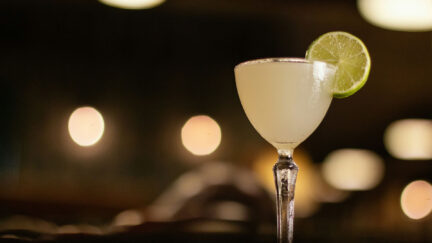
Hemingway Daiquiri

(Photo: Havana Club Rum)
Casual Mixologist reports that the Hemingway Daiquiri dates back to 1921. The prolific author Ernest Hemingway was an avid imbiber and had his own theories about bars, according to Wine Enthusiast.
“Don’t bother with churches, government buildings or city squares,” Hemingway said. “If you want to know about a culture, spend a night in its bars.”
This riff on a daiquiri originated at one of Hemingway’s favorite bars in Havana, Cuba — El Floridita. The cocktail was originally nicknamed the Papa Doble after Hemingway’s nickname in Havana — Papa — and the fact that he liked his drinks on the strong side.
Wine Enthusiast reports that a true Papa Doble is four ounces of rum with a bit of lime, blended so cold “it couldn’t be tasted going down.”El Floridita decided to make a version of this daiquiri that would actually sell, and thus the Hemingway Daiquiri was born.
We’ve gone ahead and included Wine Enthusiast’s recipe below. We recommend using Havana Club 3 Year rum in the Hemingway Daiquiri to keep this cocktail true to its Cuban roots. If you want to see what the critics think about this rum, you can check out the reviews here.
Ingredients:
- 2 ounces Havana Club 3-Year Rum
- .75 ounces Lime Juice
- .75 ounces Maraschino Liqueur
- .5 ounces grapefruit juice
- Lime wedge for garnish
Directions:
Mix all ingredients except the garnish into a cocktail shaker with ice. Shake until mixed and cold. Strain into a coupe and use a lime wedge for garnish.
Classic Negroni

(Photo: Bombay/Instagram)
According to most, the negroni was invented in 1919 at Caffè Casoni in Florence when Count Camillo Negroni ordered an Americano made with gin instead of soda water. The cocktail was a wild success, and the outlet reported that the Negronis founded the Negroni Distillery, which made ready-to-drink versions of the Negroni Cocktail.
The below recipe is from New York Times Cooking, which recommends using a London Dry Gin, like the classic Bombay Sapphire. If you’d like to see what the critics think of this affordably priced gin in its signature blue bottle, you can check out the reviews here. The recipe additionally calls for Campari, sweet vermouth and an orange twist. Be sure to serve this one in a rocks glass.
Ingredients:
- 1 ounce Bombay Sapphire Gin
- 1 ounce sweet vermouth — like Carpano Antica.
- 1 ounce Campari
- Orange twist
Directions:
Mix Bombay Sapphire, sweet vermouth and Campari with ice in a mixing glass for about 30 seconds or until chilled. Strain and pour into a rocks glass filled with ice. Squeeze orange twist over drink and use as garnish.
Sidecar

Like many cocktails, the Sidecar’s origins are murky. The father of the Sidecar is a cocktail named the Brandy Crusta, according to Alcohol Professor. The first recipes for the Sidecar appeared in 1922, in Robert Vermiere’s “Cocktails and How to Mix Them” and Harry MacElhone’s “Harry’s ABC of Mixing Cocktails.”
Vermiere, a Belgian bartender, claimed in his book that the Sidecar was “introduced in London by MacGarry, the celebrated bar-tender of Buck’s Club.”
Vermiere uses the unit of measurement called a gill, which is the equivalent of a quarter-pint. If you’re curious to check out one of the earliest recipes for the Sidecar, you can view it here.
We’re going to go a bit more modern with our recipe and work with one from Food & Wine. We suggest using Rémy Martin 1738 Accord Royal Cognac, which is priced within the $30-$60 range. If you’d like to see what the critics think, you can read the reviews here.
Ingredients:
- 1.5 oz of Rémy Martin 1738 Accord Royal Cognac
- .75 oz Cointreau
- .75 oz fresh lemon juice
- 1 orange peel for garnish
- 1 tsp sugar
Directions:
Using a lemon wedge, coat the rim of a coupe glass with its juices. Dip the glass onto a plate coated with sugar to rim the coupe.
Fill a cocktail shaker with ice and mix Rémy Martin 1738 Accord Royal Cognac, Cointreau and lemon juice. Shake until chilled — approximately 20 seconds.
Strain your Sidecar into the rimmed coupe and use the orange peel for a garnish.
Follow The Daily Pour:
About The Daily Pour
Founded by Dan Abrams, The Daily Pour is the ultimate drinking guide for the modern consumer, covering spirits, non-alcoholic and hemp beverages. With its unique combination of cross-category coverage and signature rating system that aggregates reviews from trusted critics across the internet, The Daily Pour sets the standard as the leading authority in helping consumers discover, compare and enjoy the best of today's evolving drinks landscape.