What Donald Trump’s Reelection Means for the Liquor Industry


Donald Trump made history as the first convicted felon to be elected President — here’s what it might mean for the liquor industry. (Photo: AP Photo/Steven Senne, File)
In a historic 2024 election, Donald Trump emerged victorious. Trump became the first Republican to win the popular vote in 20 years and is the first convicted felon to be elected — though those charges may disappear after he is sworn into office.
While those who voted for him will be excited with the result, a Trump presidency will undeniably bring an overwhelming amount of existential anxiety and grief for many Americans. A lot of U.S. citizens worry about the state of democracy, women’s bodily autonomy, immigration, foreign affairs, the rights of LGBTQ+ people and worsening inflation from Trump-proposed tariffs under Trump.
Yet, there is another group of Americans worried about what Trump’s presidency means for their fate: distillers and winemakers. A trade war from the previous Trump administration wreaked havoc on the spirits industry, most notably in both American and scotch whisky categories.
In late October, Robb Report reported that American whiskey brands were bracing for a bumpy ride, including Virginia’s Catoctin Creek Distillery.
“The first round of Trump tariffs killed our E.U. business dead,” Catoctin Creek Distillery founder and General Manager Scott Harris. “It would be hard to kill it further. We’ve instead shifted our focus to other markets like the U.K., Australia, Mexico and perhaps Taiwan. If you detect bitterness in my answer, it’s because I am indeed bitter.”
To get a clearer picture of what the Trump administration might have in store for the spirits industry both in the U.S. and abroad, we can look to the past at the administration’s previous policies and what the president-elect claims his plans are for the future.
‘Trade Wars Are Good, and Easy to Win’
In March 2018, President Donald Trump imposed a 25% tariff on steel and a 10% tariff on aluminum imports. Reuters reported that the president posted on X, formerly known as Twitter, the following:
“Trade wars are good, and easy to win”
In response, the E.U. imposed a retaliatory tariff of 25% on American whiskey, which many surmised was to draw the attention of Kentucky’s Senate Majority Leader Mitch McConnell. The initial tariff adversely affected American whiskeys, and the U.S. suffered, with exports to the E.U. decreasing by 20%, equivalent to about $112 million in revenue, according to Robb Report.
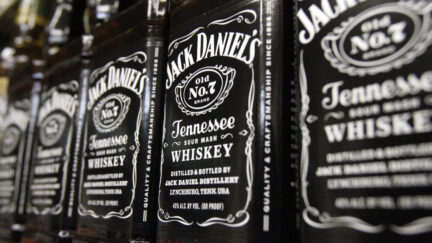
Trump escalated matters by imposing a 25% tariff that focused on single malt scotch. According to The Herald, the scotch whisky industry reported losing approximately £600 million in exports, which The National Scot reported to be the equivalent of almost “a million pounds a day.”
Whiskey was not the only alcoholic beverage category to face negative repercussions. The tariff extended to imported European wines. In December 2019, Trump threatened to impose a 100 percent tariff increase for French champagne, according to CNN. Fortunately for champagne producers, it was not implemented.
The tariffs affecting scotch whiskies are scheduled to be reviewed in June 2026, and The New York Times reported that these tariffs will “snap back” unless an agreement is reached between the U.S. and the E.U. Based on his comments, Trump doesn’t seem to be afraid of another, potentially more impactful, trade war.
Distillers Brace for a Second Potential Trade War — With a Significantly Greater Impact
The president has proposed a 60% tariff on Chinese products and tariffs of over 10% on other imported goods, including whiskeys and wine from overseas. When his next term starts, it appears he intends to kick things up several notches in an effort to expand America’s economy.
“Under my plan, American workers will no longer be worried about losing your jobs to foreign nations,” Trump said in October during a Georgia rally, according to the New York Times. “Instead, foreign nations will be worried about losing their jobs to America.”
The Times reported that many craft whisky distilleries in Europe are pausing expansion plans, as all eyes are on America and the future president.
European wines and whiskies aren’t the only spirits that will be facing tariffs. In early October, Kamala Harris’ campaign warned younger voters about what they referred to as a “Trump Tequila Tax,” or a 20% across-the-board tax on imported goods from Mexico.
Trump is known for switching his rhetoric during rallies, and during a speech given in Georgia, the former president suggested he would implement as much as a 100% tariff on imported cars from Mexico and a 200% tariff on products from the agriculture company Deere & Co. if they move operations to Ramos Arizipe.
Trump claims these tariffs will be beneficial for the U.S. economy and that he will “end inflation,” according to BBC.
Though The Atlantic reported Trump’s claims about the pressures of inflation were, in fact, what won him the 2024 election, his policies are directly at odds with curbing inflation. Historically, economists believe that tariffs contribute to inflation. Additionally, Trump’s proposed mass deportation plan could cost the U.S. approximately $968 billion, according to an estimate from the American Immigration Council, an immigrant advocacy group, as reported by Reuters.
Should a mass deportation take effect, the results would spell out catastrophe for an already struggling wine industry in Napa. Napa wineries often rely on undocumented workers to perform harvests and care for vines.
Though vineyards could potentially switch to mechanized labor, the costs would be high, leading many producers to go out of business. Napa offers a temporary visa program called the H-2A program, but a lot of the workers on the program do not have the same level of skill set as workers who have been tending to the vines for longer periods of time.
Tensions and anxiety have been at a steady climb for the liquor industry throughout the year. From shifting attitudes about alcohol consumption, to new recommendations from the World Health Organization declaring that no amount of alcohol is safe, it appears the industry is currently at a crossroads.
In such uncertain times, adaptability is key.
Follow The Daily Pour:
About The Daily Pour
Founded by Dan Abrams, The Daily Pour is the ultimate drinking guide for the modern consumer, covering spirits, non-alcoholic and hemp beverages. With its unique combination of cross-category coverage and signature rating system that aggregates reviews from trusted critics across the internet, The Daily Pour sets the standard as the leading authority in helping consumers discover, compare and enjoy the best of today's evolving drinks landscape.