Tequila Projected to Flatten at 1% Growth By 2026 — But Other Spirits Aren’t Quite as Lucky


Harvesting Blue Agave in Rancho ‘El Coyote’, Penjamo, Guanajuato, Mexico (Photo: Lucas Vallecillos / VWPics via AP Images)
Keeping up with spirits news over the past couple of years has proved a rollercoaster of emotions. Whether or not you subscribe to the broad hypothesis that cannabis, weight-loss drugs and screen time are eating away at demand, one thing is certain: The industry is witnessing a downturn. A surge in at-home alcohol spending prompted by the COVID-19 pandemic has cooled, and younger drinkers are choosing sobriety at record-high rates. The severity of this existential crisis, however, depends entirely on who you ask.
A forecast report published by Wine & Spirits Wholesalers of America earlier this week aims to answer some of the nitty-gritty concerns.
Taken at face value, the projections laid out in the SipSource report aren’t particularly promising. WSWA projects that total spirits demand will bottom out at -4.56% growth by the end of 2025, before ticking up slightly to -4.09% by the second quarter of 2026. Researchers note that the “severe downturn trend” for rum, U.S. whiskey, vodka and brandy is expected to flatten out by next year, “albeit in largely negative territory.”
Though the report doesn’t provide exact statistics, it’s easy to gather what that territory entails. U.S. whiskey, rum and vodka were all pegged at around -2% declines toward the end of 2024, while dollar sales of brandy and cognac dropped by 3.4%. In addition to the usual Gen-Z suspects, these trends have often been attributed to inflation and trade tensions. A third theory — that consumers are trading down for cheaper options, aka “depremiumization” — is rumored to be impacting whiskey and cognac in particular.
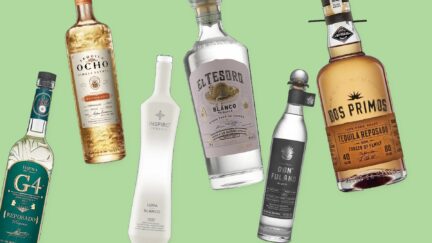
Tequila appears to be taking a different path. WSWA says the agave category is on track to stabilize at around 1% growth by mid-2026, thanks in large part to premium bottle options defined between $20 to $100. It’s worth noting that tequila is the only category singled out in the report for positive growth. However, SipSource analyst Danny Brager adds that flattening demand, even in a negative direction, should be heralded as a sign of good things to come.
“The flattening of negative growth curves may signal an encouraging bottoming out of trends in key categories,” Brager added. “While challenges remain, the data shows a clear transition period—giving producers, distributors and retailers some reason for optimism as they plan for what’s next.”
In all likelihood, the trajectory of spirits consumption doesn’t lie in the hands of consumer preferences.
The tug of war over tariffs has consumed seemingly every hour of the news cycle since the 2024 election, with spirits often being depicted at its center. In places like Canada, the trade war has already had a seismic effect on sales. Earlier this year, several provinces moved forward with a plan to remove all American products from liquor store shelves following President Trump’s 25% tariff announcement. Ontario liquor stores alone pull in an annual gross revenue of over $7 billion.
Things haven’t taken quite as severe a turn in the U.S. just yet, though it’s difficult to say where they’ll go from here. Tequila’s status as a USMCA-compliant good has so far exempted it from the tariffs imposed on Mexico. But the uncertainty surrounding trade tensions has put distillers in a tight spot. According to Reuters, some companies have been forced to pause hiring and suspend product launches, all while overstocking their inventory in preparation for the worst outcome.
Were tequila prices to rise across the board in America, it’s possible that the spirit’s premium status could tip dangerously toward over expensive. In that case, the market is at risk of the depremiumization trend that other categories are currently grappling with.
All of this is to say — tequila finds itself in a good position, but it has a lot to lose. Continued demand for pre-mixed agave cocktails has brought an enormous amount of interest to the category, and a realignment toward additive-free products has justified higher prices for consumers willing to splurge. Even at 1% growth, the industry still has plenty of gas left in the tank.
SipSource notes that its short-term forecasts for Q1 2025 were over 90% accurate across all classes, while its one-year predictions made in January 2024 have remained 80% accurate.
Follow The Daily Pour:
About The Daily Pour
Founded by Dan Abrams, The Daily Pour is the ultimate drinking guide for the modern consumer, covering spirits, non-alcoholic and hemp beverages. With its unique combination of cross-category coverage and signature rating system that aggregates reviews from trusted critics across the internet, The Daily Pour sets the standard as the leading authority in helping consumers discover, compare and enjoy the best of today's evolving drinks landscape.