5 Tequila Trends Redefining the Market in 2025

Amid an endless cascade of headlines predicting tariffs, inflation and declining liquor consumption, it’s hard to know where the tequila industry will go in 2025. Especially when the trends are fickle.
A few years back, every brand was rushing to make a charcoal-filtered cristalino; months later, red wine-finished rosados were all the rage. In recent months, an uptick in high-proof blancos has provided the perfect respite for spirits nerds in search of scorching agave flavor. Dig deeper and you’ll discover the rise of the tequila premixed cocktail, name-brand cask finishes and the suspicious disappearance of “additive-free” from hundreds of labels.
And so the question remains — what’s next? Digging through recent news and releases, we’ve identified the beginnings of five trends that are likely to define the market by the end of the year. From the rise of uncertified distillates to the contentious beginnings of California-made agave spirits, these are movements in the category you’ll want to keep a close eye on.
1. The Death (And Rebirth) of Additive-Free

(Photo: Tequila Regulatory Council)
The debate over additive-free spirits has reshaped every contour of the tequila industry. But not without a fair share of casualties.
In the late 2010s, a motley crew of influencers and interested parties began a transparency campaign highlighting the use of glycerin, oak extract, caramel coloring and sugar-based syrup in popular tequila brands. For a time, the conversation was inescapable. Distillers touted the additive-free distinction loud and proud on their bottles and marketing materials, while organizations like Tequila Matchmaker built out entire ecosystems dedicated to the term. Regulators weren’t happy. The Tequila Regulatory Council eventually compelled the takedown of the Internet’s largest additive-free database; months later, they sued its founder. Mentions of additive-free are now expressly forbidden within the industry. Brands that defy the rule have been threatened — and occasionally punished — with retaliation.
As the legal battles rage on, many of the movement’s biggest names have quietly begun reorganizing around a new category. The only rule: don’t say add*tive fr**.
One example of this realignment is Slingshot, an invitation-only craft tequila collective recently formed by content creators Jay Baer and Maddie Jager. The group’s membership list is a who’s-who of previously confirmed additive-free brands — though that’s not a selling point you’ll find anywhere in its marketing material. Elsewhere, Tequila Matchmaker founders Grover and Scarlet Sanschagrin have founded the Agavos Awards, a spirits judging body built around “values of fairness and transparency.”
With additive-free tequila effectively ushered into the underground, we’d be willing to bet that critically-acclaimed “craft distillers” curated by recognizable faces are about to explode onto the scene with a wink and a nod.
2. Uncertified Distillate

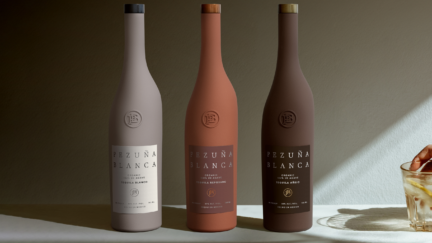
(Photo: 5 Sentidos)
Regulations are the bedrock of any good spirit. The Bottled-in-Bond Act of 1897 paved the way for a new era of American whiskey following decades of adulteration. The guidelines for London Dry Gin have codified a subgenre rich in juniper and devoid of added sugars. Rules will always have a deserved place in the liquor industry, especially as new categories are evolved and defined.
Needless to say, bureaucracy also has its downsides. Just as the Tequila Regulatory Council governs the tequila industry, the mezcal world is overseen by the similarly named Mezcal Regulatory Council. Established in 1994, the organization upholds strict rules about how and where the spirit can be distilled as well as what the spirit can be called. For families that have been distilling mezcal for generations, the CRM’s guidelines don’t always add up. Most famously, the CRM permits only one name for each agave varietal — even though agaves are known by countless names across different towns and municipalities. Factor in fees and waiting times, and many distillers simply don’t think it’s worth it to go down the certification route.
Over the past few years, a trend has emerged toward uncertified distillates, often labeled as “Destilado de Agave.” Brands like NETA and 5 Sentidos have done away with mezcal altogether in favor of uncompromising spirits that spotlight agave over guidelines. The secret key is awareness. More often than not, distillers will build their image around a high-quality, certified mezcal or tequila, then make the pivot toward uncertified fare once they’ve built enough name recognition. That’s exactly what happened last month with Paquera’s Ancestral Cuishe, and more recently with Cazcanes Tequila’s uncertified Nuestras Raices.
Agave spirits education is at an all-time high, and it stands to reason that consumers are prepared to take the next step. Don’t be surprised if your favorite tequila brand ditches the “T word” in months and years to come.
3. Single Estate, Single Field

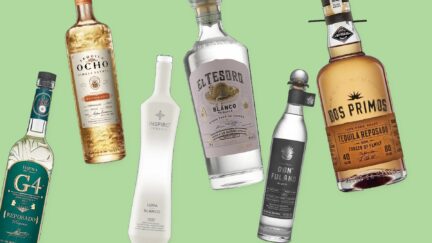
(Photo: Tequila Ocho)
One of the biggest misconceptions surrounding tequila is that of the agave field. Perusing a brand’s website, you’ll almost always be greeted by sweeping images of Blue Weber planted in neat rows as far as the eye can see. However, this imagined proximity to the distillery is usually not the case. Approximately 95% of brands source some amount of their agaves from a competitive ecosystem of farmers dotted throughout Jalisco. To be clear, this is not a bad thing, but rather a tribute to the vast, interconnected nature of the industry and the many parties therein.
Single-estate brands like Tequila Ocho are the exception. By growing all their plants within a stone’s throw of the facility, distillers are allowed greater control over the flora, fauna, climate and altitude that affect the flavor of their spirit. The iron-rich, red clay soil of the highlands imparts a distinctly different profile than the peppery spice of the lowlands. Agaves grown beside corn fields are entirely different than those planted near tomatoes. When you hear wine snobs talk about terroir, this is exactly the distinction they mean.
We’re now beginning to see up-and-comers like Lagrimas del Valle take the concept to the extreme. Rather than source from a single estate, each annual release from Lagrimas is harvested from a single field. We were especially fond of the brand’s 2024 bottling, La Loma, which recruited plants from the criminally overlooked agave-growing state of Michoacán.
As transparency and sustainability inch toward the top of drinkers’ priority list, single-estate brands are emerging as a new frontier for those in search of the nitty gritty details.
4. Beyond Mexico

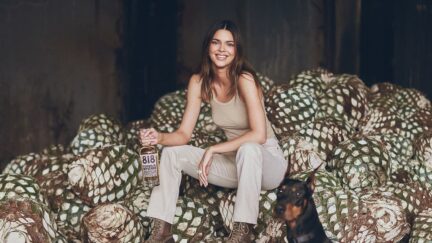
(Photo: California Agave Council)
Just as true cognac can only be made in France, tequila can only be labeled “tequila” if it’s produced in one of a handful of Mexican states. But imitators are cropping up faster than ever. From South Africa to Germany to Pennsylvania, a new generation of distillers has begun producing agave spirits using many of the same techniques and varietals perfected by their Mexican counterparts.
For a while, this burgeoning market was dominated by brands importing agave nectar from south of the border and processing it on-site. Though the technique has its advantages, it’s proven nearly impossible for mom-and-pop distillers to build a livelihood on raw materials sourced from thousands of miles away. Especially in a post-tariff world.
In enters the farmers. By far the biggest mover in this unexpected category is the California Agave Council, a consortium of growers, distillers and advocates dedicated to making West Coast agave spirits the next big thing. Nestled in arid regions like Sonoma County and Napa Valley, you can now find agave fields that handily rival those in Jalisco, Mexico. Stuart Woolf, president of the Council, recently told The New York Times that capacity is slated to reach 1,100 acres by the end of the year. The state has even passed laws recognizing California Agave Spirits with a designation of origin.
Most of the involved parties are still years away from distilling their first batch. After all, it takes nearly a decade to grow a single Blue Weber; some varietals, like the notorious Agave Salmiana, can take up to a quarter of a century. Nonetheless, brands like Tecolotito and Los Hijuelos have begun trickling out into the market, fostering awareness for a category that’s poised to expand exponentially in years to come.
For better insight into the movement, check out our interview with Stargazer Spirits founder Adam Goldberg.
5. Non-Alcoholic?

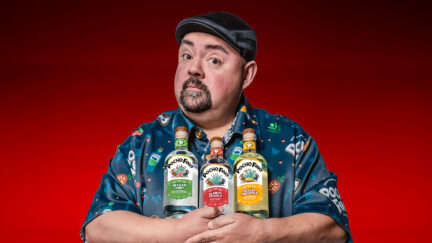
(Photo: Trejo’s Spirits)
Paradoxically, no trend has defined the alcohol category over the past few years quite like nonalcoholic.
With younger consumers drinking less than ever, industry big shots have poured billions of dollars into a new genre of liquid that goes by names like alternative spirits and functional beverages. So far, it’s amounted to an unwieldy wild west. Some brands opt for adaptogens like reishi mushrooms and l-theanine, others for THC and CBD. A few brands are playing with the same base ingredients as liquor or beer, while most go for a chemistry-like concoction approximating the original recipe. Invariably, all the above are lumped onto the same shelf.
Within the faux-tequila space, the trend has slowly but surely moved toward bona fide agave spirits minus fermentation. The most famous of the bunch is F1 racer Lewis Hamilton’s Almave. Made from agave pinas that are harvested, cooked and crushed in Jalisco, the spirit (if you can even call it that) does a fascinating job at approximating the bite of legitimate tequila. Though we wouldn’t exactly say it comes close to the real thing, we were pleasantly impressed by its signature flavors of florality, lime peel and vanilla on the palate. Another recent venture, Tomonotomo, has applied a similar concept to mezcal. Distilled from 100% tobalá agaves in Oaxaca, Mexico, Tomonotomo adds local botanicals like ginger, cinnamon, black cardamom and smoked pineapple for an added depth sorely lacking from most of the zero-proof competition.
Follow The Daily Pour:
About The Daily Pour
Founded by Dan Abrams, The Daily Pour is the ultimate drinking guide for the modern consumer, covering spirits, non-alcoholic and hemp beverages. With its unique combination of cross-category coverage and signature rating system that aggregates reviews from trusted critics across the internet, The Daily Pour sets the standard as the leading authority in helping consumers discover, compare and enjoy the best of today's evolving drinks landscape.