What on Earth Is Worm Salt? Why the Misunderstood Tequila Condiment Is Much More Than a Gimmick


(Photo: Rancho Gordo)
Worm salt, or sal de gusano, is a delicious but oft-misunderstood condiment that has begun gaining traction in the American cocktail scene. While some know it as a trendy pairing for a shot of mezcal, others recognize it as a centuries-old delicacy steeped in history.
Here are the basics:
The worms in worm salt are maguey larvae, wriggling critters that infest the stalks of growing agave plants. Once they’ve been harvested and dried, the maguey worms are ground with sea salt and dried chile to make a spicy, umami-forward sprinkle. It’s easy to replicate at home, if, of course, you have some larvae lying around.
Despite its simplicity, worm salt has often been unfairly misjudged, particularly in the worlds of tequila and agave spirits.
The biggest misconception surrounding worm salt is that it exists in the same “gimmick” category as the infamous sunken mezcal worm. Though the two might initially sound similar, their history is as different as night and day.
More Than a Salty Schtick

Teodora Bautista Romero drops worms into bottles of Monte Alban mezcal at the Beneva mezcal bottling plant in Santiago Matatlan, Mexico. (AP Photo/Arizona Republic, Chris Hawley)
At some point or another, you’ve probably encountered the spirit-soaked worm that sits at the bottom of certain mezcal bottles. Marketing gurus would like you to think it’s an authentic slice of tradition.
As the folklore goes, distillers would drop a live maguey worm into a fresh batch of spirit; if it was still wriggling by the time it reached the bottom, the mezcal was safe to drink. If not, the mezcal was deemed unsafe for human consumption.
This has largely been disproved as a myth. In truth, the “tradition” was fabricated in the 1940s as a clever marketing ploy to distinguish mezcal on liquor store shelves. Today, sightings of the sunken maguey worm are usually associated with lower-tier brands hoping to grab consumers with a quick wriggly “gotcha!”
But that doesn’t mean maguey worms aren’t a treasured delicacy. Among Aztec and Mayan cultures, the worms were recognized for centuries as a curative remedy that could bolster strength and vitality. Due to their strong nutty taste, they’ve persisted to this day as a common main ingredient in everything from tacos to soup to mole.
Alongside treats like dried chapulines (grasshoppers) and escamoles (ant larvae), maguey worms are a beloved culinary staple through and through.

On bread, beetroot hummus garnished with buffalo worms. (Photo: Stefan Puchner/picture-alliance/dpa/AP Images)
It is within that legacy that worm salt was born.
Online, you can find worm salt sold in practically every variety. Flavors range from paprika-mild to ghost pepper-spicy, usually costing no more than $10 to $20.
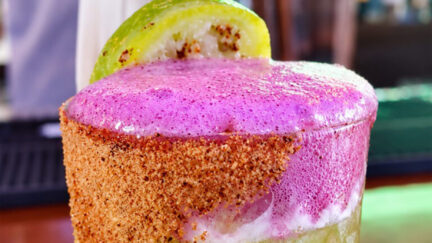
Consider using it as a cocktail rim for your next spicy margarita, or incorporate it into your homemade tacos, guacamole, ceviche or fresh-cut fruit. The possibilities are endless.
Read More:
Get Fiery This Summer With These 6 Exciting Twists on the Spicy Margarita
Casamigos Debuts Its First New Tequila in Over 5 Years, a Charcoal Filtered Cristalino
Rumors of a Mistaken Mixing Process Fuel the Mystique Surrounding Fortaleza Tequila Añejo Lot 42-A
Follow The Daily Pour:
About The Daily Pour
Founded by Dan Abrams, The Daily Pour is the ultimate drinking guide for the modern consumer, covering spirits, non-alcoholic and hemp beverages. With its unique combination of cross-category coverage and signature rating system that aggregates reviews from trusted critics across the internet, The Daily Pour sets the standard as the leading authority in helping consumers discover, compare and enjoy the best of today's evolving drinks landscape.