Trump to Enact 50% Tariffs on Canadian Liquor as Trade Talks Collapse

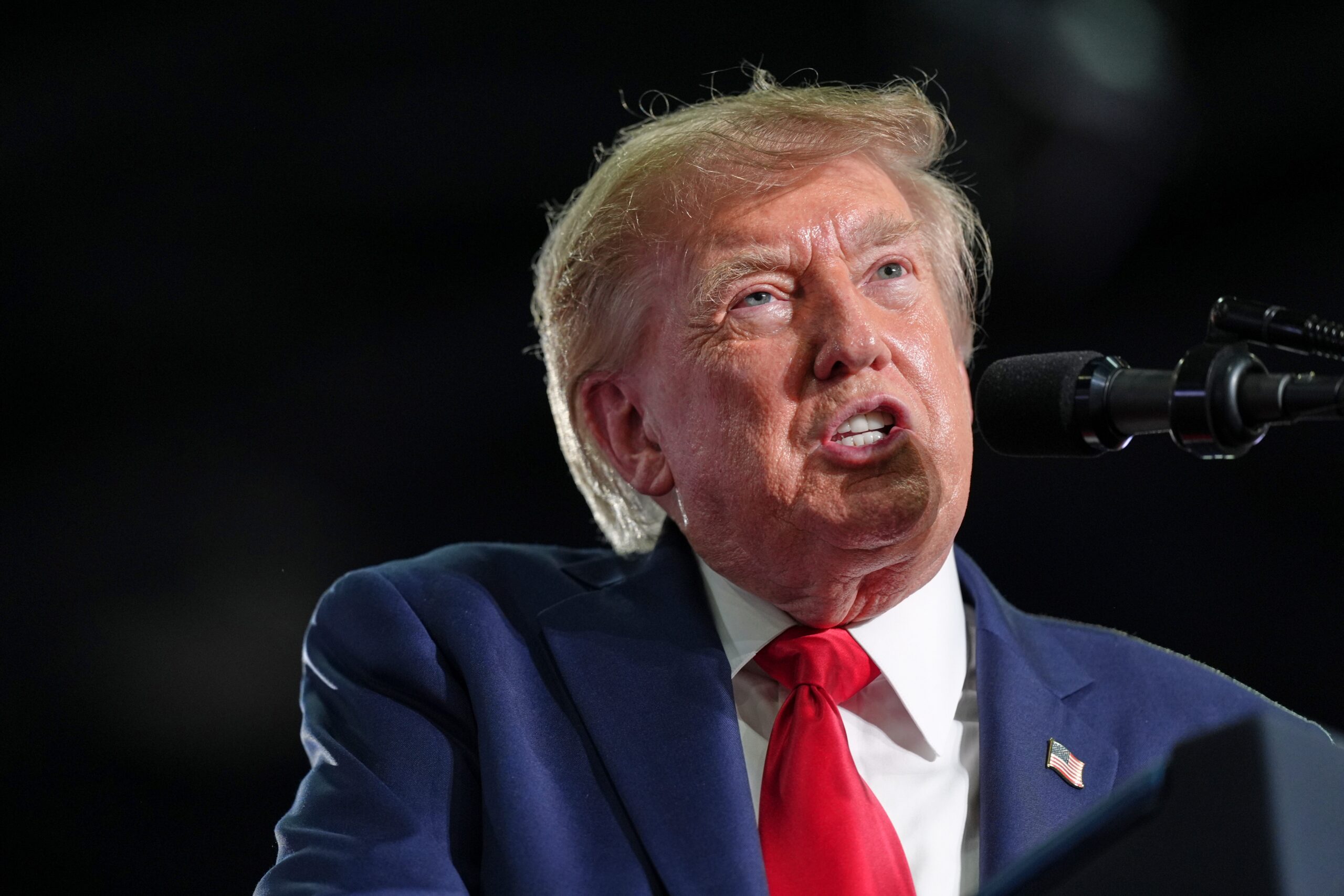
President Donald Trump speaks at a campaign rally for Sen. Darline Graham, R-S.C., at the Myrtle Beach Convention Center in Myrtle Beach, S.C., Friday, Aug. 21, 2026. (AP Photo/Jacquelyn Martin)
Canadian liquor is among the products facing new 50% U.S. tariffs after trade talks between the United States and Canada collapsed Friday night, escalating a dispute that has already ensnared the alcohol industries on both sides of the border.
Canadian Prime Minister Mark Carney said late Friday that Canada was suspending trade negotiations with the U.S. after the two countries failed to reach an agreement before the deadline. The new U.S. tariffs took effect at midnight.
The duties cover about $20 billion worth of Canadian imports, including liquor, hockey sticks, certain building materials and some clothing, according to NBC News.
Canada will respond with tariffs of its own.
“Canada will match those tariffs dollar for dollar to protect our workers and businesses,” Carney said.
The breakdown comes just days after President Donald Trump temporarily paused the same 50% tariffs, saying the two countries had reached a deal that still needed to be finalized.
The two sides instead spent the rest of the week trying to close remaining gaps, with Canadian officials continuing to seek relief from the tariffs and U.S. negotiators pushing for additional concessions.
Alcohol became one of the most contentious issues in the negotiations.
Canadian provinces removed many American alcohol products from government-controlled liquor stores in 2025 in response to earlier Trump tariffs. The move sharply reduced access to American whiskey, wine and other spirits across Canada and prompted significant losses for U.S. producers.
Trump’s administration has repeatedly pointed to those provincial alcohol restrictions as evidence that Canada discriminates against American commerce. U.S. Trade Representative Jamieson Greer also cited Canada’s bans on American goods and services, including alcohol, as a sticking point after Friday’s negotiations collapsed.
Greer said Canada had “declined to finalize the trade deal under the terms agreed earlier this week,” arguing that new Canadian demands and changes to previous commitments had disrupted the negotiations.
The alcohol issue had appeared to offer a potential path toward a deal earlier in the week.
Canadian Prime Minister Mark Carney asked the country’s premiers to reconsider the provincial bans on American alcohol in an effort to help finalize an agreement and prevent the new tariffs from taking effect.
Some Canadian provincial leaders indicated they were willing to consider lifting the restrictions, while others resisted making a commitment without seeing the details of a broader agreement.
Lisa Raitt, a former Canadian deputy prime minister and member of the Advisory Committee on Canada-U.S. Economic Relations, told BNN Bloomberg this week that reversing the alcohol bans could be an important part of reaching a deal.
“The booze ban had its time,” Raitt said, arguing that the measure had served its purpose as leverage against the U.S. but could now stand in the way of an agreement.
The consequences of the bans have already been significant for American alcohol producers.
U.S. wine exports to Canada fell by $343 million in 2025, according to U.S. Census Bureau data cited by CBC. The Distilled Spirits Council of the United States has also reported a sharp decline in U.S. bourbon exports to Canada.
The organization has urged both countries to restore American spirits to Canadian shelves and return the industry to a zero-for-zero tariff framework.
The latest escalation could further complicate that effort.
For Canadian producers, the new U.S. duties threaten to make it more expensive to sell products into the American market. For U.S. alcohol companies, meanwhile, the continued Canadian restrictions mean the industry remains caught between two governments negotiating a much broader trade dispute.
The tariffs were imposed under Section 338 of the Tariff Act of 1930, a rarely used provision that allows the president to impose duties of up to 50% on imports from countries deemed to discriminate against U.S. commerce. The provision had never previously been used to impose tariffs.
Canadian officials had sought to have the Section 338 tariffs dropped entirely, while also negotiating over other U.S. tariffs affecting Canadian steel, aluminum, autos and lumber.
Carney said the latest U.S. proposals contained last-minute changes that were “unfair, uneconomic” and raised questions about the reliability of any eventual agreement.
“We have recognised from the beginning that America has changed, and that we will not return to our old relationship,” Carney said.
The U.S.-Canada trade relationship now enters another period of uncertainty, with Canadian liquor among the products caught in the latest escalation.
For alcohol producers and consumers on both sides of the border, the collapse means the fight over where bottles can be sold remains tied to a much larger battle over tariffs, trade and the future of the two countries’ economic relationship.
Follow The Daily Pour:
About The Daily Pour
Founded by Dan Abrams, The Daily Pour is the ultimate drinking guide for the modern consumer, covering spirits, non-alcoholic and hemp beverages. With its unique combination of cross-category coverage and signature rating system that aggregates reviews from trusted critics across the internet, The Daily Pour sets the standard as the leading authority in helping consumers discover, compare and enjoy the best of today's evolving drinks landscape.