Why a Pair of Hemp Companies Are Suing the Federal Government

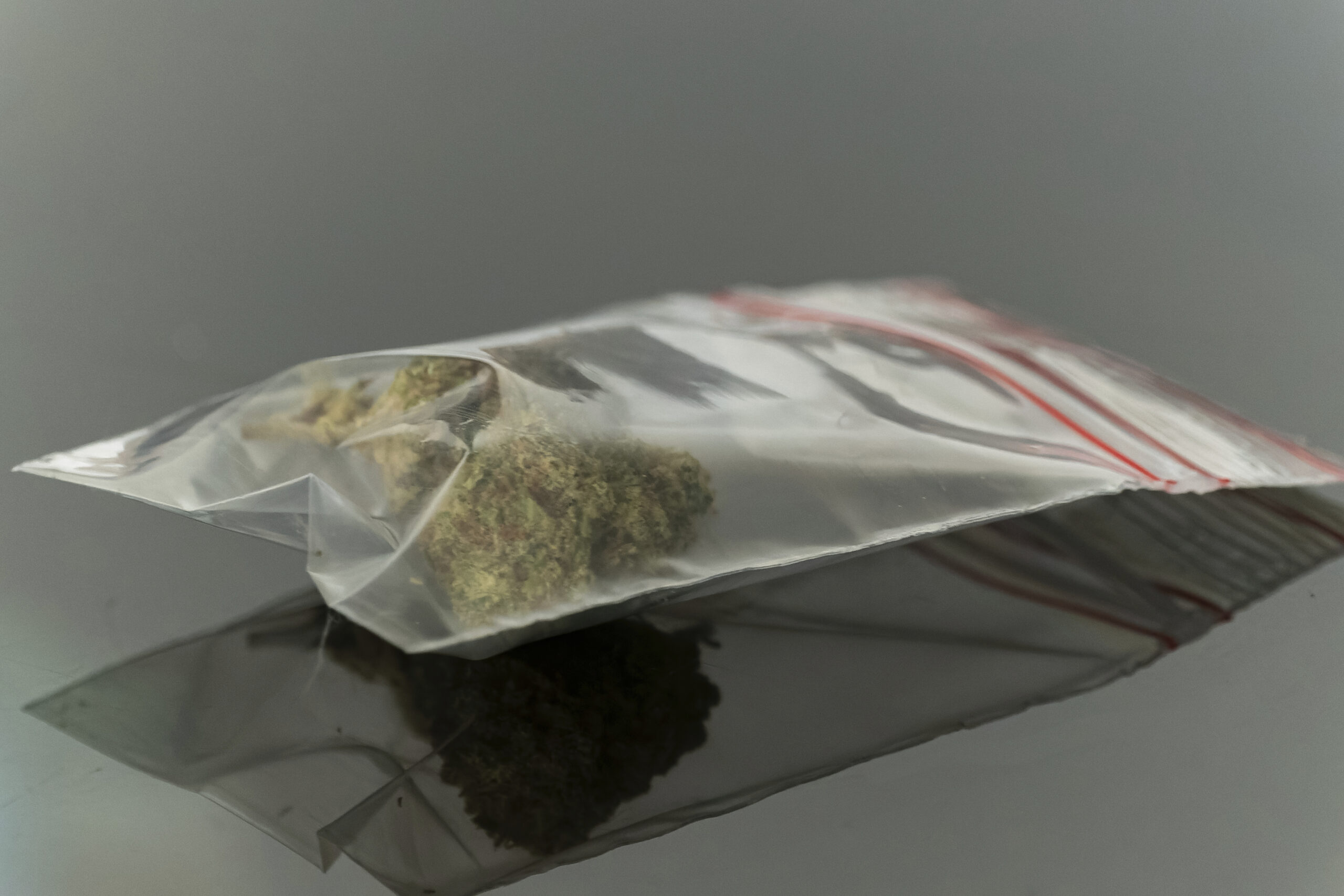
Dried flowers of HHC in a transparent plastic bag are posed on a table on May 12, 2023, in Creteil, France. (Photo: Samuel Boivin/NurPhoto via AP)
Two hemp companies have sued the U.S. Drug Enforcement Administration over a new rule that classifies a hemp-derived cannabinoid known as HHC as a Schedule I controlled substance, setting up what could become one of the most significant legal battles yet over the future of hemp-derived products.
According to petitions first reported on by Law360, Bluestar Operations LLC and IHC Investments filed separate challenges this week in federal appeals courts, arguing the DEA unlawfully exceeded its authority when it moved to classify hexahydrocannabinol, or HHC, as a Schedule I substance.
The companies contend the agency’s action conflicts with the 2018 Farm Bill, which federally legalized hemp and hemp-derived products containing no more than 0.3% delta-9 THC.
In court filings, the companies argued Congress intentionally created broad protections for hemp and did not prohibit cannabinoids produced through common manufacturing processes such as extraction, refinement, conversion or hydrogenation.
“The DEA effectively, and thus unlawfully, attempts to expand federal criminal liability through administrative interpretation,” IHC Investments argued in its petition.
The dispute centers on HHC, a psychoactive cannabinoid that can be produced from hemp-derived compounds. While it is less well known than delta-8 THC or delta-9 THC, HHC has become increasingly common in hemp products sold throughout the U.S.
The DEA announced in May that HHC should be treated as a Schedule I controlled substance because it falls within the federal definition of tetrahydrocannabinols, which are already classified under Schedule I of the Controlled Substances Act.
At the time, the agency said it was merely clarifying existing law rather than creating a new prohibition.
The hemp companies, however, argue the DEA’s interpretation ignores both the language and intent of the Farm Bill and unlawfully creates new criminal liability for products that businesses have operated under the assumption were federally legal.
The lawsuits also invoke the “major questions doctrine,” a legal principle that generally requires clear congressional authorization before federal agencies can make decisions with significant economic or political consequences.
According to the petitions, Congress — not the DEA — must decide whether hemp-derived cannabinoids should be criminalized.
The legal fight arrives at a pivotal moment for the hemp industry.
Hemp-derived cannabinoids have rapidly expanded beyond tinctures and gummies into beverages, one of the industry’s fastest-growing categories.
While HHC remains a niche cannabinoid compared to delta-9 THC, it has found its way into a growing number of hemp-derived beverages. Companies including Green Light District, Day Drinker and Green Herbal Care have sold drinks containing HHC, positioning the cannabinoid as an alternative intoxicating ingredient in the rapidly expanding hemp beverage category.
Retailers including Target have expanded sales of hemp-derived THC beverages into hundreds of stores, while entertainment venues such as Chicago’s Navy Pier and United Center have begun adding THC drinks to their menus.
At the same time, lawmakers and regulators have increasingly scrutinized intoxicating hemp products.
In April, Sen. Rand Paul introduced bipartisan legislation aimed at protecting the hemp industry as Congress considered broader restrictions on hemp-derived cannabinoids.
The uncertainty is expected to increase later this year. A recently approved federal spending bill includes provisions that would significantly narrow the definition of legal hemp and prohibit certain cannabinoids synthesized from hemp-derived CBD. Those changes are scheduled to take effect in November 2026.
While the current lawsuits focus specifically on HHC, industry participants are likely to view the cases as part of a broader battle over how federal regulators interpret hemp law and how aggressively they can move against cannabinoids that emerged after passage of the Farm Bill.
The companies are asking the courts to declare the DEA’s rule unlawful and vacate it.
“This is a coordinated defense of the rule of law and the stability of the American hemp industry,” attorney David Sergei, who represents the companies, said in a statement cited by Law360.
“The DEA is attempting to redefine federal law through administrative fiat, causing immediate and irreparable harm to businesses operating in reliance upon the 2018 Farm Bill.”
Follow The Daily Pour:
About The Daily Pour
Founded by Dan Abrams, The Daily Pour is the ultimate drinking guide for the modern consumer, covering spirits, non-alcoholic and hemp beverages. With its unique combination of cross-category coverage and signature rating system that aggregates reviews from trusted critics across the internet, The Daily Pour sets the standard as the leading authority in helping consumers discover, compare and enjoy the best of today's evolving drinks landscape.