Meet Angel’s Envy’s Owen Martin, The Master Distiller Who Took the Long Way to Kentucky

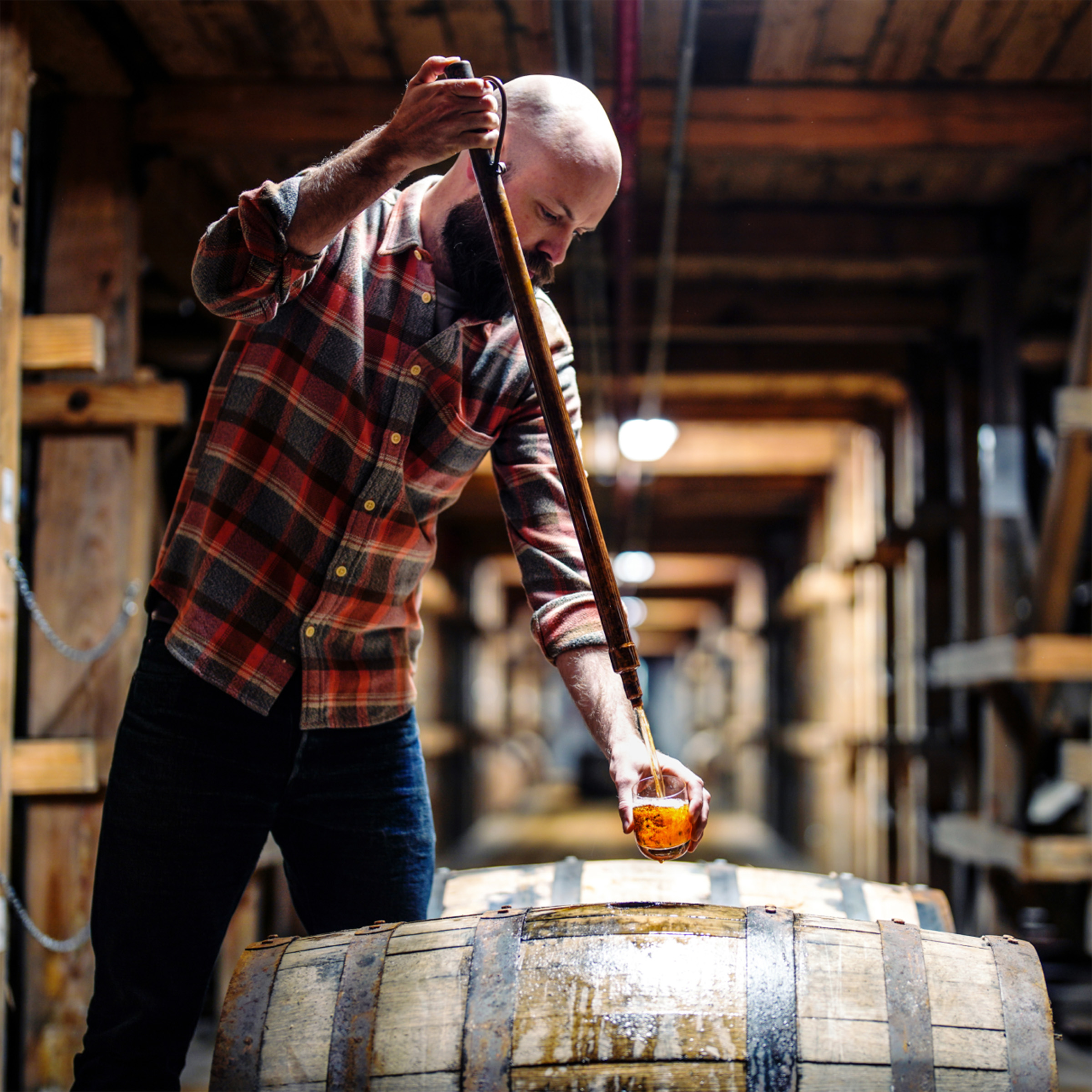
(Photos: Angel’s Envy)
Walk into most of the famous Kentucky distilleries and ask how their master distiller got the job, and the answer is often something like: grew up around the industry, came up through the ranks, spent years in the facilities. At many heritage distilleries, the answer is simply “born into it.”
Angel’s Envy’s Owen Martin’s story is different. He was born in Kansas City and bounced around from Scotland to Arkansas to Colorado before taking up the mantle as Angel’s Envy’s Master Distiller since the fall of 2022.
“I don’t think I would have been hired by potentially any other [Kentucky] distillery other than this,” Martin says. “I don’t think I could have, because they could have just hired up through the tried and true ranks of Kentucky folks.”
The résumé that Martin believes would have disqualified him nearly everywhere else reads as follows: a Master of Science in Brewing & Distilling from Heriot-Watt University in Edinburgh, Scotland; lead distiller at Rock Town Distillery in Little Rock, Arkansas; and six years rising from brewer-distiller to head distiller and production manager at Stranahan’s in Denver, one of America’s leading single malt distilleries. No family ties. No Kentucky apprenticeship. What stands out about Martin is innovation, not tradition.
Angel’s Envy, it turned out, was the one place in Kentucky where that made sense. Despite being a prolific whiskey brand in the Bluegrass State, Angel’s Envy is no hundreds-of-years-old legacy producer. The brand — which is actually six years younger than Martin’s previous stop, Stranahan’s Colorado Whiskey — was founded in 2010 as a finishing house, sourcing barrels of bourbon and rye whiskey and finishing them in various casks — mainly port for the bourbon and rum for the rye.
Martin’s unconventional path made him the ideal candidate to take the reins of this Kentucky blending house and elevate it.
At Rock Town Distillery in Arkansas, Martin spent 2014 to 2016 making about 10 barrels of whiskey a week. The scale was almost comical by industry standards (Martin says they’re filling about 125 barrels daily at Angel’s Envy), but the small environment taught Martin how to be a one-man show.
“You have to wear every single hat in the place,” he says of his days in Little Rock. “There’s no one else to do it if I’m not doing it.”
Then came Stranahan’s, where Martin spent six years, working his way to the top as head distiller and production manager. Stranahan’s had earned a reputation for adventurous finishing, working with casks including Irish whiskey, tequila, port, French oak, rye and much more. Martin found the environment generative in ways that would prove lasting. By Kentucky standards it was still a boutique operation, producing around 80 barrels a week, but compared to Martin’s time in Arkansas, it felt like Jim Beam.
While in Denver, he experimented with a Laphroaig quarter-cask finish, eager to embrace his Scottish beginnings. It worked, and in 2025, he drew inspiration from that experience, releasing a distillery-exclusive Angel’s Envy rye whiskey finished in peated scotch casks that he says he had the confidence to pull off thanks to that success at Stranahan’s.
“You can see a lot of the DNA of stuff that I had trialed out at Stranahan’s,” he says, “or even in Arkansas before that, in very small quantities, applied to much bigger releases here.”
Through those years he was building an inventory of half-formed ideas, tucking away the ones that worked and learning from the failures. He was also sharpening the convictions about bold experimentation that would lead to a place like Angel’s Envy taking a chance on him.
Hired to Push Boundaries
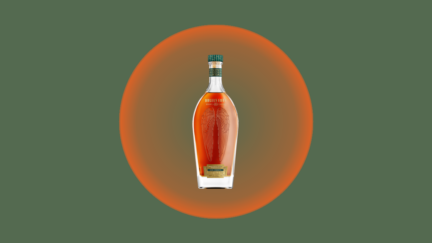
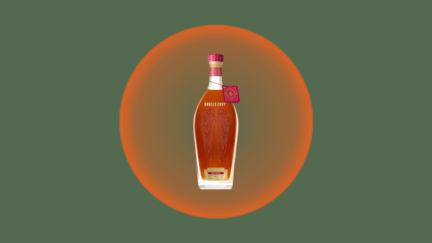
“I’m a big fan of whiskey as a way of subverting expectations,” he says. That mindset would follow him to Louisville, where his first act as master distiller was a double release pairing the annual Cask Strength bourbon with Angel’s Envy’s first cask-strength rye — a coming-out party, he calls it.
“I like innovation that feels natural while still unexpected,” he says. “As the new master distiller, to release a cask-strength rye would be like: That’s something that could have existed in their portfolio, but it hasn’t to date.”
Angel’s Envy is an infant in the grand scheme of the Kentucky bourbon industry, but the brand had spent 11 years developing a coherent identity by the time Martin arrived. Finishing was the ethos, and the portfolio was focused — perhaps too focused for Martin’s taste. He didn’t take long to expand the lane Angel’s Envy occupies.
June 2024’s Bottled In Bond release is the clearest example. It was Angel’s Envy’s first unfinished bourbon, and there was plenty of pushback when Martin pitched it.
“Am I putting ideas out there that make my marketing team uncomfortable? Absolutely,” he says. “But that’s my job.” Angel’s Envy Bottled In Bond is now a national ongoing release.
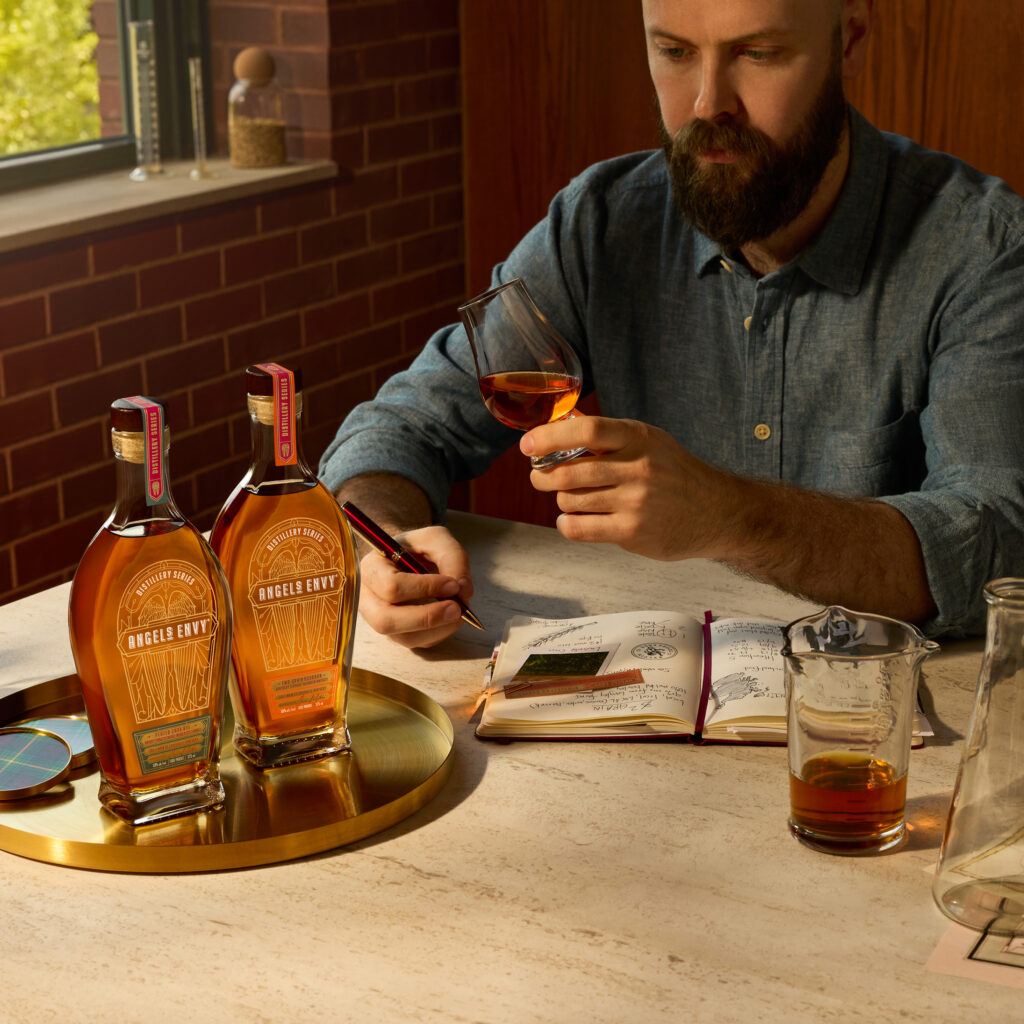
“I think I caught people by surprise because I got hired as the finishing guy, and then I was the one pushing hard that we needed to do a Bottled In Bond,” he says. “I almost need to be pushing against our own norms in a way that can cause tension. And I’m not going to succeed every time, and some ideas aren’t fully fledged. And that’s OK.”
Martin likes to push boundaries and do the unexpected, and he realizes the latitude he’s been given is partly a function of where he landed.
“Sure, there’s always tension,” he says of arriving in Kentucky as an outsider. “But I think there’s a lot less tension at a brand like this that was founded on a pretty radical notion and has always been trying to push the boundaries.
“Frankly, that’s why I got brought on.”
Finishing Philosophy: Longer Than the Norm
One thing that separates Martin from many other distillers and blenders is his philosophy of finishing whiskey. The standard finishing lengths he employs would be considered by most extended and then some.
He explains it with an analogy. He compares whiskey to chili, which is always better the next afternoon, after a night in the refrigerator, when the spices have stopped competing and everything distinct has merged into something more complete. He sheepishly admits this analogy is not new, but one he’s used for many years. “I have not in my whole career,” he says, “been able to come up with a more elevated one.”
Martin tends to finish whiskey for significantly longer than is common in America. It depends on the type of finish, though; he separates finishing into three categories:
- Fermented products: primarily wine, but beer and cider, too. These bring sugar and in the case of red wine, significant tannin. They demand careful calibration of time, and he will often reach for second-fill barrels, particularly when it comes to red wine.
- Distilled spirits: Rum, tequila, cognac and whiskey have already lost their sugars through distillation, and for that reason Martin feels more comfortable leaving whiskey in ex-spirits casks for longer periods of time. Their flavors emerge quickly from the cask, but going back to the chili analogy, Martin believes the real integration requires patience. “I can impart that flavor quickly,” he says of potent finishes like tequila, mezcal and peated scotch, “but it’s not to the degree that I want it to be.” Recalling the rye finished in peated scotch casks, he says the peat flavor was noticeable very early on (“That shit comes out within like two weeks”) , but he let the finishing process play out for a full year to allow the smoky peat and spicy rye thoroughly marry.
- Double-oaked: When using a secondary new oak barrel, he treads with caution (“sometimes three months is sufficient,” he says), often following a short period with time in neutral ex-bourbon barrels so the spirit can settle and develop without picking up excess tannic bitterness.
The tequila finish is a polarizing one among whiskey fans, with many purists turned off by the idea of agave flavors in their whiskey. You may think such a finish would require restraint, that you might pull the whiskey after a few months. Martin committed to 18 months on the tequila-finished rye he released last spring. The base whiskey, he argues, is what matters most. When it’s sturdy enough, the finish becomes a collaborator. The same month that rye launched, two or three other tequila-finished whiskeys arrived from competing producers. He’d been working on his for nearly two years.
“I could have shortened the time and got it out earlier,” he says, “but I wanted to let the liquid get to where it needed to be.”
That principle extends beyond any single release; and it shapes how Martin thinks about his tenure at Angel’s Envy as a whole.
Angel’s Envy’s Second Act Is on the Way
Nearly four years in, Martin describes his time at Angel’s Envy as a whirlwind and says he hasn’t had much time to sit and think about the journey. When he does think about it, he thinks about the gap between what Angel’s Envy has shown the world and what is still to come.
“In 15 years of this company,” he says, “people have really only seen the ‘blending house’ mentality. They’ve only really seen the first shoe drop, and they haven’t really seen our capabilities as a distiller. They’ve seen our capabilities as a blender. In three and a half years with the company, I’ve absolutely been a blender. I haven’t really been a distiller at all — at least not of anything that’s seen a bottle.”
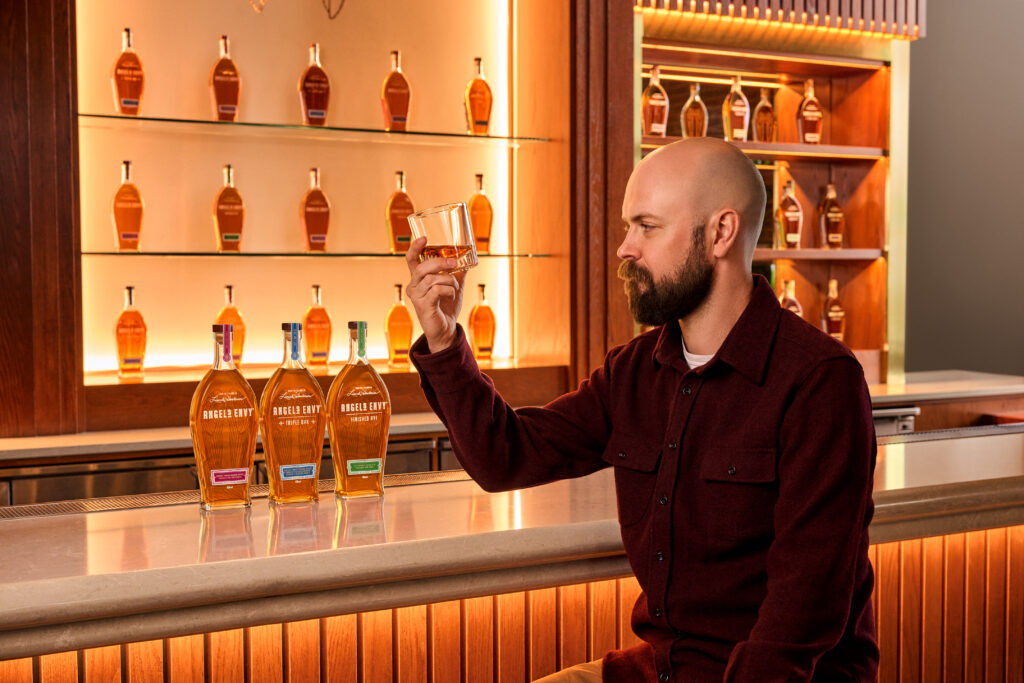
He says it without complaint; he loves blending. But tones of restlessness are audible, the sense of someone operating short of full capacity because the timeline of barrel maturation hasn’t permitted otherwise. The house distillate, which Angel’s Envy began producing in fall 2016, is only now reaching the age where it can anchor the high-end releases (the core, daily-driver releases, on the other hand, are pretty much all distilled by Angel’s Envy these days). The stuff Martin’s been distilling since he arrived not even four years ago? That’s a ways away from reaching a bottle. Martin has been waiting, working and building toward an era that we can only begin to glimpse on the horizon.
In the margins of the production schedule, during holiday shutdowns, he runs experiments the daily schedule doesn’t allow. Longer fermentations. Different yeast strains. Different finishes. Different mashbills.
The ideas he’s most animated about will take many years to see bottling — such is the nature of producing aged spirits. He describes mashbill and yeast decisions made with the finishing cask already in mind. He describes these as “intentionality both in storytelling and flavor profile.”
“I’m a big believer that we shouldn’t be the ones constraining ourselves,” he says, “and we’ll let the whiskey dictate where it wants to go from there.”
His approach now isn’t all that different from what it was in Little Rock or Denver. The difference is the scale.
“I still have that craft or smaller place mentality in what we’re doing here,” he says. Whether it’s a million bottles or a thousand, it’s gonna have that degree of handcraftedness to it.”
Angel’s Envy’s house distillate keeps aging. The oldest barrels will turn 10 this September. Martin has laid down new mashbills that are maturing in the rickhouses alongside founder Wes Henderson’s original recipe (72% corn, 18% rye, 10% malt). The experiments he’s been running are accumulating toward releases that will look, he promises, different from anything Angel’s Envy has put out before. He thinks there will be something tangible within two and a half years, but to really see all he has in store, we have a long wait ahead of us — one Martin believes will be worth it.
“People have really only seen our first act,” he says. “They haven’t even seen new grain bills, new yeast strains, new ways of running the still, all with the idea of how they might tie to a finishing cask or a finishing process or really complete the whole loop of what I think we are as a brand.”
He is building toward something he has a clear vision of in his head: a new era of Angel’s Envy. He knows better than to rush it. The chili is always better the next day.
[callout-app-promo]
Follow The Daily Pour:
About The Daily Pour
Founded by Dan Abrams, The Daily Pour is the ultimate drinking guide for the modern consumer, covering spirits, non-alcoholic and hemp beverages. With its unique combination of cross-category coverage and signature rating system that aggregates reviews from trusted critics across the internet, The Daily Pour sets the standard as the leading authority in helping consumers discover, compare and enjoy the best of today's evolving drinks landscape.