What a Study Sidelined by the Trump Administration Found About Alcohol’s Health Risks

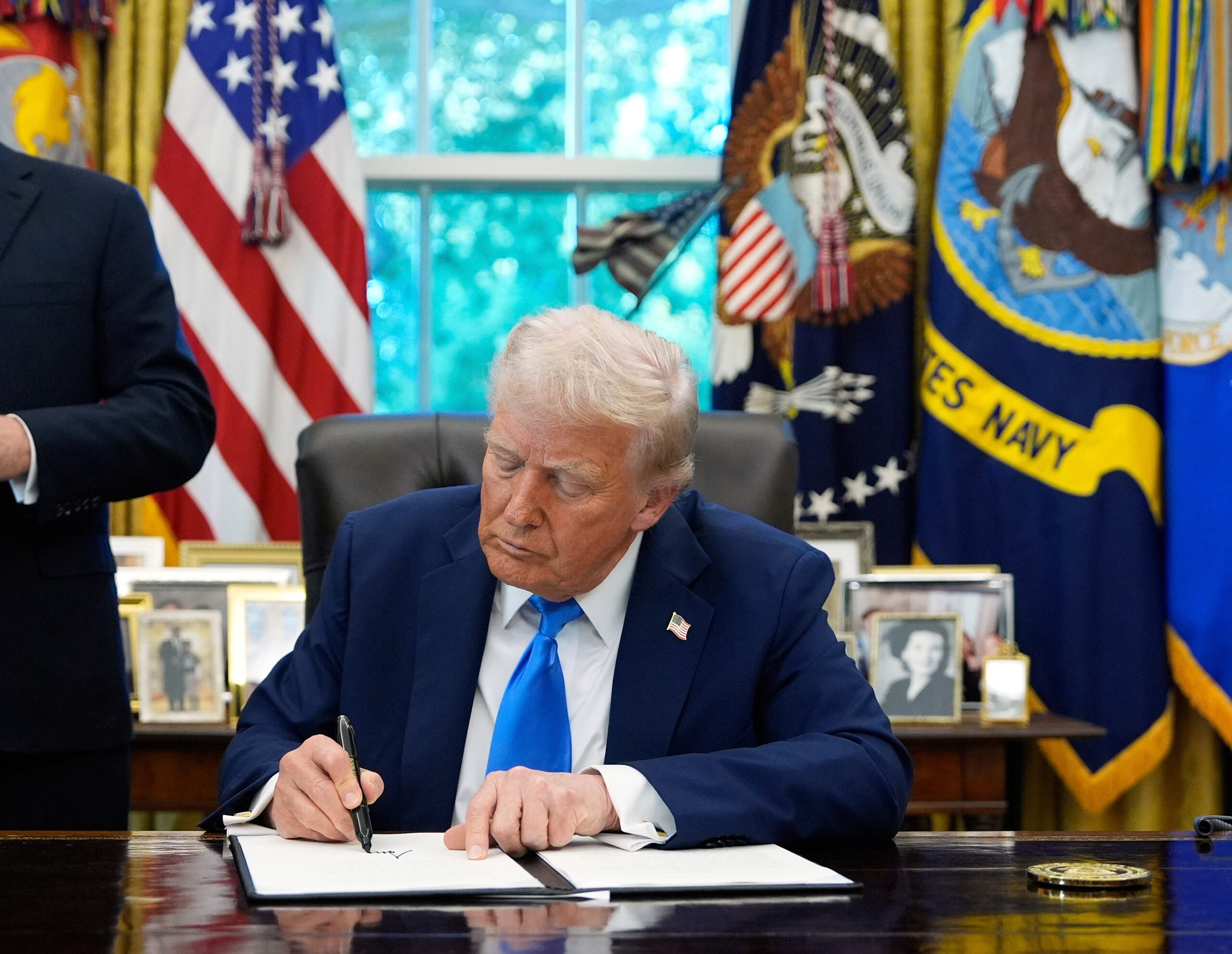
Commerce Secretary Howard Lutnick speaks as President Donald Trump signs the Gold Card executive order in the Oval Office of the White House, Sept. 19, 2025, in Washington. (AP Photo/Alex Brandon, File)
A federally commissioned study that researchers say was sidelined during the development of the Trump administration’s updated dietary guidelines has concluded that health risks from alcohol rise after just one drink per day.
The study, published this week in the Journal of Studies on Alcohol and Drugs, found that moderate drinking increases the risk of early death and contributes to diseases including cancer, heart disease and liver disease. Researchers said they found no overall health benefit associated with alcohol consumption.
The findings stand in contrast to the federal government’s current dietary guidance, which encourages Americans to drink less alcohol but does not specify a recommended daily limit.
Researchers behind the study say the evidence supports a maximum of one alcoholic drink per day.
“After one drink or more a day it increases substantially,” co-author Priscilla Martinez-Matyszczyk, a researcher at the Public Health Institute, told the Washington Post.
The study, known as the Alcohol Intake and Health report, was commissioned during the Biden administration as part of the process used to update federal dietary guidelines.
According to the report, consuming about seven alcoholic drinks per week was associated with one alcohol-attributable death for every 1,000 people over a lifetime. Researchers found the risks increased significantly at higher levels of consumption.
Having 14 drinks per week was associated with a roughly one-in-25 chance of an alcohol-related death, according to the study.
The report was not incorporated into the final 2025-2030 Dietary Guidelines for Americans released earlier this year.
Robert Vincent, a former associate administrator for alcohol prevention and treatment policy at the Substance Abuse and Mental Health Services Administration, wrote in an accompanying editorial that the study was effectively sidelined amid criticism from alcohol industry groups.
“The evidence is really pretty straightforward,” Vincent told the Washington Post. “There is no safe level of alcohol.”
The Department of Health and Human Services disputes the characterization that the study was shelved.
In a statement to the Washington Post, HHS spokesperson Emily Hilliard said the report was reviewed alongside other available scientific evidence and that the final guidelines were informed by the broader body of research rather than any single study.
The publication arrives amid an increasingly contentious debate over alcohol and health.
In recent years, public health officials have highlighted links between alcohol consumption and a range of diseases, particularly certain cancers. Earlier this year, the U.S. Surgeon General’s office called for cancer warning labels on alcoholic beverages, while the World Health Organization has argued that no level of alcohol consumption is completely risk-free.
The alcohol industry has pushed back on those conclusions, arguing that moderation has long been central to responsible drinking guidance and questioning some research used to justify stricter recommendations.
Industry groups also criticized the Alcohol Intake and Health study itself.
Amanda Berger, senior vice president of science and research at the Distilled Spirits Council of the United States, said in a statement that the report resulted from a flawed process.
“This study was the subject of a Congressional investigation that found it was the product of a flawed, opaque and biased process, with researchers pursuing a predetermined outcome rooted in personal ideologies rather than objective science,” Berger said. “The Congressional committee ultimately concluded that the ICCPUD Alcohol Intake and Health study was irretrievably flawed, should be left in its draft form, and should not be considered in the development of the 2025–2030 Dietary Guidelines.”
Researchers involved in the study maintain that their findings are supported by a growing body of evidence.
The report estimated that alcohol contributes to more than 200 diseases and health conditions, including several forms of cancer, cardiovascular disease and liver disease. It also examined alcohol-related injuries such as vehicle crashes.
The findings are likely to fuel ongoing debate over whether future federal guidance should adopt stricter recommendations for alcohol consumption.
For now, however, the Trump administration’s dietary guidelines stop short of recommending a specific daily limit, despite the study’s conclusion that health risks increase beyond one drink per day.
Follow The Daily Pour:
About The Daily Pour
Founded by Dan Abrams, The Daily Pour is the ultimate drinking guide for the modern consumer, covering spirits, non-alcoholic and hemp beverages. With its unique combination of cross-category coverage and signature rating system that aggregates reviews from trusted critics across the internet, The Daily Pour sets the standard as the leading authority in helping consumers discover, compare and enjoy the best of today's evolving drinks landscape.