Sustainability in Wine and Spirits: 4 Key Factors to Consider Before You Buy

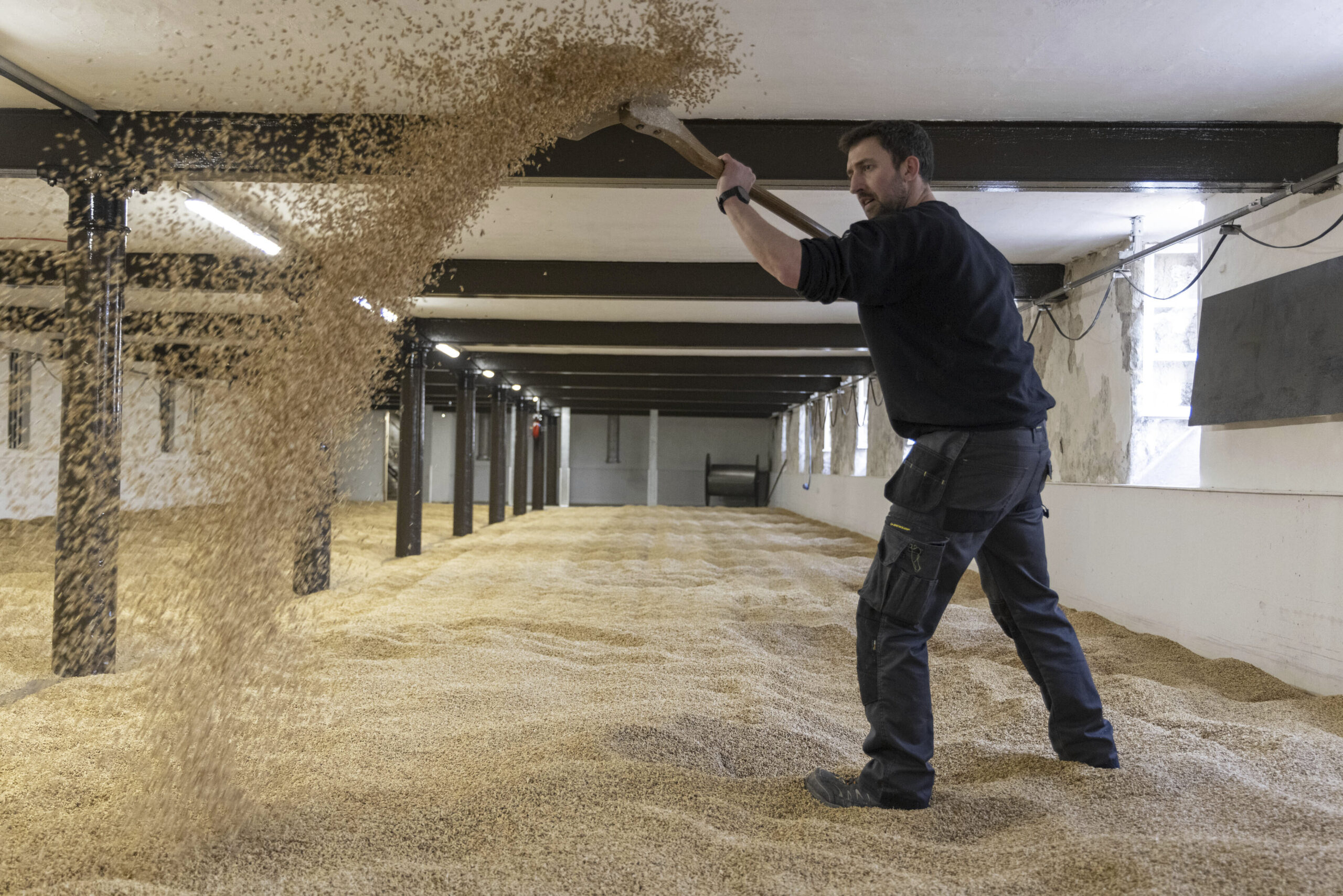
Maltings operator Nicol Roberston uses traditional methods to turn the malt at Glen Garioch’s Oldmeldrum Distillery in Scotland (Photo: Robert Perry/PA Wire)
How do we make sustainability fun and exciting within the world of wine and spirits? This is a question I’ve asked myself and colleagues enough that I’ve developed a reputation as the guy who gets riled up when discussing sustainability.
This is a simpler task when it comes to wine. When talking about sustainability, people love to listen to tales about insects and animals and healthy soil. It’s easy to paint a mental photograph describing well-kept, healthy vineyards with butterflies fluttering about.
Spirits, on the other hand, are generally confusing and involve math and science. Boiling points? Ethanol? Converting starches to sugar? It’s tough and certainly less picturesque.
The paradox is that, despite being less sexy, producing spirits takes quite a bit more energy and resources, so sustainability is even more critical.
What’s more, it can be hard to get the story. Even when it comes to brands that I know for a fact are doing top-notch sustainability projects, there are frequently no signs on the label to tell us.
Interested in supporting brands that emphasize sustainable practices? When you’re looking for that next bottle to buy, here are some questions to ask or things to look out for.
The Raw Material and Certifications
With the variety of raw materials used to produce spirits, it’s important to inquire about how things are grown. Are their fields organic certified? Look for the EU or USDA Organic certification somewhere on the bottle.
Other programs of note are certifications for Biodynamics, Regenerative Organic Certification, and HEV (High Environmental Value) which is a very detailed three-level program in France.
Are they growing a single crop like agave, sugarcane or grapes? When it comes to growing a single crop that requires years to reach maturation, biodiversity is a hot topic.
Biodiversity is about creating environments around and within the fields to attract other insects, animals, plants and bacteria that can help control harmful pests and disease. For example, many regions in France that grow grapes have goals to dedicate certain percentages of land to biodiversity. To do this, they allow small plots or corridors grow wild to attract those beneficial elements.
Bottle Weight: The Hidden Carbon Driver
I applaud the movement within the wine industry of prioritizing bottle weight, particularly writers such as Jancis Robinson, who lists the weight of the bottle in her reviews. The weight of the bottle may not sound sexy, but it is a major factor in producers’ greenhouse gas emissions; heavy bottles require more energy to move.
With that said, I realize consumers enjoy a heavy bottle. It’s almost expected — there’s that “whoa!” moment when you first lift a high-end bottle, and our brains tell us that the weight equates to something special.
Packaging: Is it Actually Recyclable?
Those handsome glass bottles and gift boxes for our favorite spirits can make up a large chunk of the CO2 emissions that a distillery produces. Ask if all the components of the bottle can be recycled. If the fancy gift box contains various elements of different materials, can they be easily broken apart so each can be recycled?
What percentage of recycled glass are they using? Is any recycled paper or cardboard being utilized?
Energy for Distilling
Finally, if you want to go one level deeper — especially with distilleries that are proud of their operations — ask about what happens inside the facility. Distillation requires heat, and heat requires energy, so the biggest sustainability wins often come from energy sources and efficiency.
Is the distillery powered by renewable electricity? Is heat being recovered during distillation to reduce overall energy demand?
Water use is another pressure point: How are cooling water, cleaning and wastewater managed? And what happens to byproducts (spent grain, agave fibers, grape pomace) after production? The best producers can explain whether those materials are composted, reused, fed to livestock, converted to energy or otherwise kept out of landfills.
To summarize: If you are concerned about sustainability in wine and spirits, the best thing you can do is ask questions and hold brands accountable.
The most important factors shaping a brand’s environmental impact are often the least visible. By focusing on packaging, weight, transport and certifications, you can cut through the noise and make more informed choices. Next time you’re browsing the shelf, don’t just pick what looks sustainable. Flip the bottle, do a quick search and start holding brands accountable.
Follow The Daily Pour:
About The Daily Pour
Founded by Dan Abrams, The Daily Pour is the ultimate drinking guide for the modern consumer, covering spirits, non-alcoholic and hemp beverages. With its unique combination of cross-category coverage and signature rating system that aggregates reviews from trusted critics across the internet, The Daily Pour sets the standard as the leading authority in helping consumers discover, compare and enjoy the best of today's evolving drinks landscape.