Tracking BAC With a Mobile Breathalyzer Affects Drinking Habits, Study Suggests

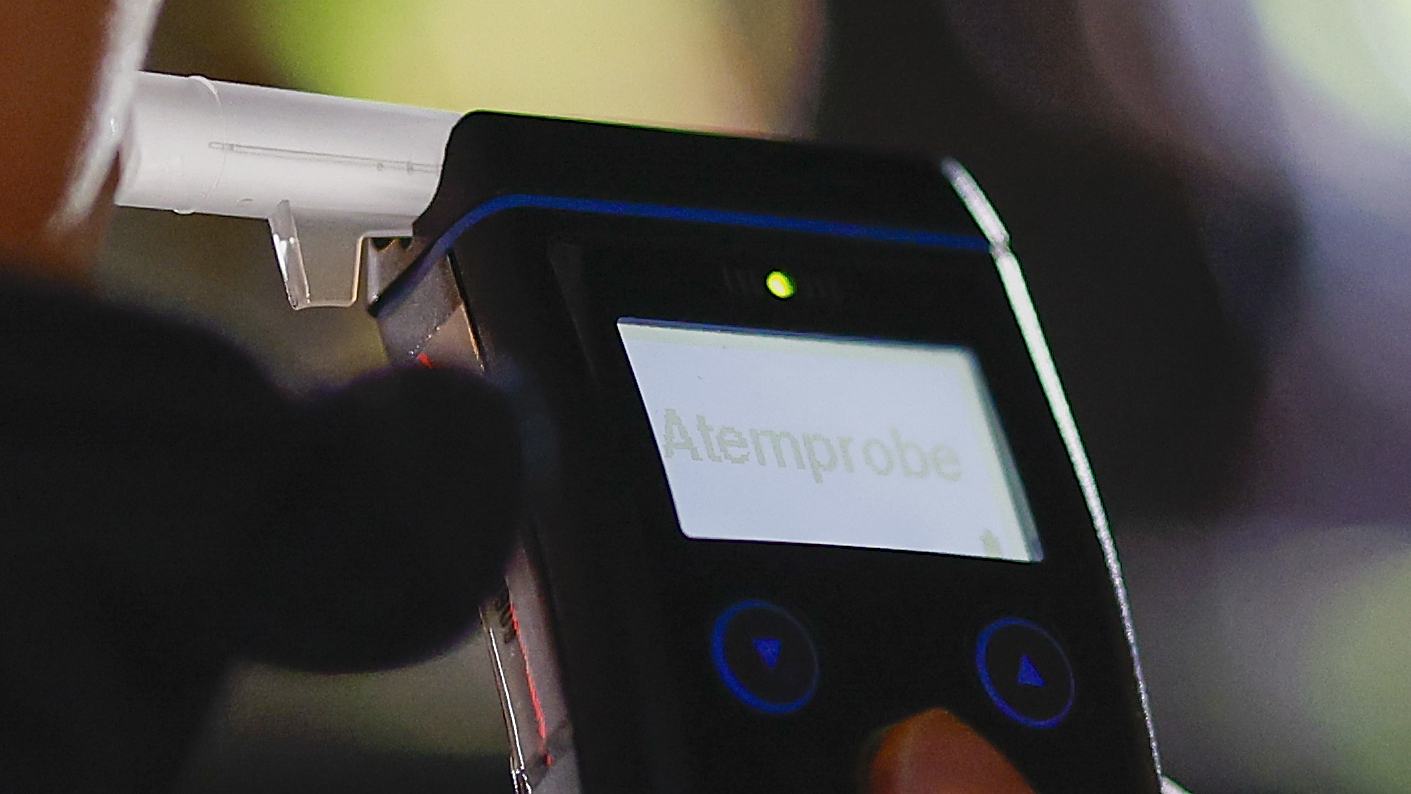
(File photo: Heiko Becker/picture-alliance/dpa/AP Images)
People who regularly use mobile breathalyzers may change how they drink and improve their awareness of intoxication levels, according to a new study published in the American Journal of Psychiatry.
Researchers analyzed anonymized data from more than 32,000 users of mobile breathalyzers between 2016 and 2022. The study, led by Yang Lu and Catharine Fairbairn at the University of Illinois Urbana-Champaign, found that repeated use of the devices was associated with both improved accuracy in estimating blood-alcohol concentration and shifts in drinking patterns.
Participants used the devices an average of 40 times over about seven months. Before each test, users were asked to estimate their BAC, allowing researchers to compare perceived and actual intoxication levels.
“Most people tend to underestimate their blood-alcohol levels,” Lu said, according to the University of Illinois. “When I speak with clients who struggle with alcohol use, they’re often surprised by their BAC results.”
At the start of the study, nearly 70% of participants underestimated their BAC. Over time, their accuracy improved, increasing by an average of 2.38%, suggesting users became better at recognizing their level of intoxication.
The data also showed differences between heavier and lighter drinkers. Among heavier drinkers, average BAC levels declined from 0.106% to 0.096% during the study period. Lighter drinkers, however, showed a slight increase, from 0.058% to 0.067%.
“We’re seeing a movement away from the clinic and into people’s smartphones for how they want to manage their behavior and their health,” Fairbairn said.
The study did not establish a direct cause-and-effect relationship between breathalyzer use and behavior changes. Researchers noted that the findings are observational and not based on a controlled trial.
Still, the results suggest that real-time feedback tools could play a role in harm reduction, particularly for people who drink heavily. Improved awareness of BAC levels may help individuals make more informed decisions about activities such as driving or continued alcohol consumption.
“The prevailing wisdom is that monitoring your behavior will make your behavior better,” Fairbairn said. “And we did find evidence to support that.”
The research was supported by the National Institutes of Health, and researchers said further studies are needed to better understand how mobile health tools influence long-term drinking behavior.
Follow The Daily Pour:
About The Daily Pour
Founded by Dan Abrams, The Daily Pour is the ultimate drinking guide for the modern consumer, covering spirits, non-alcoholic and hemp beverages. With its unique combination of cross-category coverage and signature rating system that aggregates reviews from trusted critics across the internet, The Daily Pour sets the standard as the leading authority in helping consumers discover, compare and enjoy the best of today's evolving drinks landscape.